Lanzarote is a dry island, with little rain and volcanic soil. Its cooking reflects that: few ingredients, none superfluous, and a great deal of skill to make them go far. Those looking for white-tablecloth refinement will find it in a few places; those looking to understand the island will find it in a plate of potatoes with mojo and a fish that was in the sea that morning.
Papas arrugadas and the mojos
This is where everything begins. Small potatoes, boiled in their skins in heavily salted water until the water evaporates and the salt clings to the skin, which wrinkles. They are eaten whole, dipped in mojo.
There are two, and you order both. Mojo rojo, or picón, is made with red pepper, garlic, oil and vinegar, and is more or less fiery depending on the kitchen. Mojo verde is made with coriander, garlic and oil, and goes mainly with fish. Every kitchen has its own recipe and none matches the one next door: it is the first clue to where you are eating.
The catch of the day
Lanzarote faces the Atlantic on every side, and fish is the centre of the table. Cherne (wreckfish), firm and white, is among the most prized; so too vieja (parrotfish) and other rockfish, depending on what has come in. They are grilled, fried or poached, almost always with potatoes and green mojo.
Lapas (limpets), a cone-shelled mollusc gathered from the rocks, are served grilled with a little green mojo. They are a classic of places near the sea, in Arrecife and the small harbours.
The question worth asking every time is the same: what fish is there today? What is on the menu all year says less than what the waiter recites from memory.
Sancocho and gofio
Sancocho is the dish of family celebrations: salted fish — traditionally cherne — desalted and stewed, with potatoes, sweet potato and mojo, served with a ball of gofio.
Gofio, flour made from toasted grain, is the oldest inheritance of the Canarian table. It appears kneaded into a ball, stirred into milk, or as escaldón: gofio mixed with hot stock into a paste eaten with raw onion. The inland taverns, in villages such as Haría, are the natural place to try it.
Goat’s cheese
Goats have always grazed the island’s dry slopes, and their cheese is on almost every table: fresh, semi-cured or cured. It is served in slices as a starter, or fried, sometimes with honey — one of those pairings that sounds like dessert and works at any point in the meal.
Wine and salt
With all of this, you drink island wine. The Malvasía Volcánica of La Geria, white and saline, partners fish better than almost any other wine. We tell the story in Malvasía Volcánica in the glass.
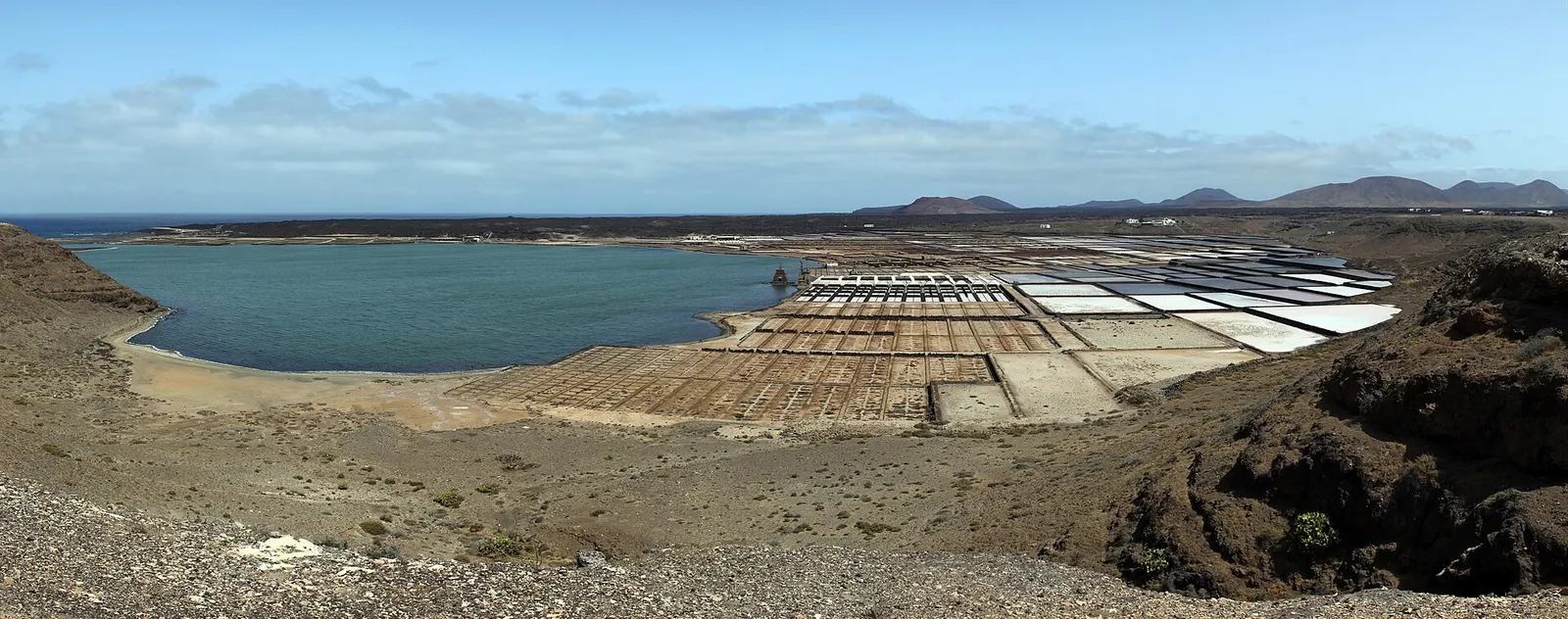
And the salt that finishes many dishes has its own landscape here too: the Janubio salt pans, in the south, still produce it beside the sea.
Where and when
We do not name restaurants here: we would rather not recommend what we have not been able to check. The general rule works: fish near the sea, on the quaysides and in the harbours; stews and gofio in the inland taverns. Be wary of menus in six languages with a photo of every dish, and trust the places where islanders eat on weekdays.
When booking, remember the island runs an hour behind mainland Spain. Outside the busiest months you will find a table without booking almost anywhere; at Christmas, Easter and in August, call ahead.
To follow the thread: the landscape the wine comes from, in La Geria; the salt, in the Janubio salt pans; and a town for an unhurried Sunday lunch, Teguise.