Real calm is not at midday, or even at sunset. It is at dawn, before anyone else arrives. And to have a place’s dawn to yourself, you have to have slept there.
In Mallorca that is almost never possible in a protected area: the unspoilt coves have nowhere to stay and the parks are visited by day. Almost never. There are three exceptions, perfectly legal and open to anyone who books, and almost nobody knows about them.
The essentials
- s’Arenalet des Verger (Artà): a public refuge inside the Llevant nature park, on a roadless cove. Since August 2026, with en-suite rooms.
- Castell d’Alaró: a 30-bed guesthouse inside the castle walls, at 821 metres.
- Cabrera: the night is only spent aboard a boat, on a reserved buoy. The refuge is closed.
- And a morning: Sa Dragonera on the first boat from Sant Elm.
s’Arenalet: dawn on a roadless cove
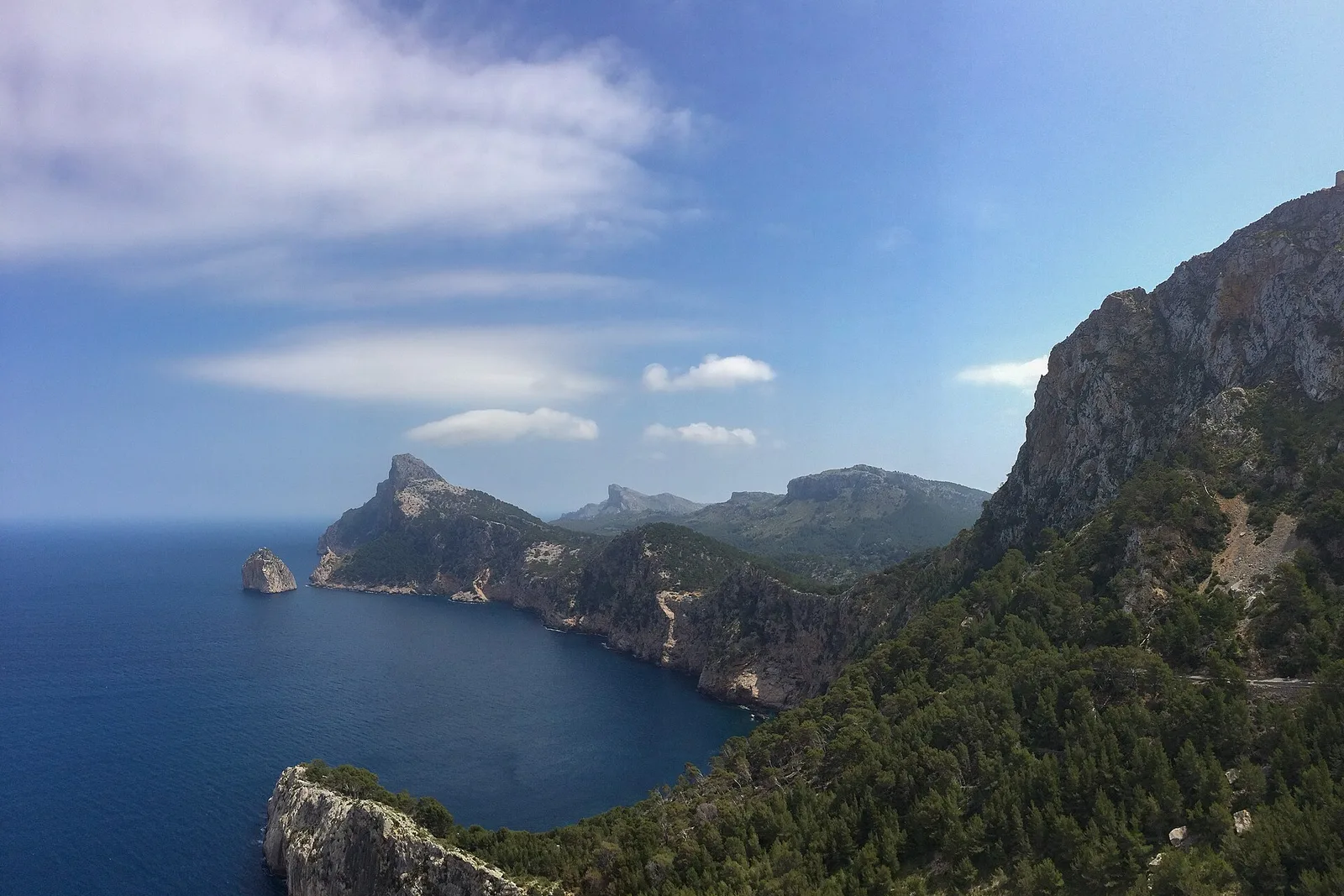
The Llevant Peninsula nature park, in Artà, protects around 1,600 hectares of undeveloped coast and hillside. In the middle, next to the cove of s’Arenalet des Verger, IBANAT —the Govern body that manages the natural spaces— runs a refuge for twenty people.
And it changed this summer: since 1 August 2026 it has been let by room: four doubles and three quads, all with a bathroom. It has drinking water and solar lighting. What it does not have is a road: you can only get there on foot, and the refuge does not carry people or food up, so you bring dinner with you.
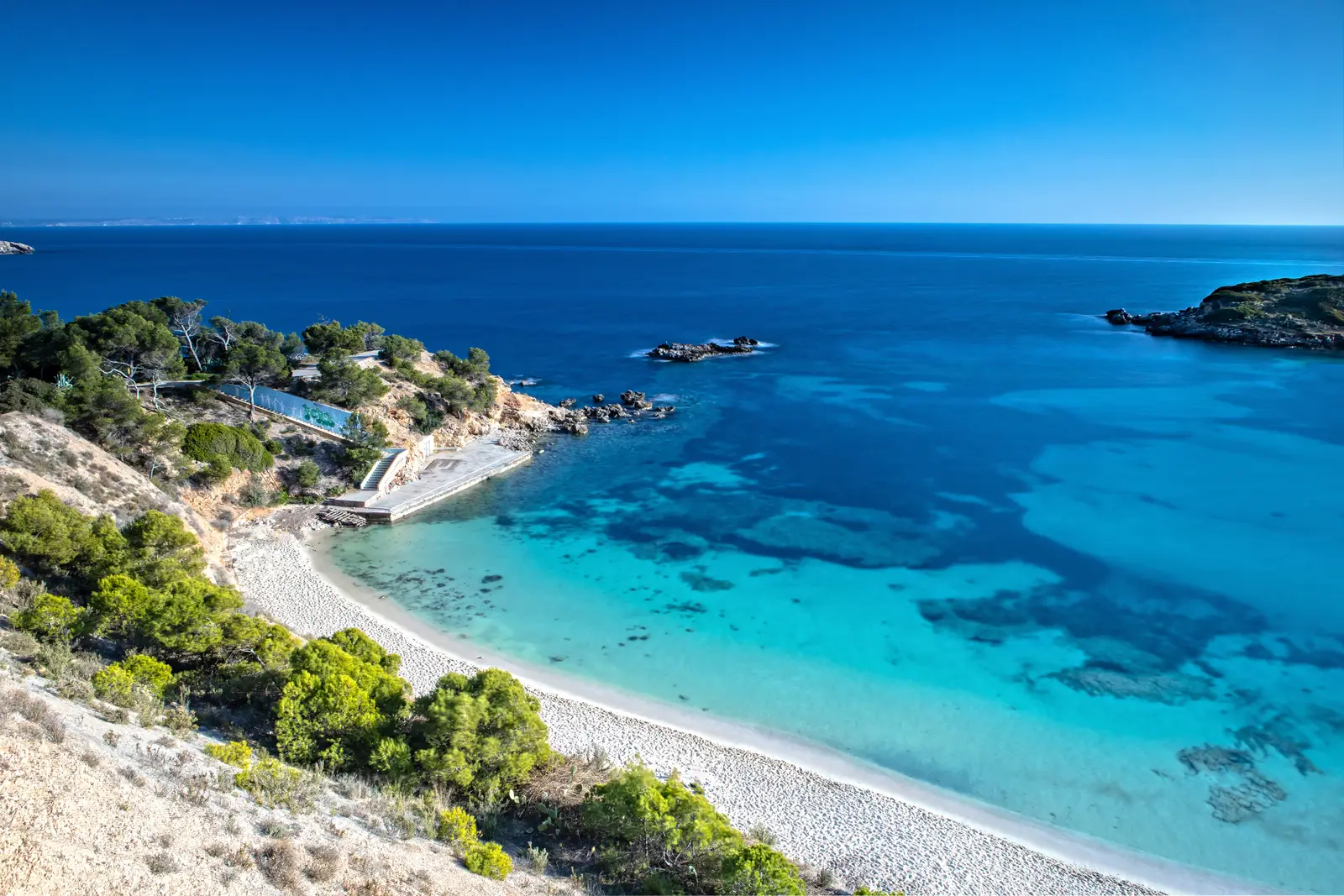
In exchange, when you wake up, the cove is yours. There is no other way to see one of the unspoilt beaches of north-east Mallorca like this.
It is booked through the IBANAT website or by phone (971 17 76 52, Monday to Friday, 10am to 2pm).

Castell d’Alaró: sleeping above the island
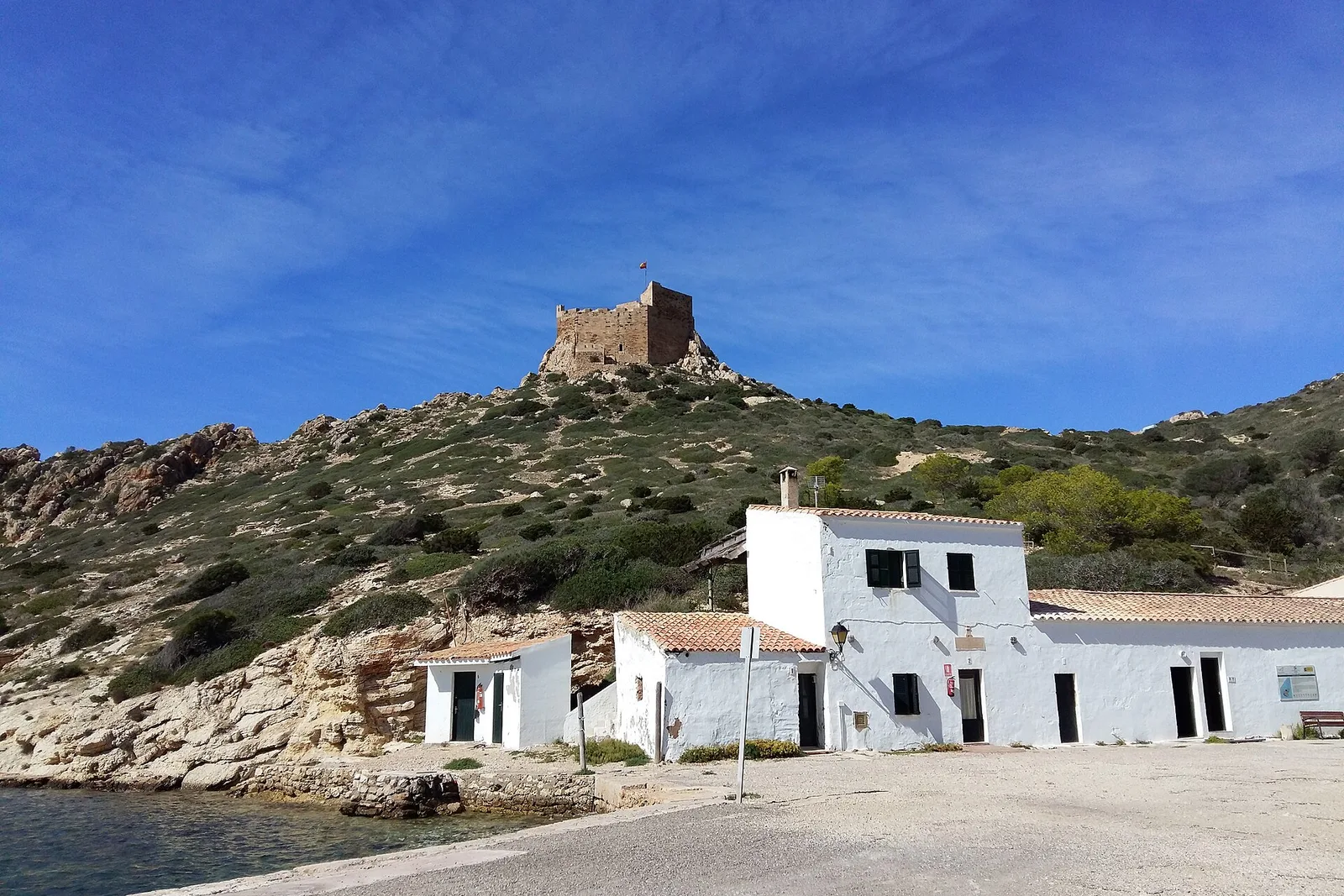
Castell d’Alaró is a rock-top castle perched on a crag, with half of Mallorca at its feet. The climb, from the village of Alaró, is one of the island’s classic walks, and almost everybody does it there and back in a day.
What few people know is that you can sleep at the top. Inside the fortress walls, at 821 metres, there is a 30-bed guesthouse —one ten-bed room and five four-bed rooms— with a dining room, a room with a fireplace and a bar open 9am to 11pm. It is run by the Fundació Castell d’Alaró and sits on one of the variants of the Pedra en Sec route (GR 221).
What you are buying here is the moment the day-trippers leave. Sunset over the Pla, the night with the lights of half the island below, and, in the morning, the castle empty. It is simple lodging: the luxury is the place.

Cabrera: the night belongs to the boat
The Cabrera Archipelago Maritime-Terrestrial National Park, south of Mallorca, has protected —since 1991, and with the 2019 extension— 90,794 hectares, of which 89,478 are sea. It is, almost entirely, a marine park.
Its history explains the silence. Between 1809 and 1814, after the Battle of Bailén, Cabrera was a prison island: between 6,000 and 9,000 of Napoleon’s soldiers were left there, and only 3,600 returned to France, according to Spain’s Ministry for the Ecological Transition. Today you can visit the fourteenth-century castle, the n’Ensiola lighthouse (1870) and the free Es Celler museum.
To stay the night, the rules are clear:
- The refuge is closed with no date set. The only possible night is aboard a boat.
- Sailing in the park requires a free permit, applied for online and valid for a year.
- By day there are 50 free buoys with no booking (30 at Es Burrí, 8 at sa Coveta Roja and 12 in the harbour). For the night, the buoy has to be booked.
Without your own boat, the only way to Cabrera is with the operators authorised by the park, which sail in summer from Colònia de Sant Jordi; the list is on the Govern balear website. And for the night, what you charter is a licensed boat with skipper: there is no better way to see the archipelago once the day boats have gone.
And a morning: Sa Dragonera on the first boat
Sa Dragonera, the long, narrow islet off Sant Elm, allows no overnight stays, but it does allow almost-empty mornings. It can only be reached by sea, on the boats from Sant Elm or your own, and you have to check in on arrival at Cala Lledó. From 1 May to 30 October it opens Monday to Friday 10am to 4.30pm and weekends 10am to 6pm; the rest of the year, 10am to 2.30pm.
What is surprising is that it exists at all in this state. In 1977, almost fifty people from the Terra i Llibertat and Talaiot Corcat groups occupied the island to stop the plan to develop it. The Consell de Mallorca later bought it, and in 1995 it was declared a nature park. The first boat of a weekday is the best way to thank them for it: three lighthouses, footpaths and almost nobody.
Before you book
- These are not hotels. They are a public refuge, a foundation-run guesthouse and a buoy in a national park. The luxury is where you are, not the service.
- You get there on foot or by sea. s’Arenalet and the castle mean walking in with what you need; Cabrera means a boat.
- Book ahead. There are few beds and few buoys, and that is exactly what makes them worth having.
If you would rather sleep with service and go out to find these places by day, the houses we recommend are in our guide to quiet luxury hotels in Mallorca. If the sea interests you, the coves you can only reach by boat complete this map. And for the famous sights, at the right hour, there is Mallorca’s famous places, at the hour nobody is there.
Our view
Mallorca has extraordinary hotels, and we recommend them. But none of them has this: waking up in a cove the road cannot reach, inside a medieval castle, or anchored off an island that was once Napoleon’s prison.
This is not the luxury of service. It is the luxury of being where, at that hour, there is nobody else.
Details checked on 22 September 2026 on the websites of IBANAT, the Consell de Mallorca (Castell d’Alaró and Sa Dragonera), the Govern balear (Cabrera National Park) and Spain’s Ministry for the Ecological Transition. Availability and opening hours change every season: confirm them when booking. This guide charges nothing for inclusion.