Mallorca has a problem its visitors discover in July: the island is big and you can drive to almost everything, and that has filled the cove car parks. The result is a paradox: the best-preserved coastline in the western Mediterranean is seen, from land, after three laps looking for a space.
From the water you see it the other way round. And there are stretches that, quite simply, cannot be seen from land at all.
The essentials
- Several of the best coves have no road, especially in the southeast, between the known villages.
- Sa Foradada can only be seen head-on from the sea.
- In Mallorca a boat does not solve access —there is a road to almost everything— but parking and timing.
- Early for flat sea and empty coves; late afternoon for the Tramuntana facing the sun.
The Serra, falling into the sea
Mallorca’s west coast is a wall. The Serra de Tramuntana meets the water with no transition, and that produces two of the island’s most recognisable images.
The first is the mouth of the Torrent de Pareis, at Sa Calobra: a canyon that opens between vertical walls exactly where it meets the sea. You can reach it by land —along the famous knotted road— but the classic arrival is by boat from Port de Sóller, and that is the one that explains the scale of the place.
The second is Sa Foradada, the pierced headland on the Deià coast: a tongue of rock with a hole through the middle. From the road you can guess at it; from the water you see it head-on, which is how it was meant to be seen.
The southeast, the stretch of small coves
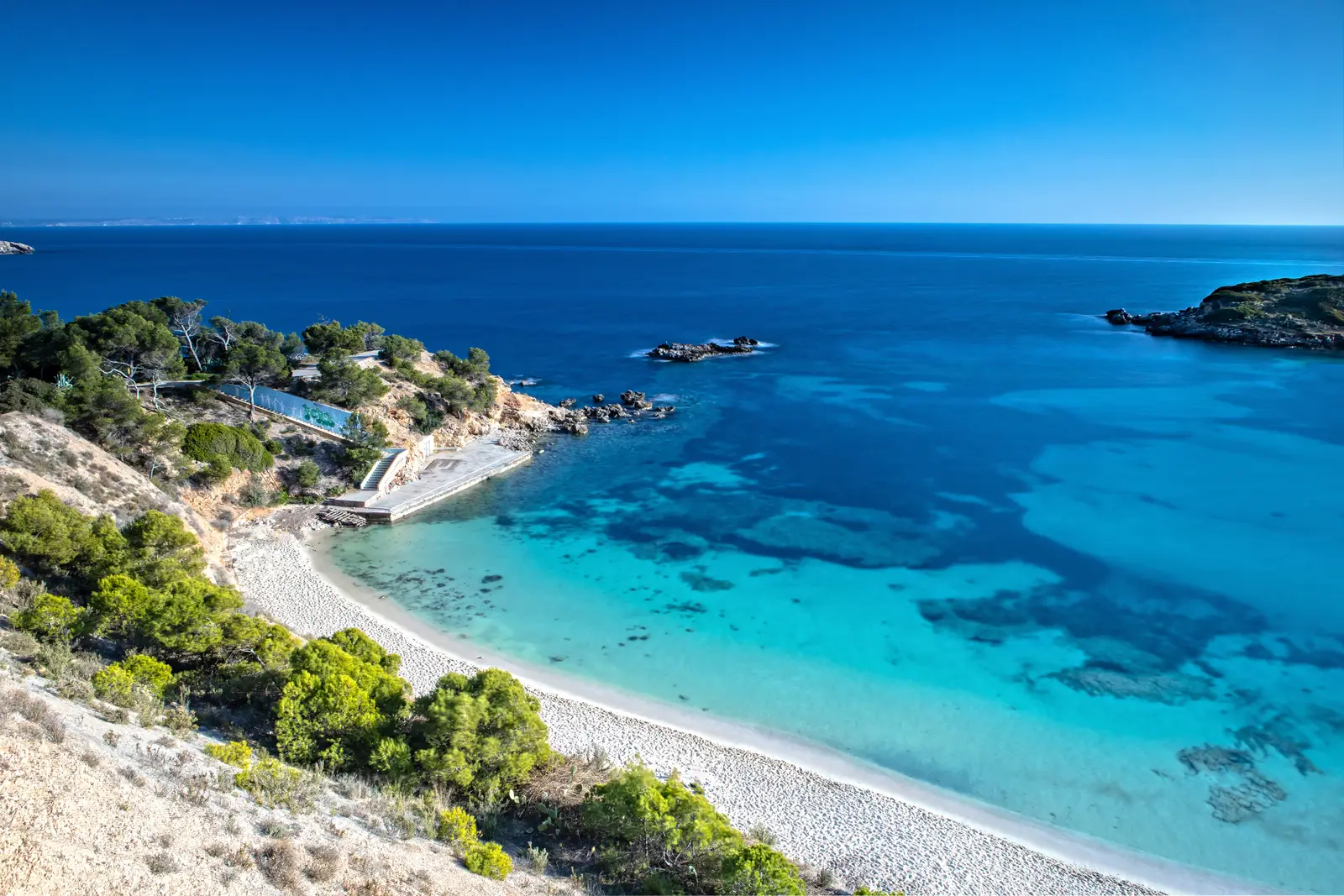
Between the known villages of the southeast there is a run of small inlets, many with no road, with water of a turquoise that looks retouched in photographs and is not. It is the stretch where a boat changes the trip most: you move from cove to cove in minutes and eat at anchor, and by mid-morning there is nobody there.
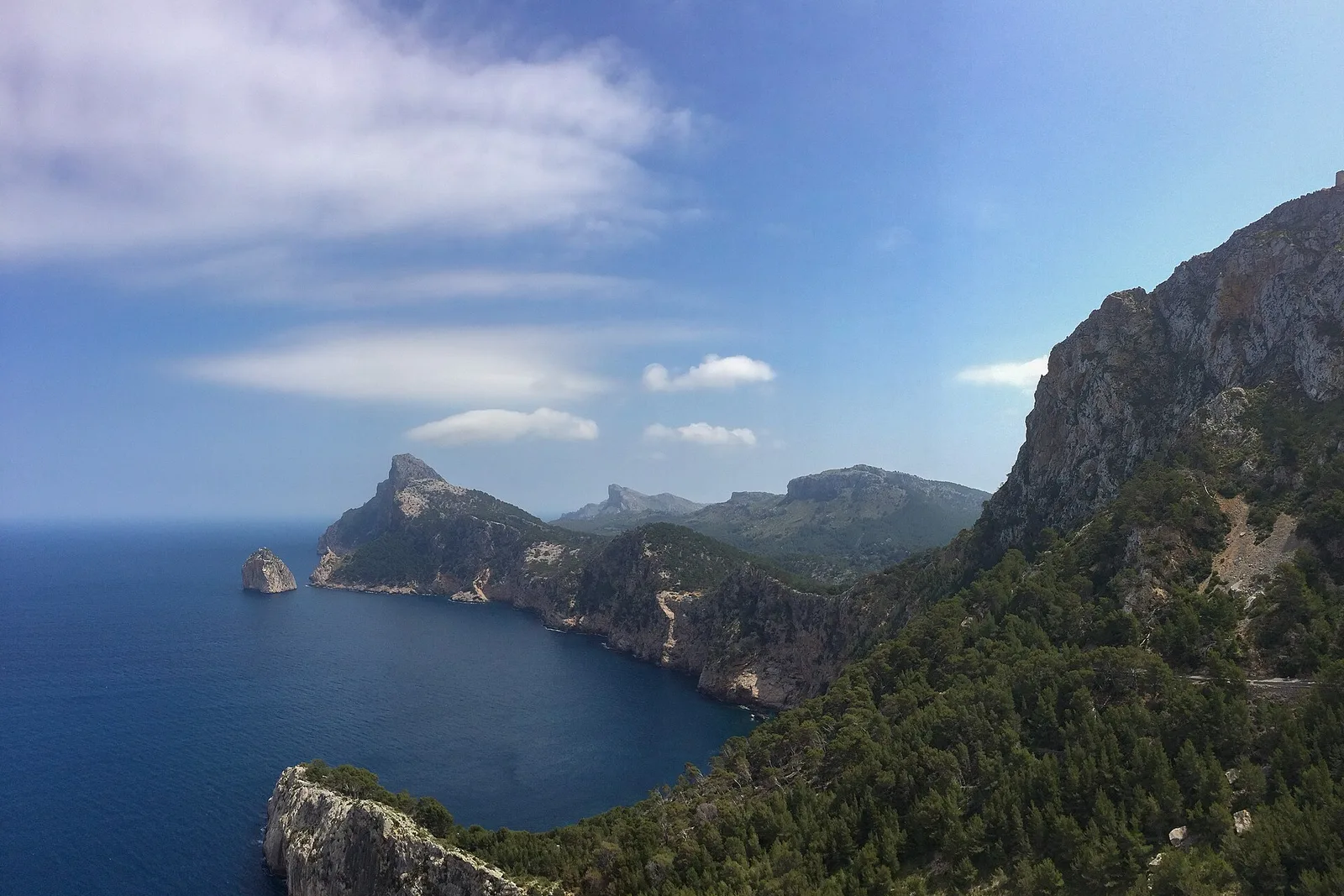
Further south is Es Trenc, which does have access and parking, and is therefore best done first thing. And on the north coast, Cala Tuent and the area around Cap de Formentor complete the map of what looks better from outside than from within.
Planning the day
- Set out early. It is the difference between an empty cove and a full one, and it costs no more.
- The west coast, late afternoon. When the sun faces the Tramuntana head-on there is no competing with it.
- Count the distance. Mallorca is big by sea too: you do not cross the island in a morning.
- If you are staying in the Serra, first look at how access and the roads work, because the departure harbour may be a long hour from your house.
- And if the idea is to finish at a table, there are the island’s eleven Michelin stars: several of them right by the harbour.
Our view
In Mallorca a boat does not buy access: it buys silence and timing. That is an important distinction, because it means anyone who does not sail is missing nothing —except Sa Foradada head-on—; they will simply see it with more people and in worse light.
That said, there is one moment that only happens from the water: leaving Port de Sóller first thing and watching the whole Tramuntana rise from below. While it lasts, there is nothing else to do. And that is, exactly, our definition of luxury.
The places mentioned and their access come from our own records, checked on 21 September 2026. This guide recommends no particular charter company and charges nothing for inclusion.