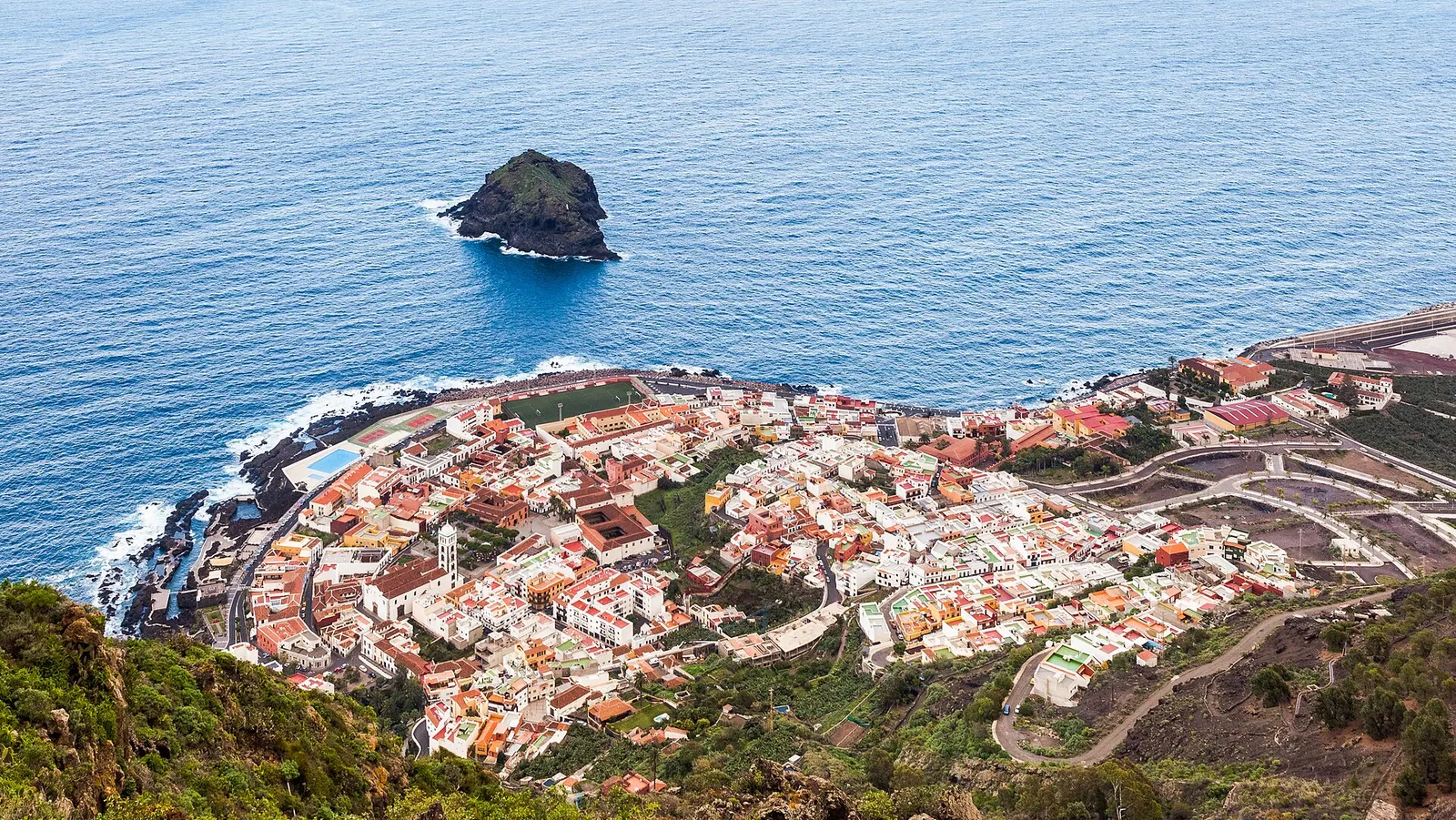
Some towns are quiet because nothing ever happened there. Garachico is quiet for the opposite reason: everything happened at once, one May morning three centuries ago, and it has been in no hurry since to become what it once was.
The island’s richest port
Through the sixteenth and seventeenth centuries, Garachico was Tenerife’s great port. Much of the island’s trade with Europe and the Americas left from here, and the town grew with convents, merchants’ houses and a bustle that is hard to picture in its streets today.
On 5 May 1706 the Trevejo volcano — also known as Arenas Negras — erupted in the heights above. The lava flows ran down to the coast, buried much of the town and, above all, filled in the harbour. The sea retreated before the lava, and with it went the town’s reason for being: trade moved to other ports on the island, largely to Puerto de la Cruz.
Garachico did not move. It rebuilt itself on top of its own ruin, on the cooled lava, with the sea a little further away than before.
What survived
The castle of San Miguel, a small stone fort built at the end of the sixteenth century facing the sea to protect the port from pirates, was one of the few buildings to come through the eruption without serious damage. It still stands by the shore, and it is the image that sums the town up best: something built for one danger, while another came from a different direction.
The Puerta de Tierra, now in a small park, was the arch through which you entered the old port. The sea reached this far before the lava pushed it back. Standing beneath that arch and looking towards the shore, now some distance away, explains 1706 better than any information board.
El Caletón: the volcano’s legacy
In front of the castle, the lava that reached the sea cooled into El Caletón, a series of natural pools of black rock that fill and empty with the tide. Access is free and, when the sea is calm, it is one of the loveliest places to swim on the north coast.
When the sea is calm — we mean it. The north of Tenerife takes the full Atlantic swell, and on some days the waves break right over the rocks. If there is swell or the area is signposted as closed, it is not a day for swimming: look from above and come back another time.
Other lava pools on the island, with their precautions, in Tenerife’s natural rock pools.
What to do in Garachico
Very little, slowly. Walk the old town, step into a church or convent if it is open, sit in the square, eat something by the sea and stay to watch the evening settle over the Atlantic. Half a day is enough; a whole day is not too much.
The town is best enjoyed outside the hours when coach excursions arrive. Early in the morning or late in the afternoon, Garachico belongs again to the people who live there.
Getting there
Garachico is on Tenerife’s north-west coast. The easiest way is by car, parking at the edge of town; TITSA buses also run here, with timetables you should check on their website or app before setting out (information as of October 2026).
Further reading
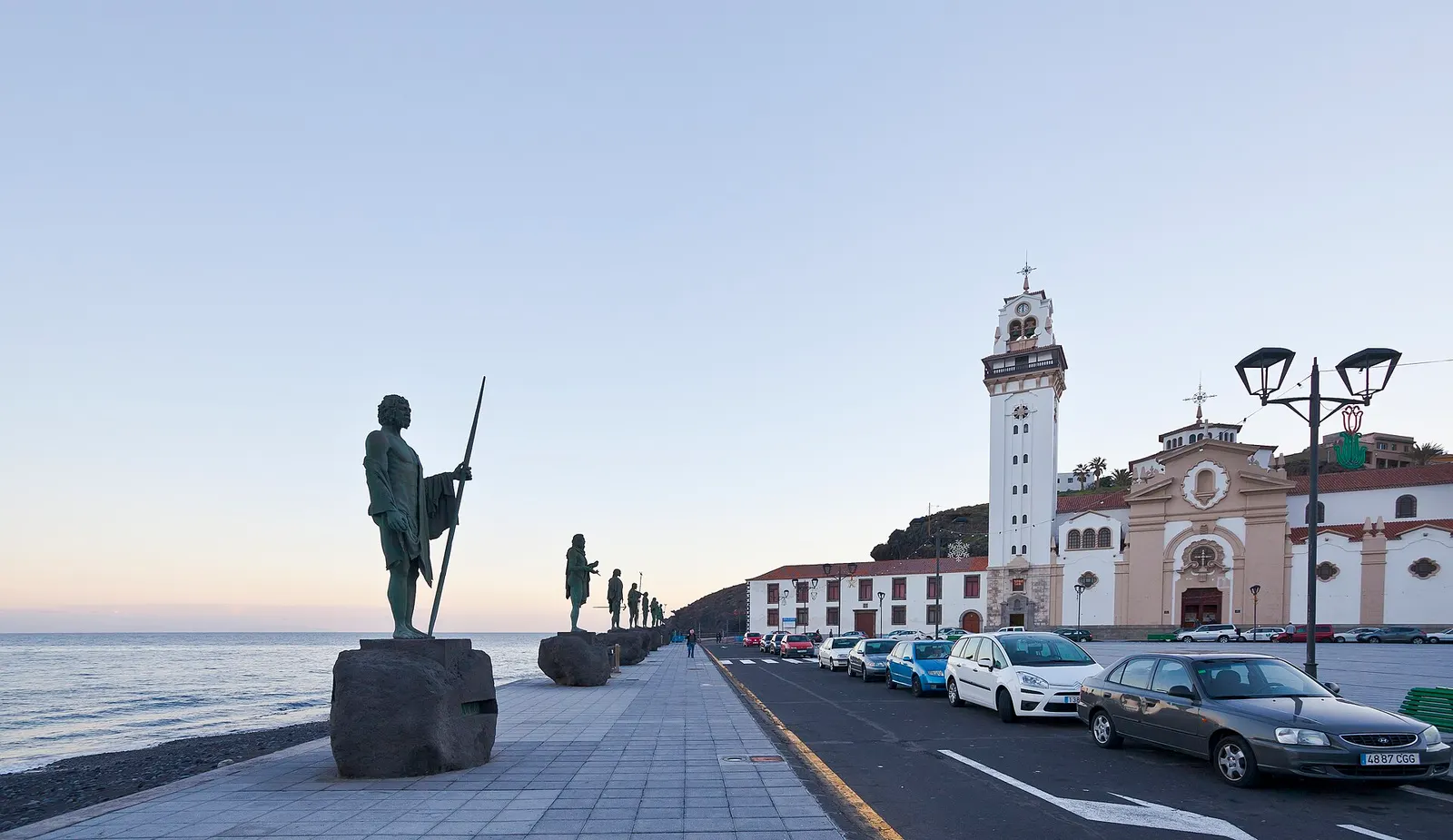
If this is the north that draws you, the island’s story before the conquest makes sense in Candelaria, facing the nine menceyes, and the story after it in La Laguna, the city without walls.
Our approach
The dates and the names of the volcano come from the island’s heritage and geotourism guides. Sources disagree on the exact year the castle was built, so we do not give one. Sea conditions at El Caletón change from one day to the next: check local warnings before you swim.