Tenerife has two entries on UNESCO’s World Heritage List. One is Mount Teide, visible from almost anywhere on the island. The other lies inland, on a high plain often wrapped in cloud, and hardly anyone puts it first: San Cristóbal de La Laguna, inscribed on 4 December 1999.
No single monument explains it. What UNESCO protects is the plan: the way its streets were laid out more than five centuries ago, and the fact that, in essence, it is still there.
A town designed not to defend itself
After the conquest of the island at the end of the fifteenth century, La Laguna was founded inland, away from the coast. Its lower part, the Villa de Abajo, was laid out in 1498 as a grid: straight streets, regular blocks, open squares. And no walls.
That absence is what makes it unusual. The University of La Laguna describes it as the first unfortified colonial town to keep its original layout almost intact, and presents it as a model for many cities in the Americas founded later. It is worth reading with the right nuance: this is a widely held interpretation among historians and writers, not a lineage proven street by street. But walk through La Laguna and then through the centre of a colonial city in the Caribbean, and you understand why people say it.
We cover the island’s other World Heritage Site in why Teide is World Heritage.
How to walk it
On foot, ideally early in the morning or as the afternoon fades. Much of the old town is pedestrianised and flat, so the walk never tires: you drift from one street to the next almost without noticing.
Calle San Agustín is the spine. Along it come stately houses, the Palacio Lercaro — now home to the Museum of History and Anthropology of Tenerife — and the ruins of the church of San Agustín. At the far end stands the church of La Concepción, its tower visible from afar and its timber ceiling in the Mudéjar tradition; it is considered the first church founded on the island.
The Cathedral of Nuestra Señora de los Remedios has a different story: it was a parish church for centuries and only became a cathedral in the early nineteenth century, when the diocese was created. Its façade is neoclassical and its interior was rebuilt in the twentieth century.
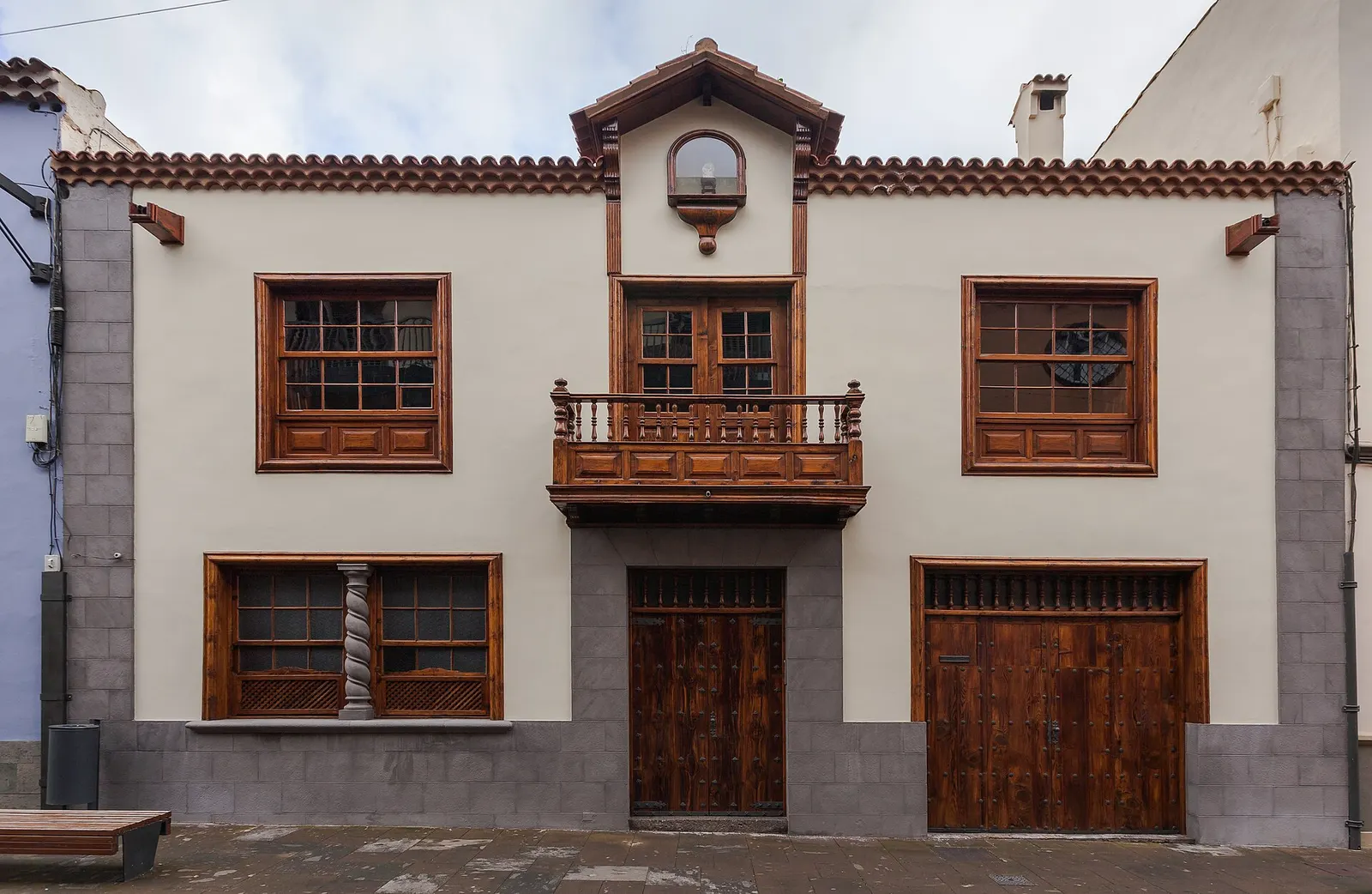
Wooden balconies are the detail La Laguna repeats most and the one that defines it best: low houses around an inner courtyard, projecting balconies, large doors that, when left ajar, reveal a garden.
A town, not a museum
La Laguna has not frozen itself for visitors. It is a university town, and you notice it in the terraces, the bookshops and the rhythm of the evening. Lifelong residents, students and offices share the same buildings that carry the heritage value. What is protected is not a stage set: it is a town still used the way it was conceived.
So the best way to see it is with very little planned. A morning to walk, a coffee in a square, a museum if you feel like it. Then come back at another hour: in mist, the town changes completely.
Getting there
La Laguna is a few kilometres from Santa Cruz and very close to Tenerife North airport. From Santa Cruz, the easiest way in is tram line 1, which links the two cities and drops you a short walk from the old town. By car, park outside the historic centre and walk in.
For everything else about getting around the island, see our guide to getting around Tenerife.
When to go
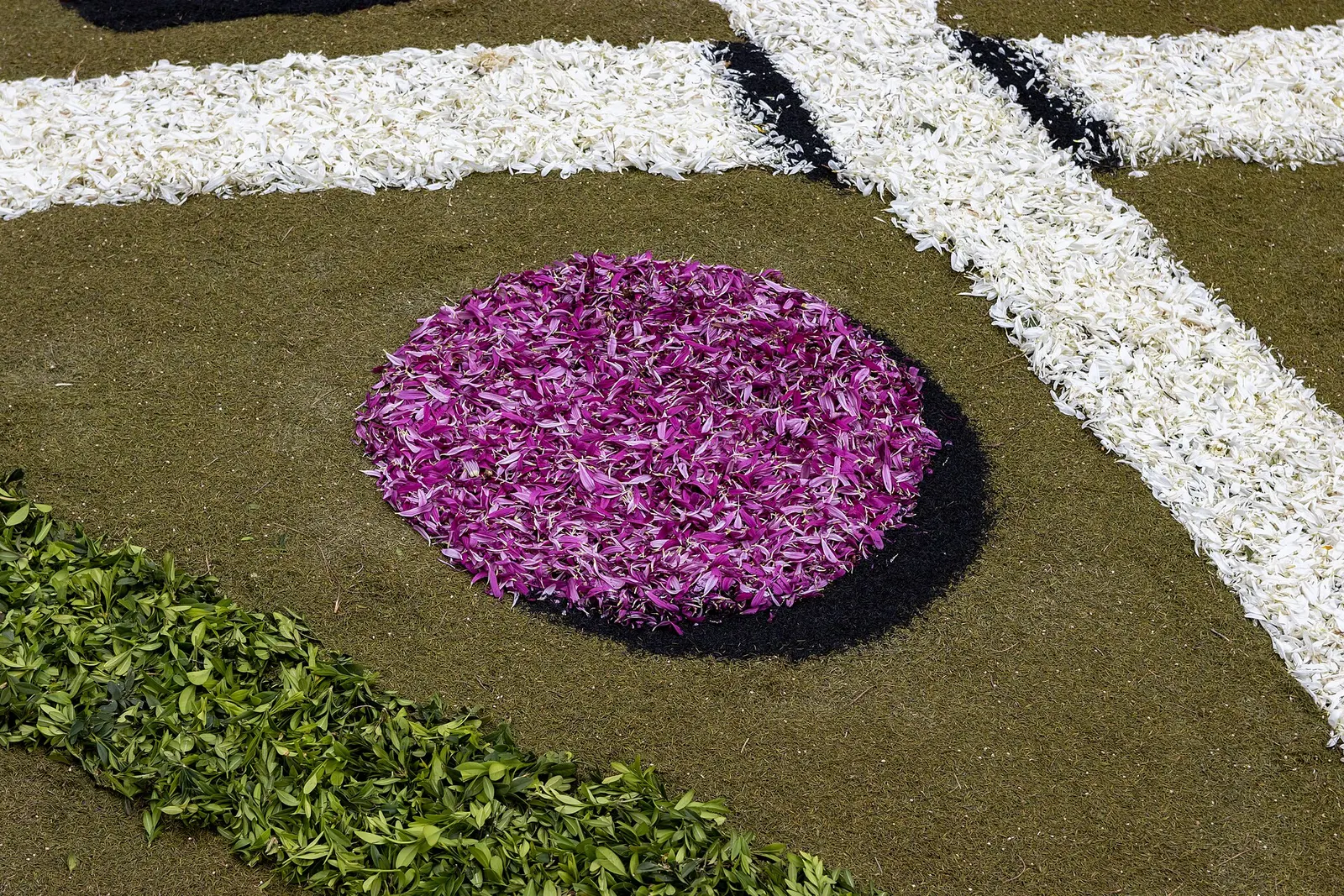
Any time of year. It is cooler and damper than the south coast, so bring a layer even in summer. In July the town celebrates the Romería de San Benito Abad, one of Tenerife’s festivals that best explain the island. If you travel in June, the tradition of the Corpus Christi carpets in La Orotava is half an hour away by car.
Our approach
We describe what UNESCO protects and what anyone can see on foot. The dates of inscription, of the street plan and of the cathedral come from the university, from Canary Islands public media and from heritage guides; opening hours of museums and churches change, so check before you go (information as of October 2026).