The question almost everyone asks before buying in Menorca — “which area is best?” — is, in truth, the wrong question. There is no best area; there is an area that fits you. The island is small (you cross it end to end in under an hour), yet within that scale live very different worlds: the rugged, windswept north has nothing in common with the gentle, white-sand south, and living in the old quarter of Ciutadella is another life entirely from a coastal development that empties out in February.
This guide is not a list of prices per square metre. Those figures shift every quarter, anyone can summarise them and, above all, they won’t tell you where you’ll be happy on a Tuesday in January. What really makes for a good purchase in Menorca is something else: which way the wind blows, which towns stay alive out of season, how much you’ll drive each day, and the character of each place. That’s what this piece is about. If you want the full mental order of the purchase itself — paperwork, cautions, taxes — we set it out in our guide to buying a home in Menorca; here we focus on what comes first: choosing the place.
Key facts
- North and south are almost two islands. The north is dark rock, tramuntana wind and austere beauty; the south is white sand, pinewoods and calm waters. The wind, more than the price, should decide your area.
- Town or coast changes winter completely. The towns along the central spine — Maó, Ciutadella, Alaior, Es Mercadal, Ferreries — keep life all year round; much of the coastal hospitality and retail closes out of season (indicative; worth checking on the ground in the specific place).
- A car is practically essential for living here year-round, wherever you settle. It’s the factor most people underestimate.
- Prices are an order of magnitude, not the criterion. As an indicative reference as of June 2026, the most sought-after areas sit around €3,000–4,400/m²; always verify with a local professional before deciding anything.
- Decide by how you want to live all 365 days, not by the August snapshot. A house that only works in summer is half a house.
North or south: the question that really matters
Menorca splits in two by the character of its coast, and that invisible border shapes daily life more than anything else.
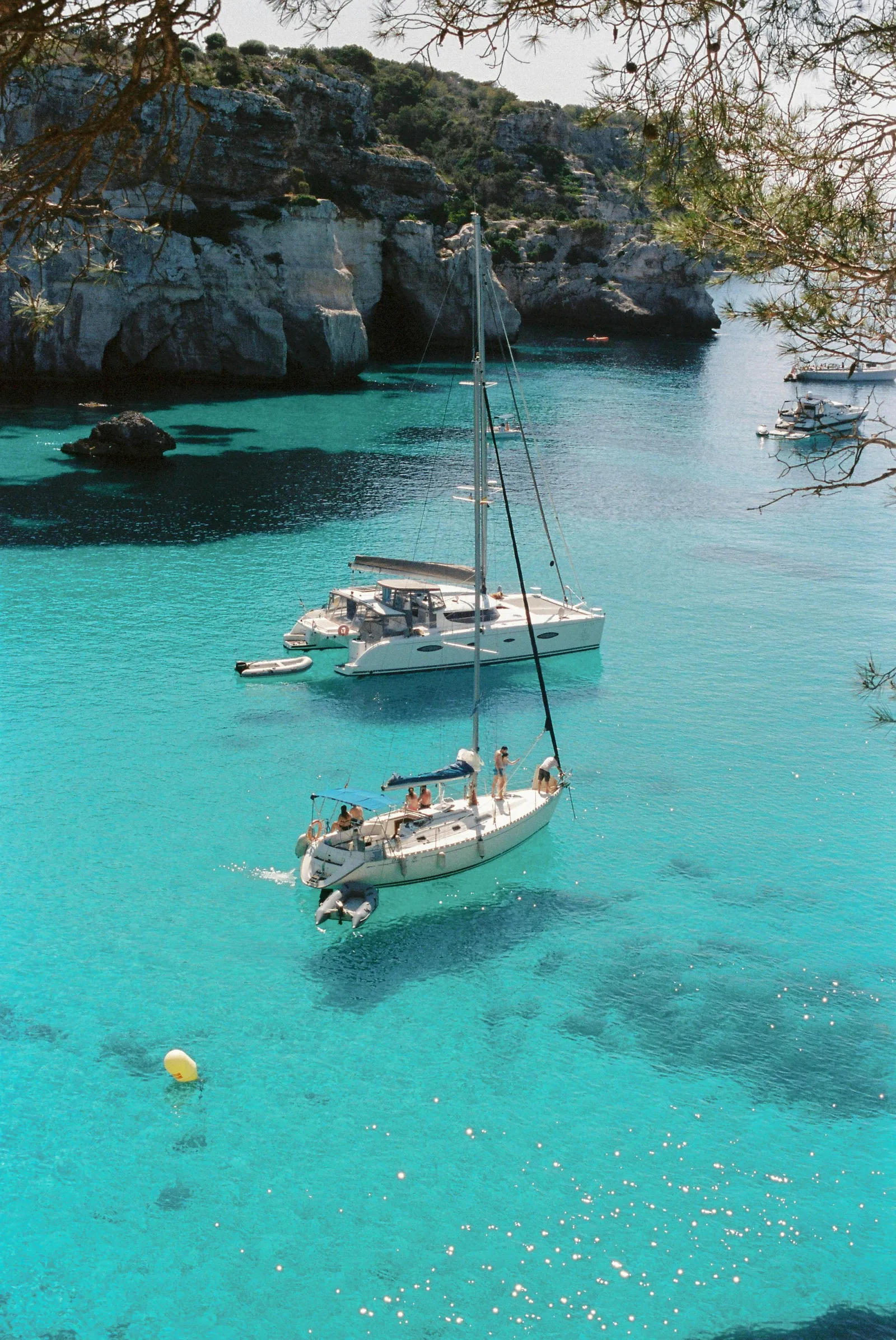
The south is the gentle face. Pale-sand coves, a backdrop of pinewood, waters that tend to calm and a soft light. The southern coastline — the area around Sant Lluís, Cala Galdana, the Es Migjorn stretch and Ciutadella heading south — concentrates much of the coastal residential demand, precisely because it is the most liveable Menorca: less wind, gentler sea, easier access to a swim.
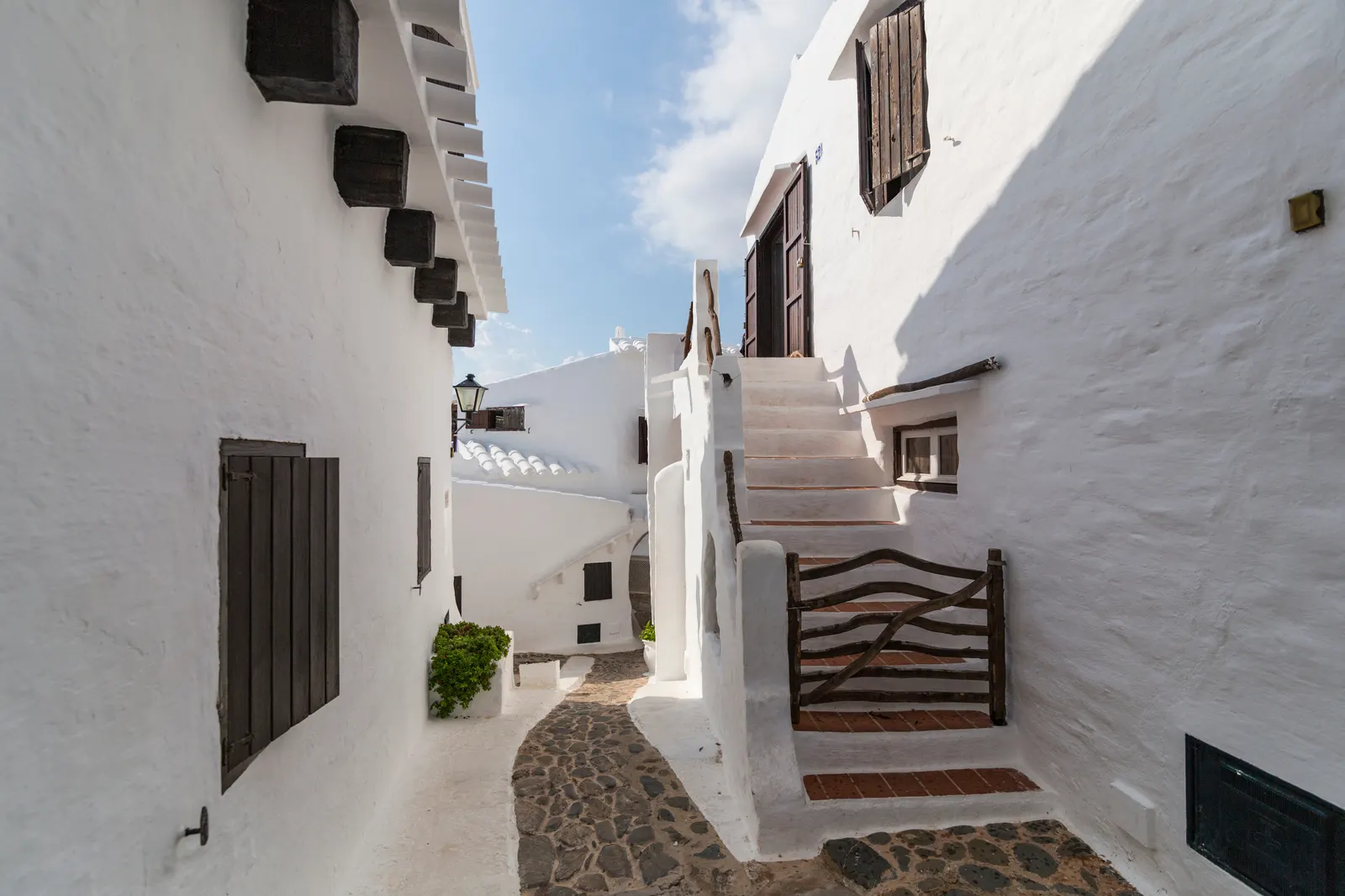
The north is the wild face. Reddish and black rock, coves that look almost lunar, low scrub shaped by the wind, and a beauty that is more austere than sweet. Here the tramuntana rules — the north wind that can blow hard for days on end, above all between November and March. It is no small detail: the tramuntana defines the traditional architecture (whitewashed houses, oriented for shelter), bends the wild olive trees and, yes, marks the mood of those who live facing it.
How to choose between the two: don’t ask which is prettier — both are — ask yourself how you handle the wind. Those who seek solitude, raw landscape and don’t mind (or even love) the constant murmur of the tramuntana flourish in the north, and usually pay less for it. Those who want a milder climate, an easy swim and a more sheltered daily life are better in the south. The orientation of the particular house matters as much as the area: a good northern house, well placed in the lee of the wind, can be more comfortable than a badly oriented one in the south.
Town or coast: what decides your winter
This is the other great fork in the road, and the one most people underestimate. In summer everything is alive; in winter, not so. And the difference between living in a town and living in a coastal development is, quite literally, the difference between having neighbours in January or not.
The towns along the island’s central spine — Maó and Ciutadella as cities, and the inland towns such as Alaior, Es Mercadal, Ferreries or Es Migjorn — stay alive all year round: shops open, a weekly market, a school, a doctor, the bar where they know your name. This is the Menorca that keeps working when the tourism leaves.
The coastal developments, by contrast, are largely built for summer. Many concentrate their activity from May to October and empty out off-season; part of their hospitality and retail closes through the cold months. (This varies a great deal from one place to the next, and it’s worth checking in the specific spot before buying: ask what opens in February, not in August.) Living in one year-round is possible, and for some it’s exactly what they’re after — absolute quiet, nature at the door — but it means accepting that you’ll depend on the car for almost everything and that winter will be solitary.
The practical rule: if you’re going to spend whole winters on the island, look at the towns first; if you mostly come in summer, the coast makes sense. And in any case, visit your candidate area in low season before you sign. On why thinking about winter changes everything — in the house and in life — we write at length in living in Menorca year-round.
The car: the factor almost everyone underestimates
Before we talk about municipalities, a fact that weighs more than the price: to live in Menorca year-round, a car is practically essential. This isn’t a convenience tip, it’s a structural reality. Public transport exists but is limited and highly seasonal; the distances between towns, coves, the hospital or the airport are covered by car. The further your house sits from a town, the more you’ll depend on it — and the more kilometres you’ll clock up each week without noticing.
This should enter your area decision from the very start. A beautiful, isolated house in the countryside is wonderful until you count it in daily journeys: school, the shop, the doctor, your social life. Living near a town — or within it — cuts that dependence; living far away multiplies it. There’s no right answer, but you should decide it with your eyes open.
The character of each area, town by town
Beyond north/south and town/coast, each place has its own temperament. These mini-profiles don’t aim to rank — there’s no better or worse — but to help you recognise which one you belong to.
Ciutadella: the stately one
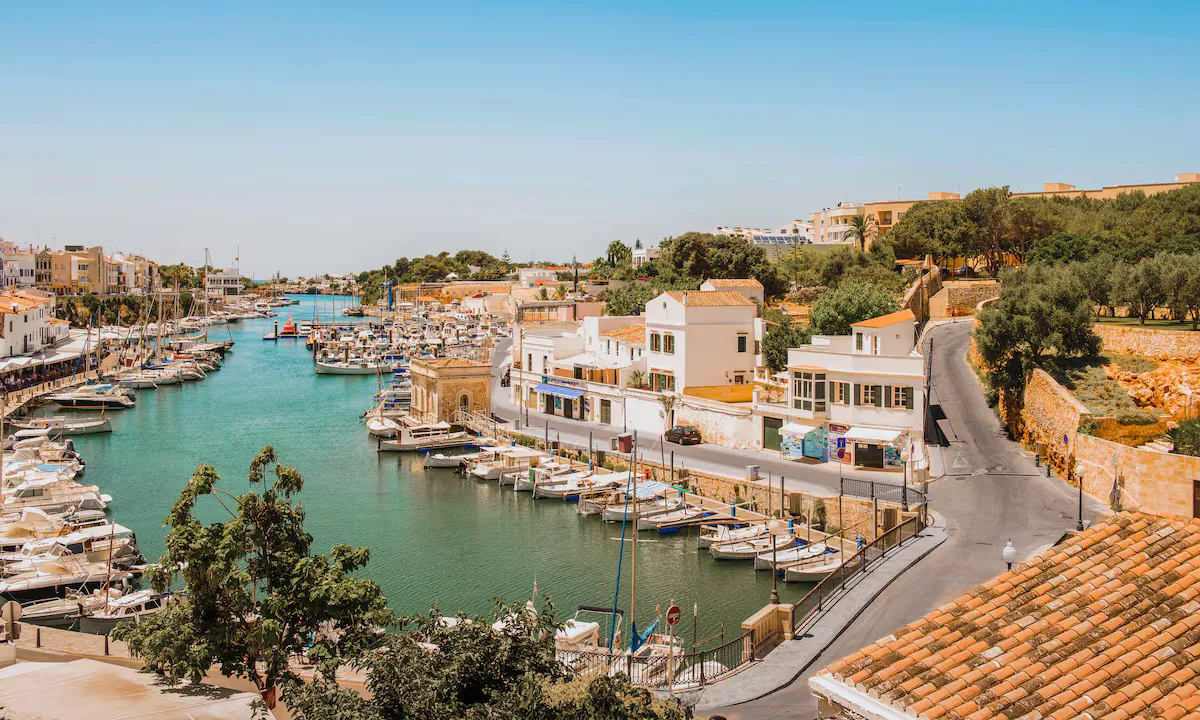
The western city is the island’s most monumental: palaces, a Gothic cathedral, stone alleyways, sunsets over its narrow harbour. It has a living, elegant old quarter, a cultural life of its own and an aristocratic touch you won’t find anywhere else in Menorca; we portray that character in Ciutadella, city of palaces.
- Winter life: high. It’s a real city, with its own momentum out of season.
- Who it suits: anyone who wants urban life with a historic soul, culture and sociability, without giving up the sea nearby. It’s also the area of greatest demand — and, as a result, of the highest prices on the island.
Maó: the harbour
The capital, in the east, lives around one of the largest and most beautiful natural harbours in the Mediterranean. It is more administrative and commercial than Ciutadella, with a British heritage you can read in the architecture and an open, water-facing harbour character. Here you’ll find the airport and the island’s main hospital.
- Winter life: high. An administrative and services hub; it works all twelve months.
- Who it suits: anyone who values connectivity (airport close by), services within reach and a harbour atmosphere. It tends to offer better value for what you pay than Ciutadella.
Es Mercadal, Alaior, Ferreries: the authentic interior
The towns at the centre of the island, strung along the axis that links the two cities, are the least touristy and most everyday Menorca. Es Mercadal, at the foot of Monte Toro; Alaior, with its cheese-making and shoemaking tradition; Ferreries, the highest, set beside green ravines. They offer authenticity, town life and, generally, better value than the two cities.
- Winter life: high. These are towns lived in all year round, with their shops, their market and their community.
- Who it suits: anyone seeking to belong to a real community, to buy with more common sense and to live the agricultural, inland island. From here the sea — north and south — is a short drive away.
Es Migjorn Gran: the discreet one
The smallest and most peaceful municipality, in the south-centre, with access to some of the loveliest coves and a particularly unhurried rhythm. For anyone who wants the south without the bustle of the most sought-after areas.
- Winter life: moderate. A small, serene town; quiet life rather than busy.
- Who it suits: anyone who prizes calm above all else and doesn’t need a wealth of services at the door.
Es Castell and Sant Lluís: the sheltered east
At the eastern tip, beside Maó, Es Castell (of British military origin, home to Cales Fonts) and Sant Lluís (of orderly layout, French heritage) form a well-regarded residential setting, close to the capital and to the south-eastern coves. Market comparisons tend to place them in the mid-to-upper bracket of the island’s east.
- Who it suits: anyone who wants to be near Maó and the airport, in a quiet setting with personality, without moving into the city itself. (Their day-to-day character out of season is worth checking in person: each town in the east has its own winter pulse.)
And the prices — where do they fit in all this?
In their proper place: they matter, but they shouldn’t rule. As an indicative order of magnitude as of June 2026, the residential market in the most sought-after areas moves within these figures:
- Ciutadella: around €4,400/m² (fotocasa, June 2026), the most expensive area and the one that has risen most: it closed 2025 at an all-time high, with an annual rise above 20% according to the local college of estate agents (Coapi).
- Maó: around €3,460/m² (fotocasa, June 2026).
- Es Mercadal: around €4,000/m² as a municipal average — a figure that includes its coastal developments (Fornells, Arenal d’en Castell), not just the inland town.
Two essential warnings. First: these figures are indicative and they date quickly. The Menorcan market is volatile and has risen sharply in recent years — with Ciutadella leading the way — so take them as a snapshot of a moment, not a fixed price. Before deciding anything, confirm it with a local agent or valuer, who knows the real state of the market in your area and for your type of house. Second, and more important: price should not be your criterion for choosing an area. Two houses at the same €/m² can offer opposite lives depending on the wind, the orientation, the proximity to a living town and the kilometres you’ll drive each day. That — and not the figure — is what separates a good purchase from an expensive mistake. And don’t forget that the house is only part of the sum: everyday island life has rules of its own, and we set them out in the real cost of living in Menorca.
For the market in rural estates and high-end country houses, incidentally, there is no reliable price per square metre: these are deals closed on total value and handled discreetly. If that’s your path, the value lies elsewhere — in restoration done with judgement — and we tell that story in a restored stone house in the interior and, with the building work in mind, in renovating a Menorcan house.
How to choose well: our method
If we had to boil it down to an order of decision, it would be this:
- Start with the wind, not the price. Decide first whether you’re a north person (austere, windswept, solitary) or a south person (gentle, calm, more in demand). It’s what changes least and shapes daily life most.
- Then town or coast, according to your winter. If you’re going to live here through the cold months, prioritise a town with a life of its own. If you mostly come in summer, the coast makes sense.
- Count the kilometres before you fall in love. Work out the real daily driving — school, shopping, doctor, social life — for the specific house you like. Isolation is precious, and costly in time.
- Visit in February, not in August. Get to know your candidate area in low season: with the shops that open, the wind that blows and the silence that falls. It’s the only honest test.
- And only then, look at the price. Once you know what life you want, the figure helps you choose between similar options; never the other way round.
Our take
The best area in Menorca doesn’t exist in the abstract: what exists is the one that converses with how you want to live. We’ve seen people fall out of love with a beautiful coastal house because winter turned into a desert, and others find their place in an inland town they’d never have looked at in a search engine. The difference was never in the price per square metre, but in having chosen for the life of the 365 days and not for the August postcard.
Choose slowly. Drive the north and the south, sleep in different towns, live a winter before you sign. The island rewards those who understand it and punishes those who buy it blind. And when you get the area right, you’ll know it: not by what it costs, but by how you feel on any ordinary Tuesday in January, with the tramuntana outside and the house warm within.
The best area in Menorca isn’t the most expensive or the prettiest in the photo: it’s the one that fits how you want to live all 365 days of the year.