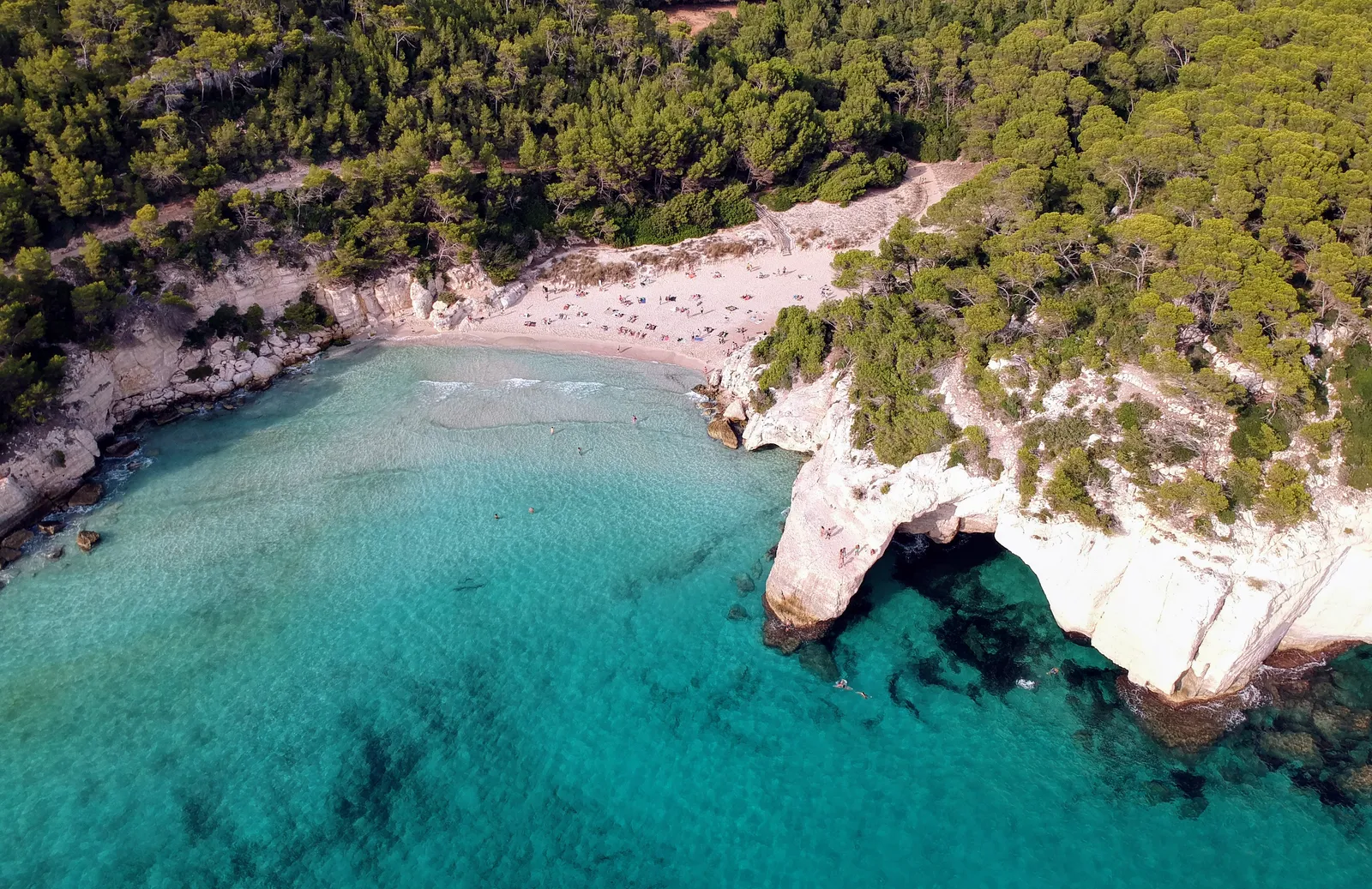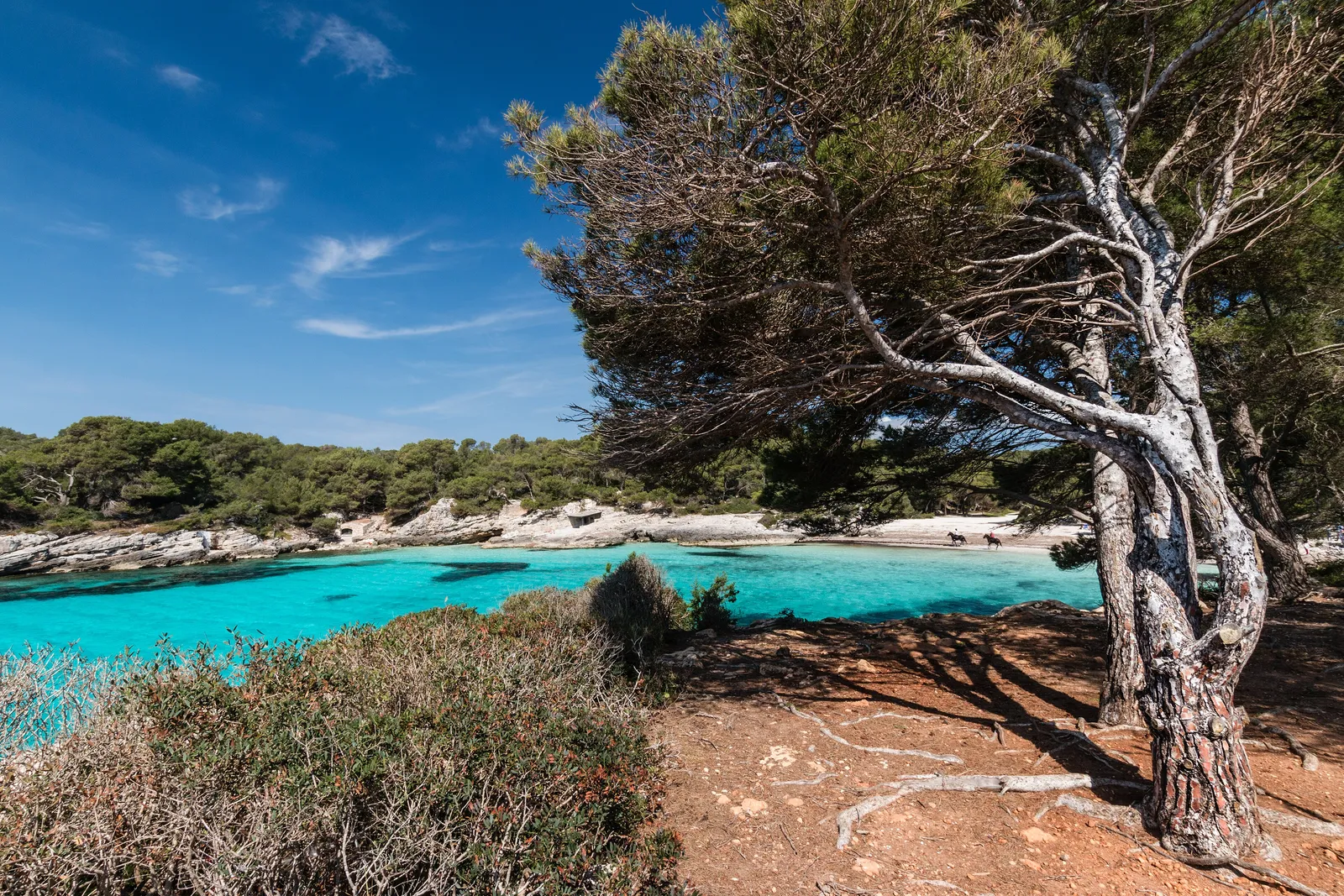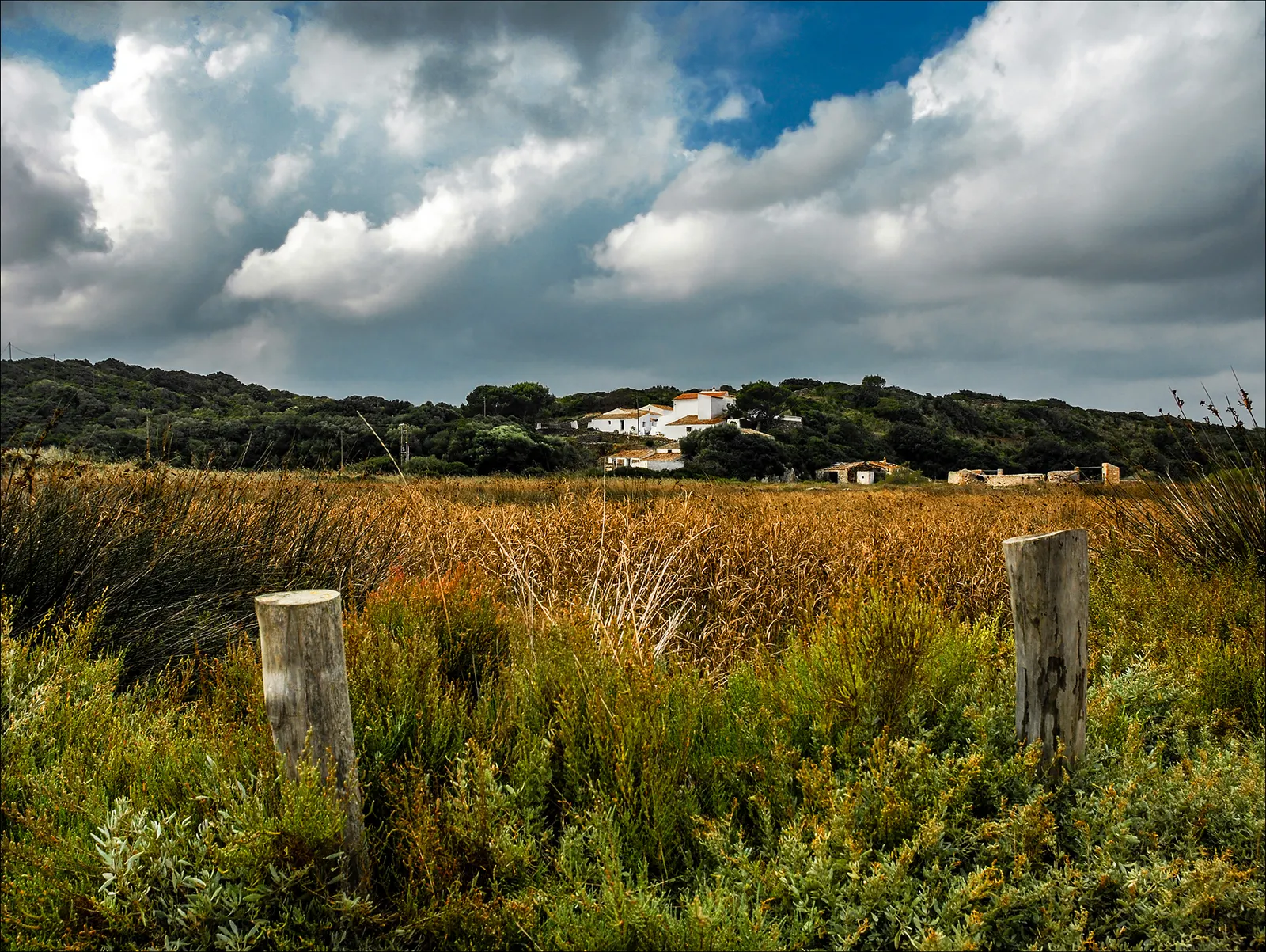
There is one fact that changes the way you look at Menorca: the entire island, without exception, is a UNESCO Biosphere Reserve. Not a single spot, nor a fenced-off park, nor a cove marked with a sign. The whole island —its villages, its dry-stone fields, its coves and, more recently, the sea that surrounds it too— forms part of a single international recognition granted in 1993. Few regions in the world can say the same of their entire territory.
It is worth understanding clearly what that label means, because it is often misread. A Biosphere Reserve is not a national park, nor an area where it is forbidden to live or work. It is precisely the opposite: a UNESCO designation that rewards and promotes the balance between human activity and the conservation of nature. It recognises a landscape that has been inhabited, farmed and cared for over centuries, and commits to maintaining that delicate middle ground. Menorca is a Biosphere Reserve precisely because people have lived on it for millennia without destroying it.
In this guide we explain what exactly that designation protects, how the island multiplied its area sevenfold when the reserve was extended out to sea, where its natural heart lies and, above all, why this recognition explains much of what makes Menorca different. Without haste, as befits a place that has made calm its way of being.
The essentials
- What it is: a UNESCO Biosphere Reserve —a designation about balance between people and nature—, not a national park.
- Since when: the whole island was declared a Biosphere Reserve in 1993, for its natural and cultural values.
- The marine extension: approved on 19 June 2019, it extended protection to the sea surrounding Menorca.
- How large it is: it grew from 71,191 ha (1993) to 514,485 ha after the extension, multiplying its area sevenfold.
- The weight of the sea: the marine area reaches 12 miles out to sea —445,005 ha, 85% of the total—; it is the Biosphere Reserve with the largest marine area in the Mediterranean.
- Its heart: the Parc Natural de s’Albufera des Grau is the terrestrial core of maximum protection, managed by the Consell Insular.
What “Biosphere Reserve” means (and what it doesn’t)
The most common misunderstanding is to confuse this designation with a national park. They are different things. A national park protects a specific area and restricts what can be done within it. A UNESCO Biosphere Reserve covers a far wider territory —in this case, an entire, inhabited island— and pursues a more ambitious goal: to show that human development and conservation can coexist.
That is why Menorca can be, at once, an island with villages, working farms, livestock, tourism and everyday life, and a territory recognised by UNESCO. The reserve does not freeze the island into a postcard: it accompanies it. It recognises that the landscape we admire —the dry-stone walls, the green meadows, the wild-olive woods— is the fruit of human labour as much as of nature, and it sets out to keep it that way without breaking it.
Why Menorca earned the recognition in 1993
The declaration came in 1993, and it was no accident. UNESCO valued an unusual combination of natural and cultural values concentrated within a small area. On the one hand, a remarkable biodiversity for a Mediterranean island: wetlands, dune systems, ravines, cliffs and vegetation adapted to wind and salt. On the other, an extraordinary cultural heritage, with thousands of years of human presence carved into the stone.
That marriage between nature and culture is the key. Menorca was not a pristine space to be protected from human beings, but a landscape built with human beings through centuries of balance. The 1993 recognition covered the whole terrestrial part of the island —71,191 hectares at the time— and laid the foundations for a way of managing the territory that remains in force.
The great 2019 extension: when the reserve reached the sea
For more than two decades, the reserve was a matter of dry land. That changed on 19 June 2019, when UNESCO approved its marine extension. It was a leap in scale hard to overstate: the area grew from those 71,191 hectares to 514,485 hectares, multiplying sevenfold.
The reason is simple and, seen today, almost obvious: on an island, the sea is not the edge of the territory but an essential part of it. The new boundary extended protection out to 12 nautical miles, adding 445,005 hectares of sea that represent 85% of the entire reserve. With that gesture, Menorca became the Biosphere Reserve with the largest marine area in the whole Mediterranean. The island stopped protecting only itself and began to protect the waters that give it meaning too.
The heart of the reserve: s’Albufera des Grau
Although the whole island is recognised, the protection is not uniform. A Biosphere Reserve is organised into degrees, and its core of maximum protection in Menorca is the Parc Natural de s’Albufera des Grau, in the north-east. This large coastal lagoon —surrounded by marshes, dunes, islets and a shore of serene waters— is the island’s natural pulse and the place where biodiversity gathers most strongly.
The reserve is managed by the Consell Insular de Menorca, which coordinates its conservation through the Agència Menorca Reserva de Biosfera (menorcabiosfera.org). It is this body that ensures the balance between use and protection that justified the recognition is maintained. If you would like to get to know this core up close, we have devoted a full guide to s’Albufera des Grau, the best starting point for understanding, on the ground, what all of this means.
How you notice the reserve as you travel the island
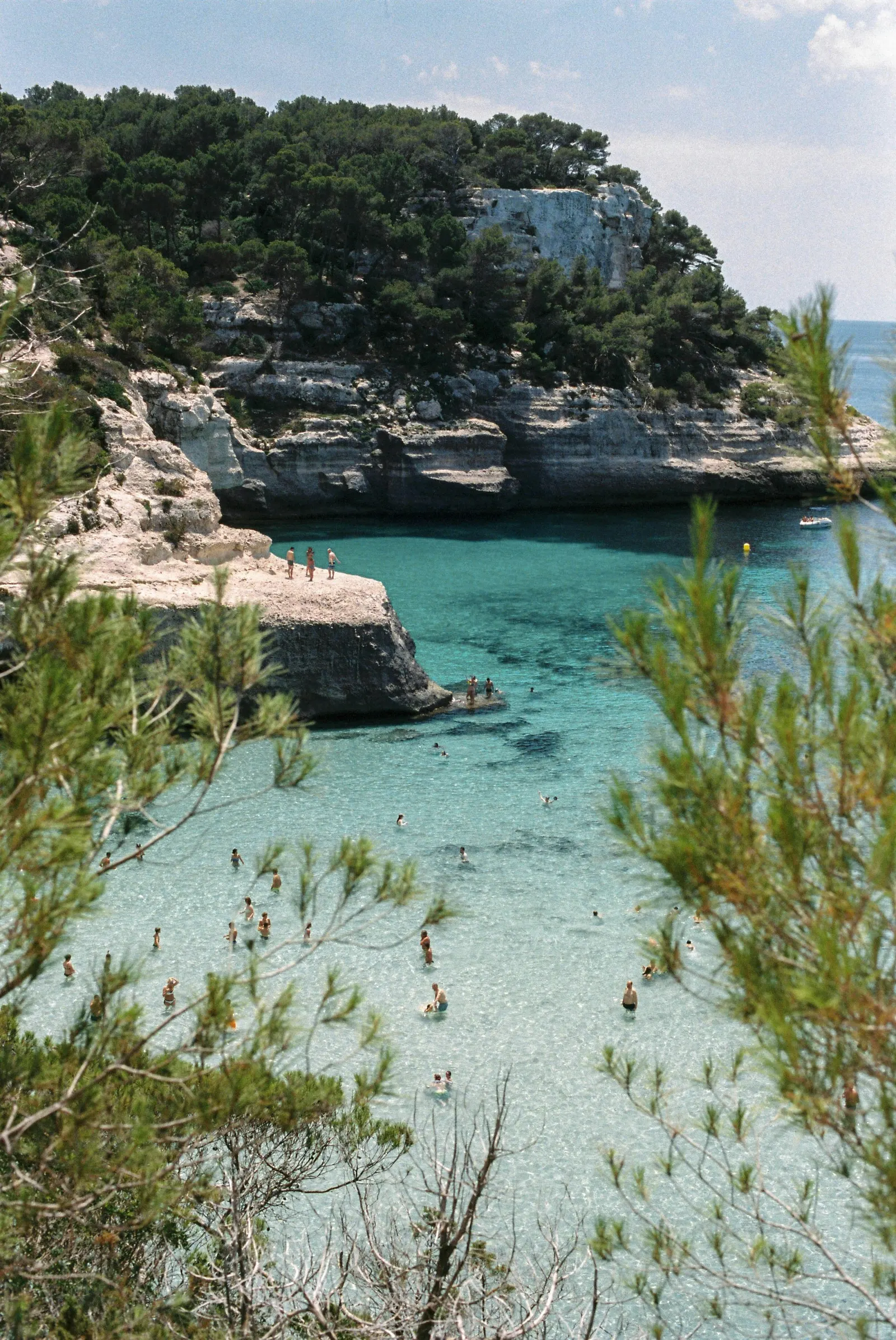
The most revealing thing is that being a Biosphere Reserve does not stay on paper: it can be felt as you travel Menorca. You notice it in the absence of large resorts hugging the sea, in a coast dotted with coves that still look wild, in the miles of dry-stone walls that order the countryside, and in a density of building far lower than that of other neighbouring islands. That restraint is no accident: it is the tangible legacy of half a century of looking at the territory in a different way.
The most honest way to grasp it is on foot, along the Camí de Cavalls, the historic path that circles the entire island and crosses much of the protected coastline. Walking it, you understand why UNESCO placed its seal here: because every stretch is a dialogue between the human and the natural. We have devoted its own guide to the Camí de Cavalls, with its stages and tips for walking it without haste.
What you can (and should) do within the reserve
Being a Biosphere Reserve does not mean the island is closed: it means it is enjoyed with respect. Bathing in its coves, walking its paths, watching birds in the wetlands, sailing along its coast or tasting the produce of its farms are ways of inhabiting the reserve, not of harming it. The difference lies in the how: leaving the cove as you found it, not straying from the paths in sensitive areas, respecting the wildlife and reducing your transport footprint.
UNESCO’s recognition is, at heart, an invitation to a different kind of travel: slower, more attentive, more aware that Menorca’s luxury is not bought but cared for. Those who understand it this way not only enjoy the island more, but help it go on deserving the seal that defines it.
Our take
If you take away only one idea about Menorca, let it be this: the entire island is protected, and that explains almost everything. The calm you are after, the coast that still looks untouched, the absence of visual noise are neither coincidence nor luck: they are the direct consequence of a decision taken in 1993 and reinforced in 2019. It is worth not confusing the terms —it is not a national park, but a UNESCO designation, and the natural park is s’Albufera des Grau, within the reserve—, because understanding clearly what it is helps you travel better. Menorca does not protect itself in order to keep away those who arrive, but so that what they find is worth the journey. That is its quiet luxury: an island that decided, long ago, never to stop resembling itself.