Menorca is almost always told through its coves, and that is only half fair. The other half of the island lives in its villages: white, human-scale settlements that were not built to be photographed but to make a living from the land, the sea or a trade. That is the difference from so many Mediterranean destinations: here the villages are still real places, with bakeries that open in January and neighbours hanging out washing ten metres from the postcard.
This list gathers the nine that, in our judgement, justify the trip. It is not an inventory of every settlement on the island but a selection with criteria: each one offers something the others do not, and for almost all of them we have written a full guide, linked from its entry. One honest note before we start: the list includes one small historic city, Ciutadella, because leaving it out on a technicality would be absurd; Maó, the capital and great harbour, gets its own story.
The essentials
- How many and where: nine settlements spread across the whole island — the white south-east (Binibeca Vell, Sant Lluís), the seafaring north (Fornells), the two historic ends (Ciutadella and Es Castell) and the inland spine (Alaior, Es Mercadal, Ferreries, Es Migjorn Gran).
- The golden rule: early morning or late afternoon. It is the difference between a place and a crowded stage set.
- Without a car: the line 01 bus links Maó and Ciutadella in one hour (5.75 euros, summer 2026 fare), stopping at Alaior, Es Mercadal and Ferreries.
- When: spring and autumn for the calm; the inland towns work all twelve months of the year.
- The nuance almost nobody mentions: the island’s most photographed village, Binibeca Vell, is a development from around 1972. It is still worth the visit — knowing what it is.
1. Binibeca Vell, the white labyrinth of the south-east
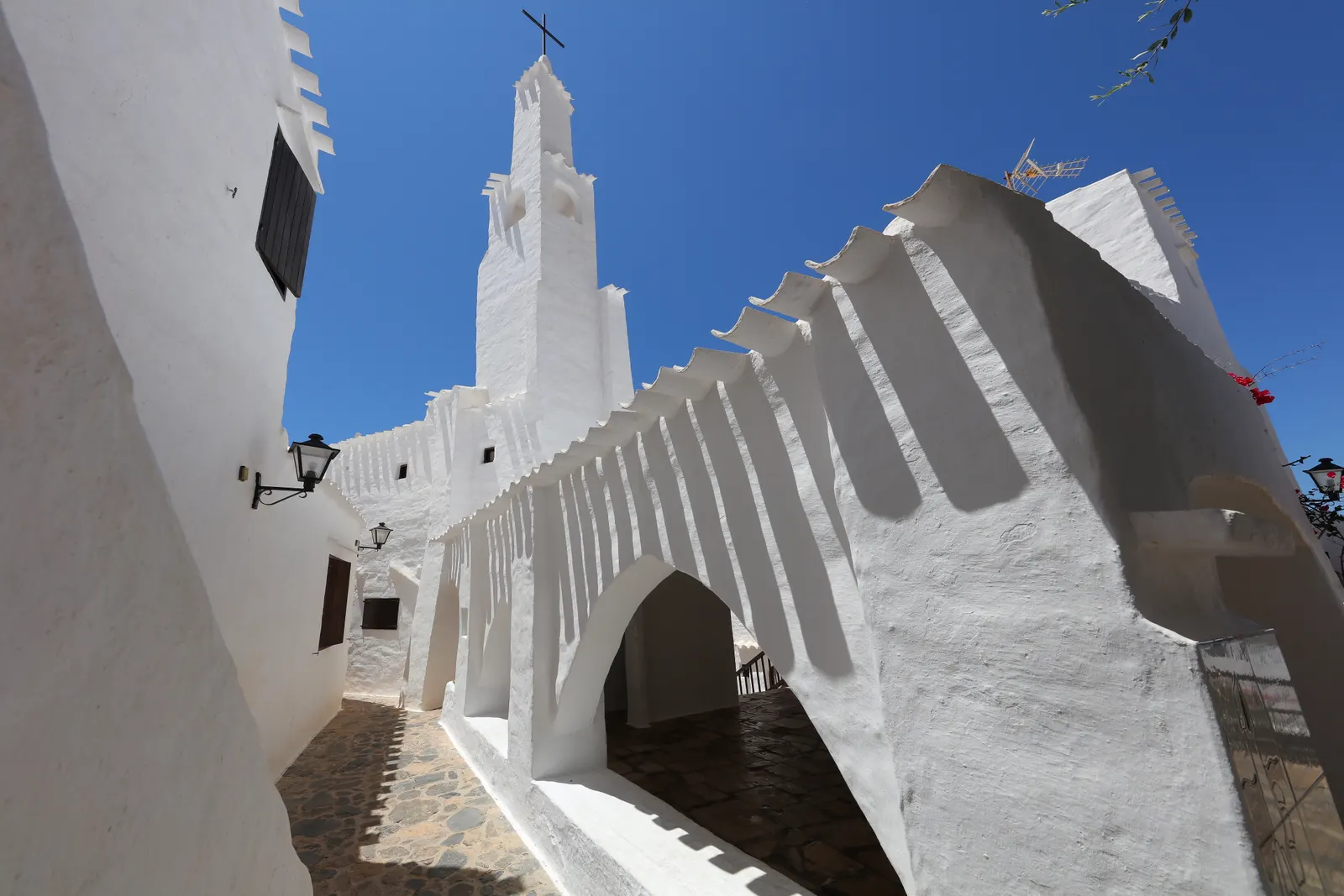
We start with the icon, and with the truth up front: Binibeca Vell is not a centuries-old fishing village but a development built around 1972 that imitates, with a great deal of craft, Menorca’s traditional white architecture. Knowing this takes nothing away from its beauty; it puts it in its rightful place. Its whitewashed alleys, narrowing until they almost graze your shoulders, form one of the most photogenic corners of the Mediterranean — and one of the most delicate, because it is an inhabited, privately owned place whose residents asked in 2024 for visiting hours to be limited.
The right way to see it: at dawn or in the late afternoon, in silence, and in an unhurried 45-60 minutes. How to experience it with respect, and what to chain together nearby, is in our guide to Binibeca Vell and the white south-east.
2. Fornells, the fishing village of the north
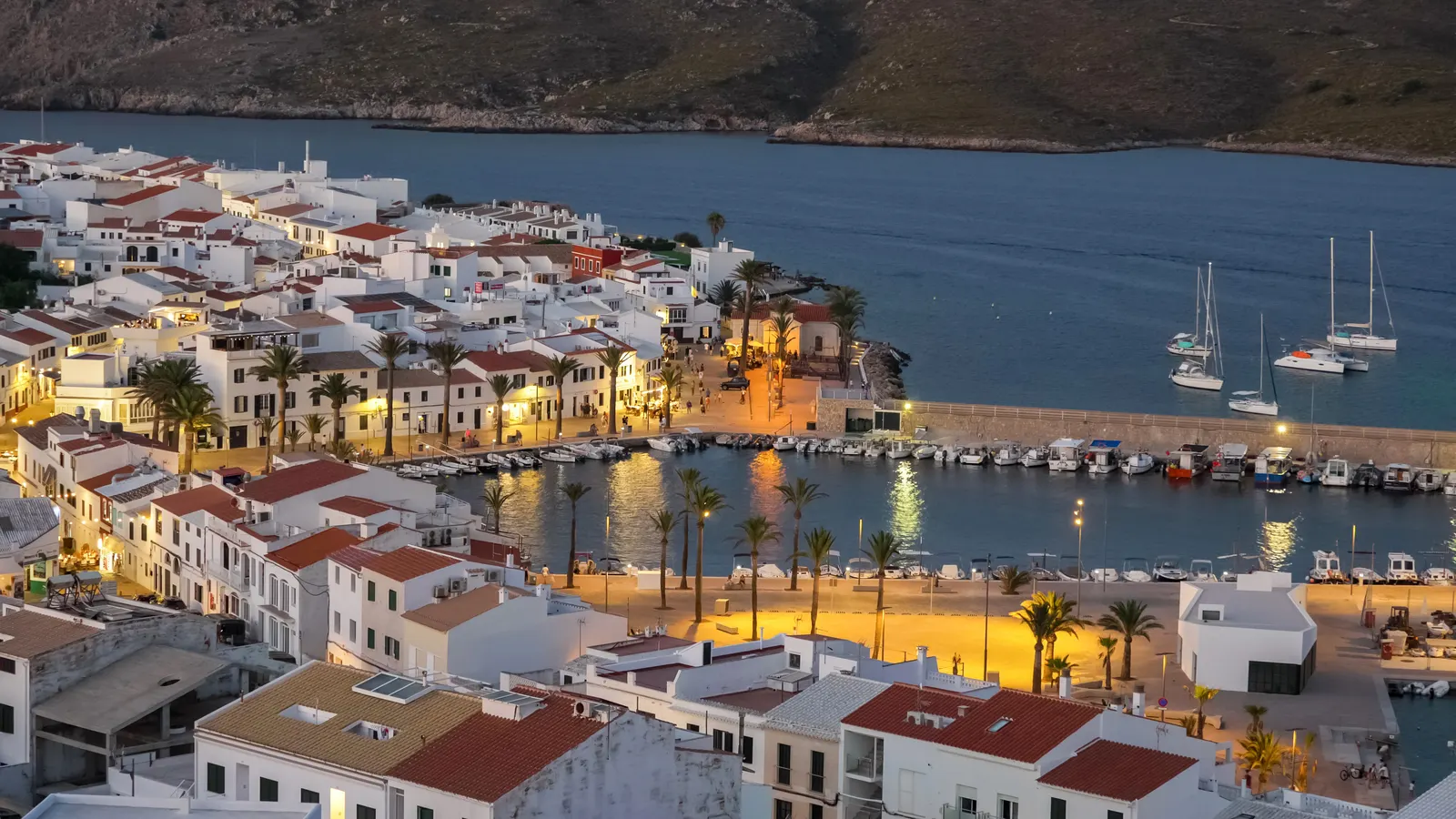
If Binibeca is the stage set, Fornells is the original: a fishing village of just over a thousand people, its low white houses lined up along a sheltered bay more than three kilometres long on the north coast. People here live from the sea all twelve months of the year, and it shows: moored boats, the Torre de Fornells — the defence tower the British built in 1801-1802 to watch the mouth of the bay — and lobster stew as a local institution.
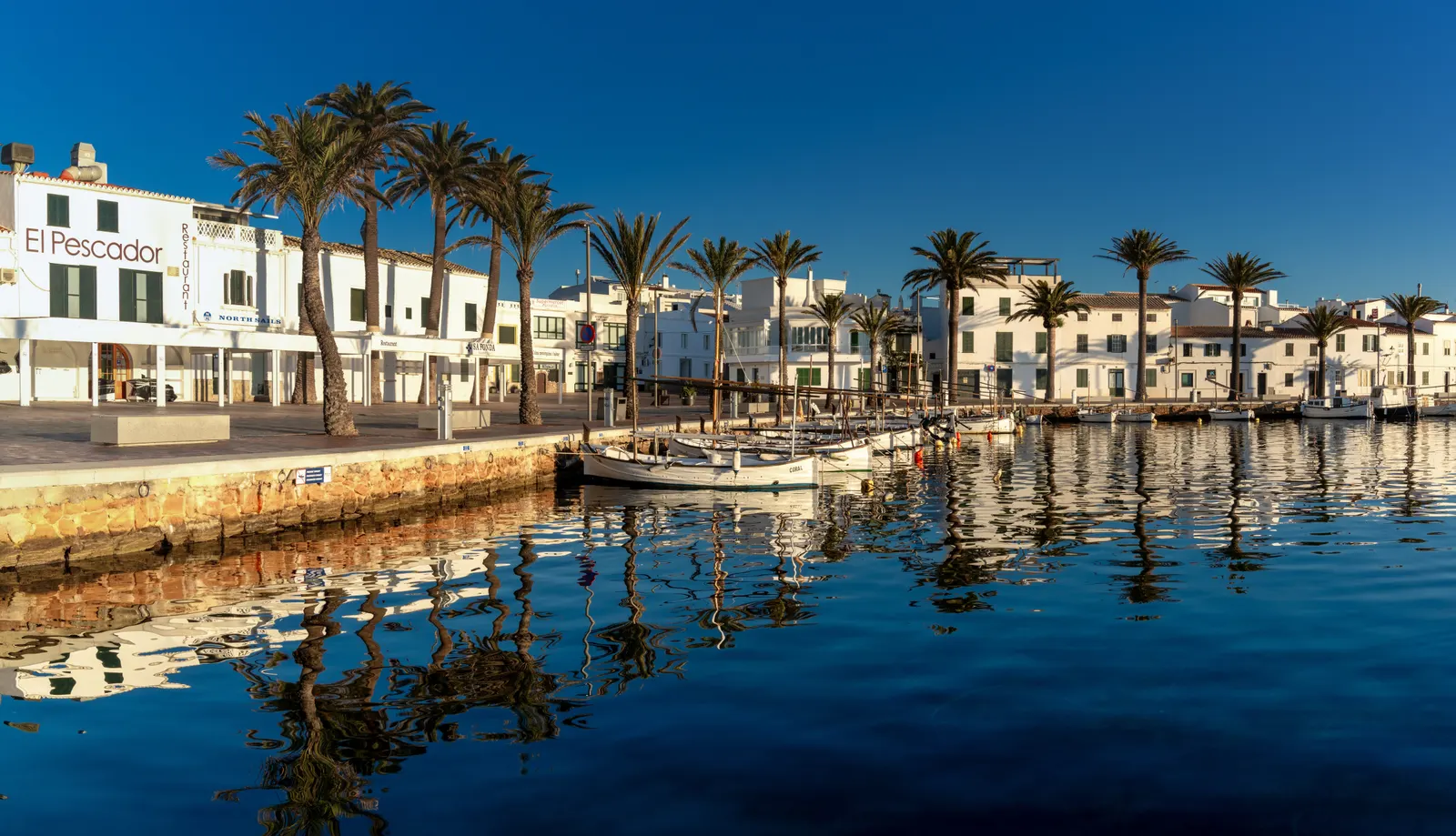
The full guide — with the lobster stew and the wild north of Cap de Cavalleria — is in Fornells, the fishing village.
3. Ciutadella, the stately exception
The only “city” on the list, and we include it without apology: Menorca’s old capital keeps one of the most beautiful historic centres in the Mediterranean, and it walks like a large village — compact, flat and pedestrian. Golden stone, aristocratic palaces, the Gothic cathedral raised after the conquest of 1287, the arcades of Ses Voltes and a narrow harbour that turns honey-coloured at sunset.
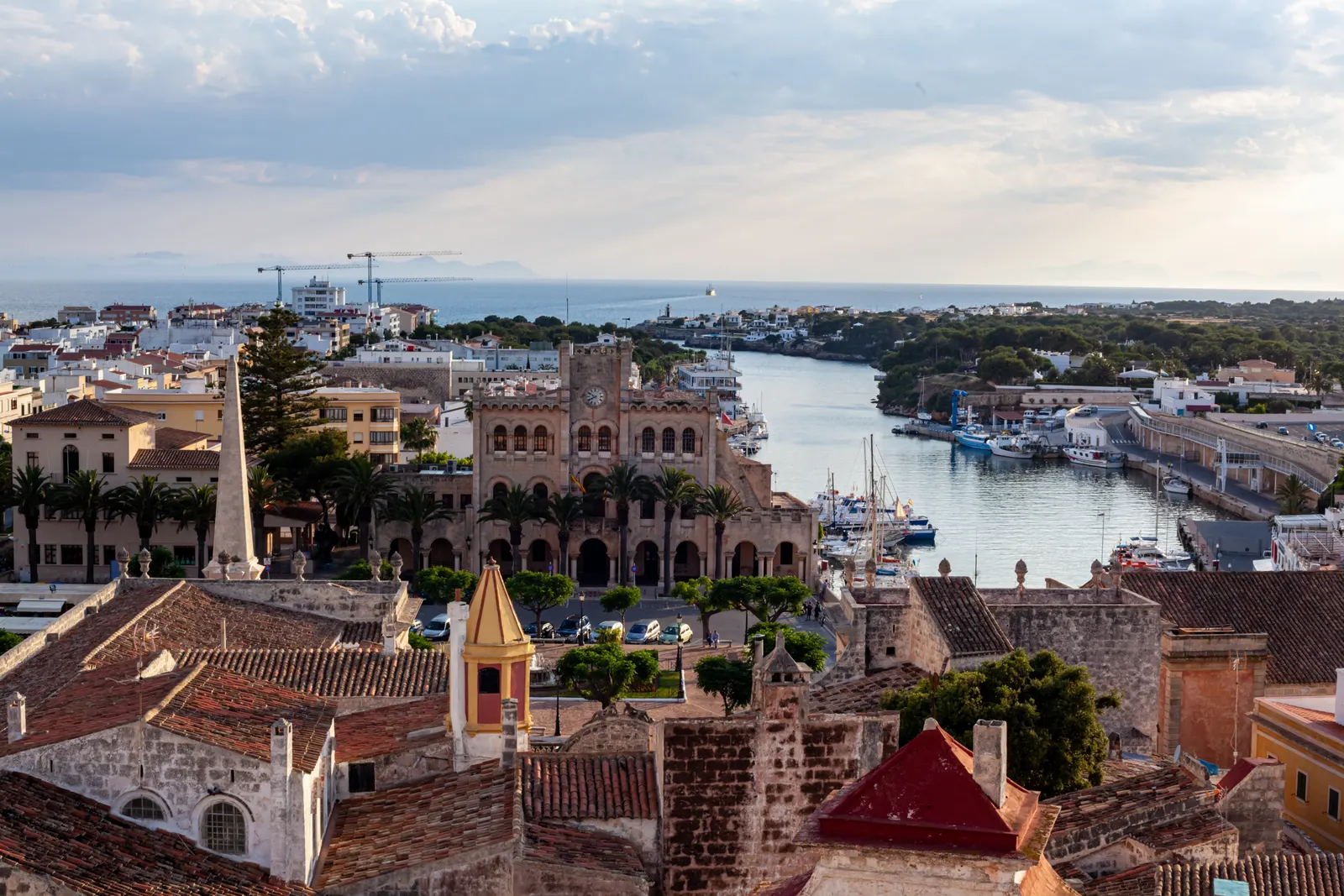
What to see, what the cathedral costs and how to get around, in our guide to Ciutadella, the city of palaces.
4. Es Castell, the British town that watches the sunrise
Few villages have such a clear birth certificate: the British laid it out in 1771 as “Georgetown”, with a grid of streets around a parade ground. Two and a half centuries later, that military logic has settled into a serene town of coloured facades and sash windows, the easternmost municipality in Spain — where the sun rises before anywhere else in the country for eight months of the year.
Its heart is down at the water, in Cales Fonts: the old fishermen’s quay whose storage caves, dug by hand into the rock, are now terraces and restaurants by the water. The full story, with its two fortresses, is in Es Castell and Cales Fonts.
5. Sant Lluís, the white village with a French plan
If Es Castell was founded by the British, Sant Lluís is the other side’s reply: it was born in 1761, during the island’s brief French rule (1756-1763), and named in honour of Louis XV. It is one of the whitest villages in Menorca, with its neoclassical church and the Molí de Dalt, an eighteenth-century flour mill now restored as a museum.
Quiet and residential, it is also the natural base for the south-east: Binibeca Vell is a short hop away. Its entry, with the practical details, is in our places guide.
6. Alaior, the capital of cheese
The island’s third town announces itself from afar: a hillside of white houses in the inland east. Alaior is the commercial cradle of Mahón-Menorca cheese — the protected designation of origin, in force since 1985, has its historic producers here — and a town of trades: its factories turn out artisan footwear exported around the world. At the top of the old town stands the church of Santa Eulàlia; a few steps away, the Pati de Sa Lluna, a former cloister where time stands still.
You go home with cheese and with something stitched by hand. The full guide is in Alaior, cheese and shoes.
7. Es Mercadal, the heart of the island
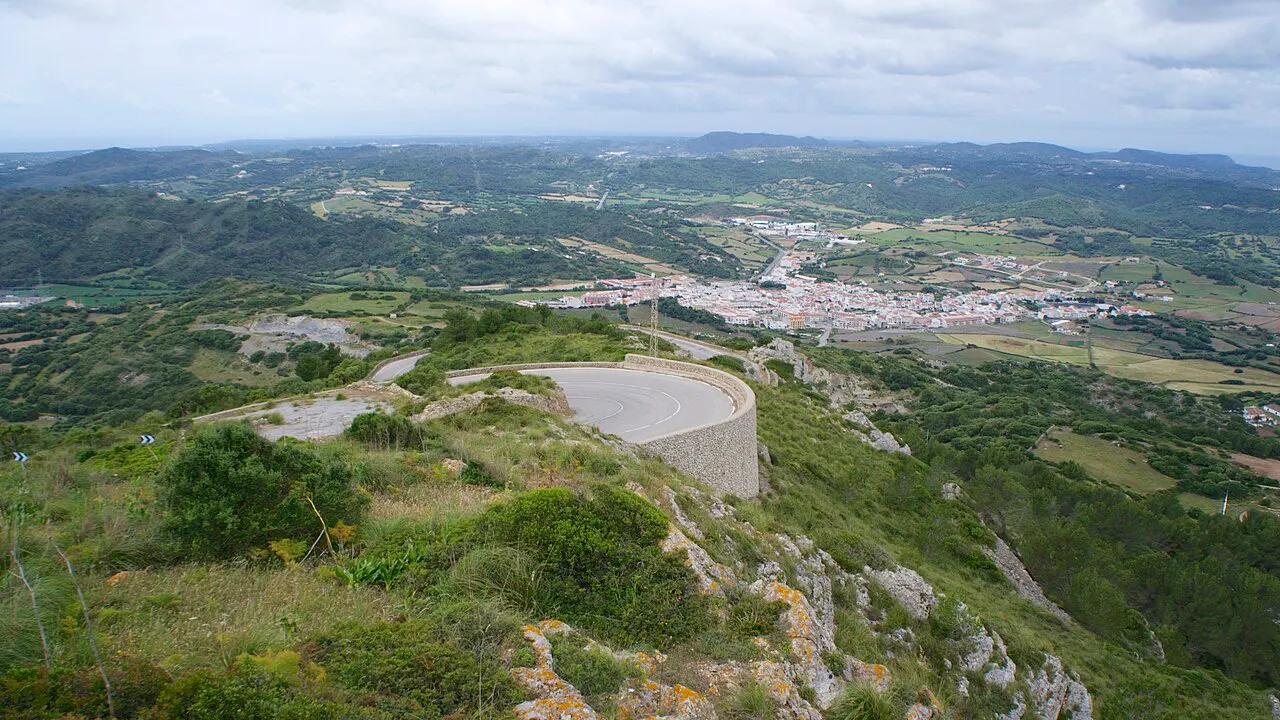
At Menorca’s exact geographic centre, at the foot of the only mountain worthy of the name, Es Mercadal is the farming village par excellence: white, agricultural in its bones, with a market of centuries-old tradition and bakeries that scent the street with toasted almond — it is the cradle of carquinyols. Above it, Monte Toro (around 358 metres, the island’s highest point) offers a 360-degree panorama, with the sanctuary of the Verge del Toro, Menorca’s patron saint, at the summit.
How to visit them together and unhurried, in Es Mercadal and Monte Toro.
8. Ferreries, the village of trades
One of the highest villages on the island, at around 140 metres, and the one that best keeps the pulse of the old trades: leather, wicker and clay are still worked in real workshops, not in displays for tourists. Its moment is Saturday morning, when the Plaça d’Espanya hosts the artisan and farmers’ market. And its geographic secret is the Barranc d’Algendar: a green, humid ravine that runs from the village down to the sea at Cala Galdana, joining the Camí de Cavalls.
We tell it in Ferreries, crafts and ravine.
9. Es Migjorn Gran, the youngest and quietest
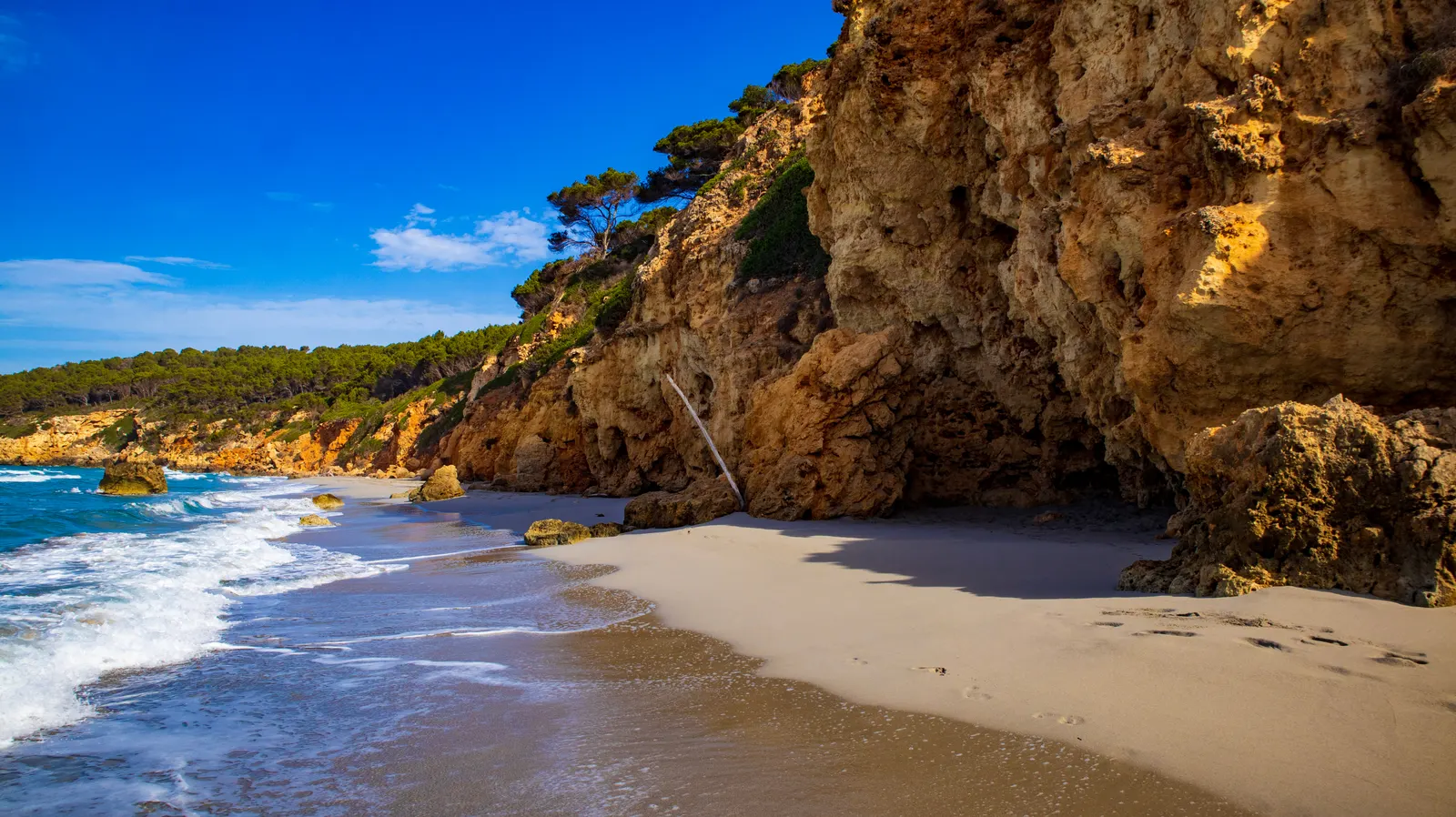
The most discreet on the list, and perhaps the most lovable: Es Migjorn Gran is Menorca’s youngest municipality — it separated from Es Mercadal in 1989 — and its least populated, with some 1,500 inhabitants. A handful of houses of farming origin in the centre-south, with no monuments to tick off and two treasures within walking distance: the Cova des Coloms, the cave nicknamed “The Cathedral” for its 24-metre-high vault, and the wild beach of Binigaus.
The guide, with the ravine walk, is in Es Migjorn Gran.
How to plan the route
Geography helps: the Me-1, the main road, crosses the island from Maó to Ciutadella past Alaior, Es Mercadal and Ferreries, so the inland spine falls naturally into any journey between the two historic capitals. Without a car, the direct line 01 bus covers that same axis in one hour (5.75 euros, summer 2026 fare) with stops in all three inland towns. Es Castell sits right next to Maó; for Binibeca Vell, Sant Lluís and Fornells, a car or a transfer works better.
Our advice is not to attempt everything in a day. Two or three villages per day, pairing coast and inland, leave room for the unhurried coffee and the village bakery. In summer, save the villages for early morning and sunset and the middle hours for the sea; the best time of year for this route, in any case, is spring or autumn.
Our verdict
Nine villages and no filler: each one is here for something the others do not have. Binibeca Vell for the acknowledged beauty of its artifice; Fornells for being the seafaring original; Ciutadella for stone with centuries behind it; Es Castell and Sant Lluís for their British and French birth certificates; Alaior, Es Mercadal and Ferreries for the trades that sustain the island; Es Migjorn Gran for the silence.
If there is one idea to take away, it is this: Menorca’s villages are not stage sets, they are places with real life. They are best visited slowly, at the hours when they breathe, and treated as what they are — somebody’s home. That, in the end, is the difference between collecting postcards and getting to know an island.
If this way of looking at Menorca suits you, join the Calma Society newsletter: we will send it to your inbox with the same calm as this guide — no noise, no hurry.
Bus fare verified in July 2026. Everything seasonal changes: confirm timetables before your visit.