The Serra is good country for a car, but there are stretches and hours when the car is the problem. Here is what to know before you head up.
What is regulated
In Valldemossa, the old town is a restricted-traffic zone: only authorised vehicles get in, and parking inside is scarce and awkward. Leave the car at the entrance and walk up.
In Deià there are signposted restricted parking zones, its cove among them, and the council can regulate access to the road and the car park when needed.
At the harbour of Sa Calobra, Escorca’s council regulates parking by ordinance and there is licence-plate access control.
And on the Formentor peninsula, in the busiest months private vehicles are restricted by traffic order, with a TIB shuttle from Port de Pollença and Alcúdia stopping at the viewpoint, the coves and the lighthouse. Dates and times are set each season: check them on the day.
The Sóller train and tram
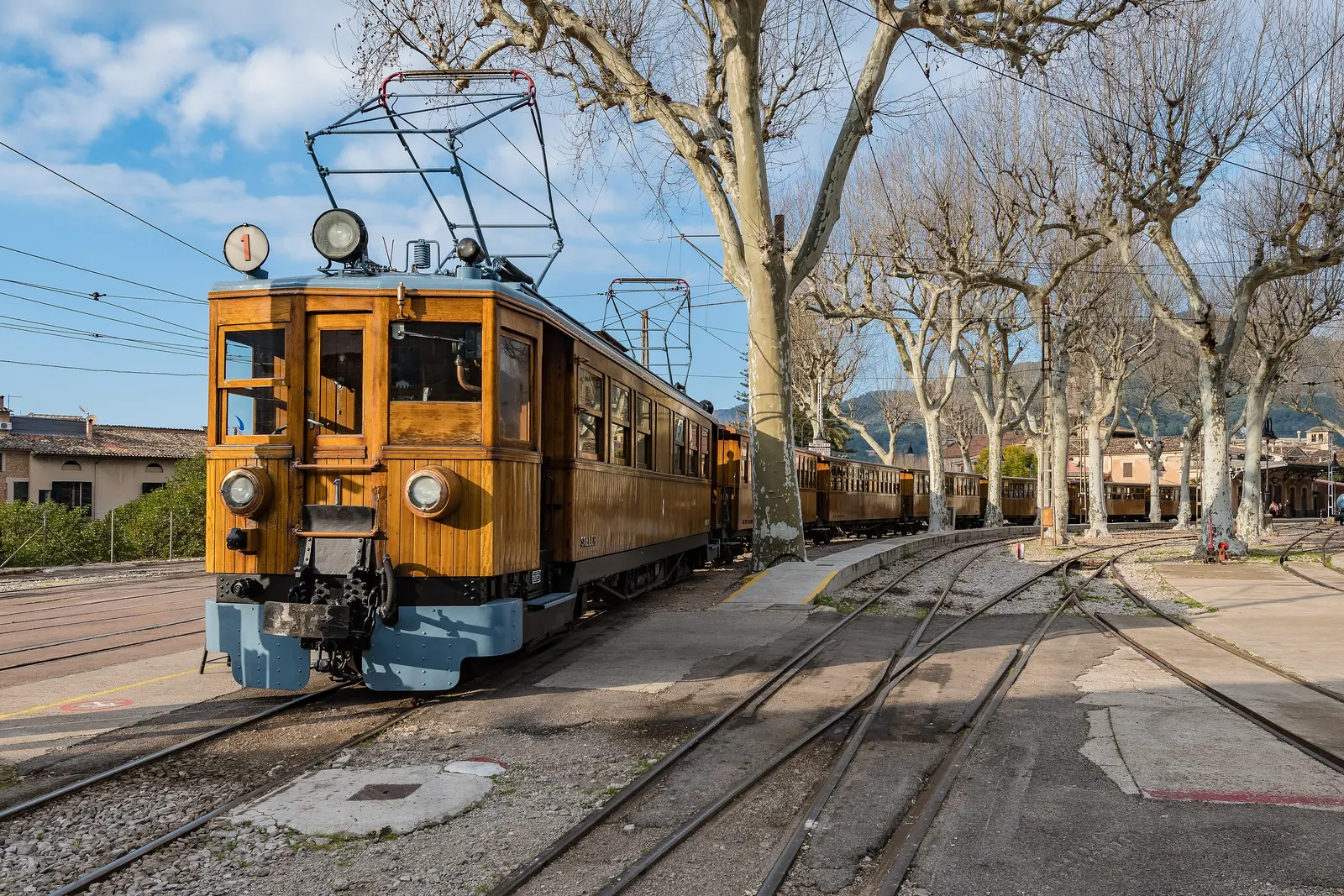
The train from Palma to Sóller has run since 1912: 27.3 kilometres and thirteen tunnels, one of them almost three, to cross the mountain. It is not a transfer, it is part of the journey.
From Sóller’s square, the tram has been running down to Port de Sóller since 1913, barely five kilometres. Locals use it to get to the port, and it works as what it is: public transport.
By bus
The TIB’s L203 links Palma with Port de Sóller via Valldemossa and Deià. It is the way to see that road without driving it — which is no small thing — and to stop depending on parking in two villages where it is scarce.
Three pieces of advice that save the day
Start early. The Serra’s roads and car parks fill up by mid-morning, not at noon.
Count in time, not kilometres. Ninety kilometres of bends is not one hour: it is two and a half with stops.
Leave the car when you can. The tram, the train or the boat to Sa Calobra turn a transfer into part of the trip, and take the parking problem off your hands.