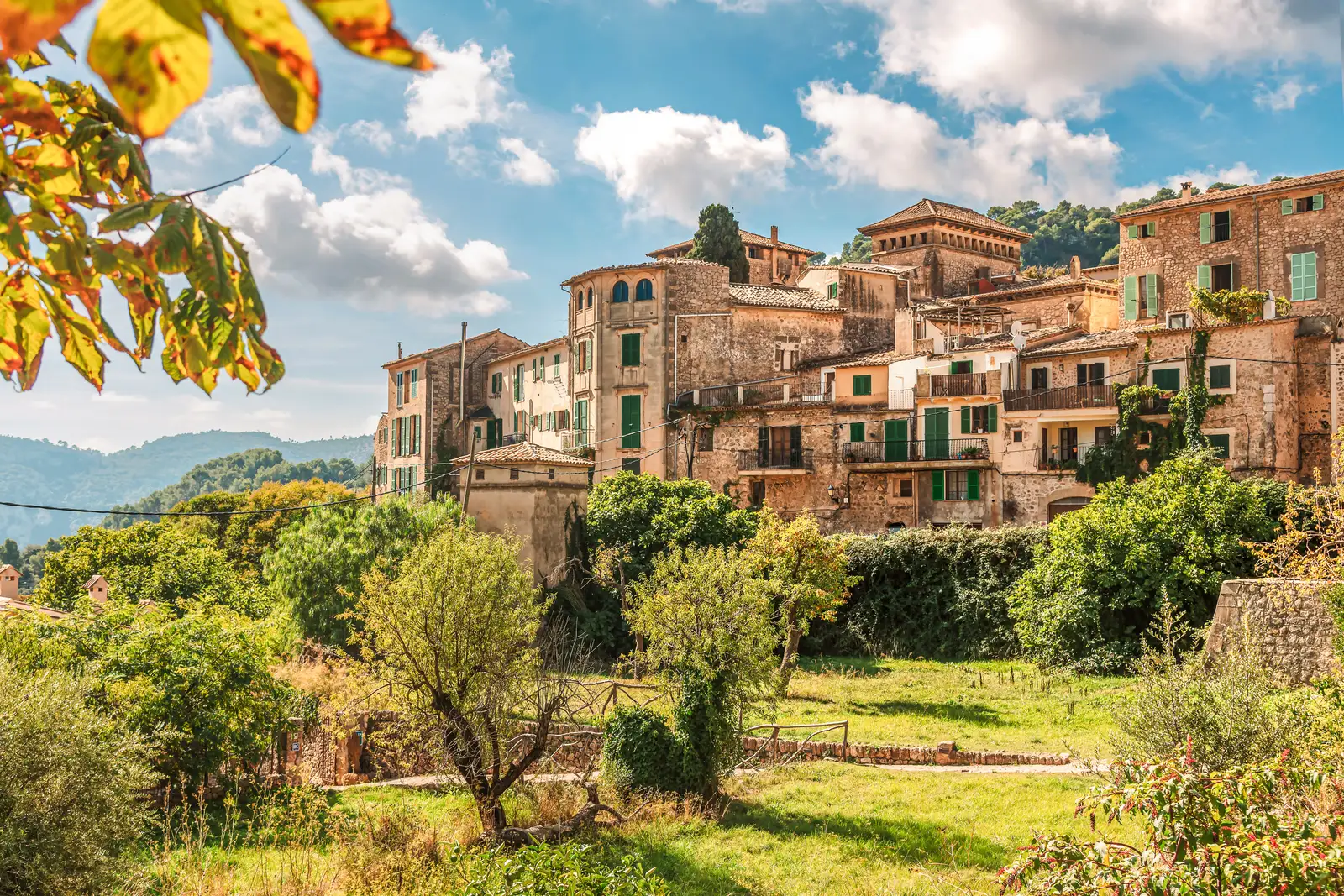
Valldemossa sells Chopin on postcards, fridge magnets and boxes of chocolates. The scene they all suggest is the same: the delicate genius composing in front of a sublime landscape, in a sort of luminous retreat.
It was not like that. It was considerably worse, and that is what makes it far more interesting.
The short answer
No. Chopin was not happy in Mallorca. He arrived ill, got worse, was cold, complained about the weather and the food, and left earlier than planned. On his own terms, the trip was a failure.
And even so, those three months produced one of the summits of the piano repertoire.
What actually happened
Chopin and George Sand — the writer Aurore Dupin, who published under a man’s name — reached Mallorca in November 1838 with her two children. They were after a mild winter for Chopin’s lungs; he had tuberculosis. On paper, the plan was sensible.
The calculation went exactly the other way. That winter was unusually wet and humid, and the Valldemossa charterhouse — an old stone monastery, high up, with nothing resembling heating — turned out to be among the worst possible places for a man with a chest complaint. Chopin got worse. Within weeks he was complaining about the climate and the food.
The reception did not help either. An unmarried couple, she dressed as a man and smoking, he tubercular at a time when tuberculosis was feared like a plague: the village regarded them with suspicion and distance. George Sand repaid it with interest years later in A Winter in Majorca (1842), a book that praises the island’s landscape and dismisses its inhabitants with a contempt Mallorca has not entirely forgotten.
They left in February 1839. They had been there a little over three months.
What remained
Here is why the story is worth telling. In those weeks of damp, fever and a rented piano — his own Pleyel was held up in customs — Chopin finished the Preludes Op. 28.
They are twenty-four pieces, one in each key, some under a minute long. They are among the most played and most recorded piano music ever written. He also worked on the Ballade No. 2, the Scherzo No. 3 and one of the Polonaises Op. 40.
This is not about romanticising illness: he did not compose thanks to the Mallorcan winter, but in spite of it. Still, the fact stands, and it is blunt: the trip that went wrong produced what nobody remembers as a failure.
What to see today, without the postcard
The Valldemossa charterhouse preserves and shows the cells associated with their stay, and it is among the most visited sites in the Serra. It is worth going, but worth going knowing what you will see: not the idyllic studio of a genius, but the rooms where a very ill man spent a bad winter and wrote extraordinary music.
Go out of season if you can. Among other reasons because that is when it makes sense: with the Serra wet and the village silent, the story stops sounding like a brochure.
Listing for Valldemossa, with how to get there · Getting around the Serra de Tramuntana
Our take
We find this version more interesting than the postcard, and not out of contrariness. A place is better served when it is told whole: Valldemossa does not need Chopin to have been happy there. It is enough to have been the place where, in three bad months, someone finished writing something still played almost two centuries later.
Dates, works and circumstances of the trip checked on 21 September 2026. George Sand’s A Winter in Majorca was published in 1842 and remains in print.