Some works are made to last centuries and some are made to disappear. The Corpus Christi carpets of La Orotava belong to the second kind, and that is why they move people so much: weeks of painstaking work that the procession walks over in a single day, on purpose.
Where it comes from
The tradition dates from the mid-nineteenth century. According to the account given by Televisión Canaria, it was in 1847 that the Monteverde family covered the stretch of street outside their house with flowers for the passing of the Blessed Sacrament. The idea caught on among the neighbours, and the town gradually made it its own, street by street.
Over time came the piece that makes it unique today: the great tapestry in the Plaza del Ayuntamiento, made not with flowers but with coloured volcanic sands from Teide National Park. Sources disagree on the year the square was first carpeted — all place it in the early twentieth century — so we give no date.
In 2007, La Orotava’s Corpus Christi carpets were declared a Site of Cultural Interest (Bien de Interés Cultural).
How they are made
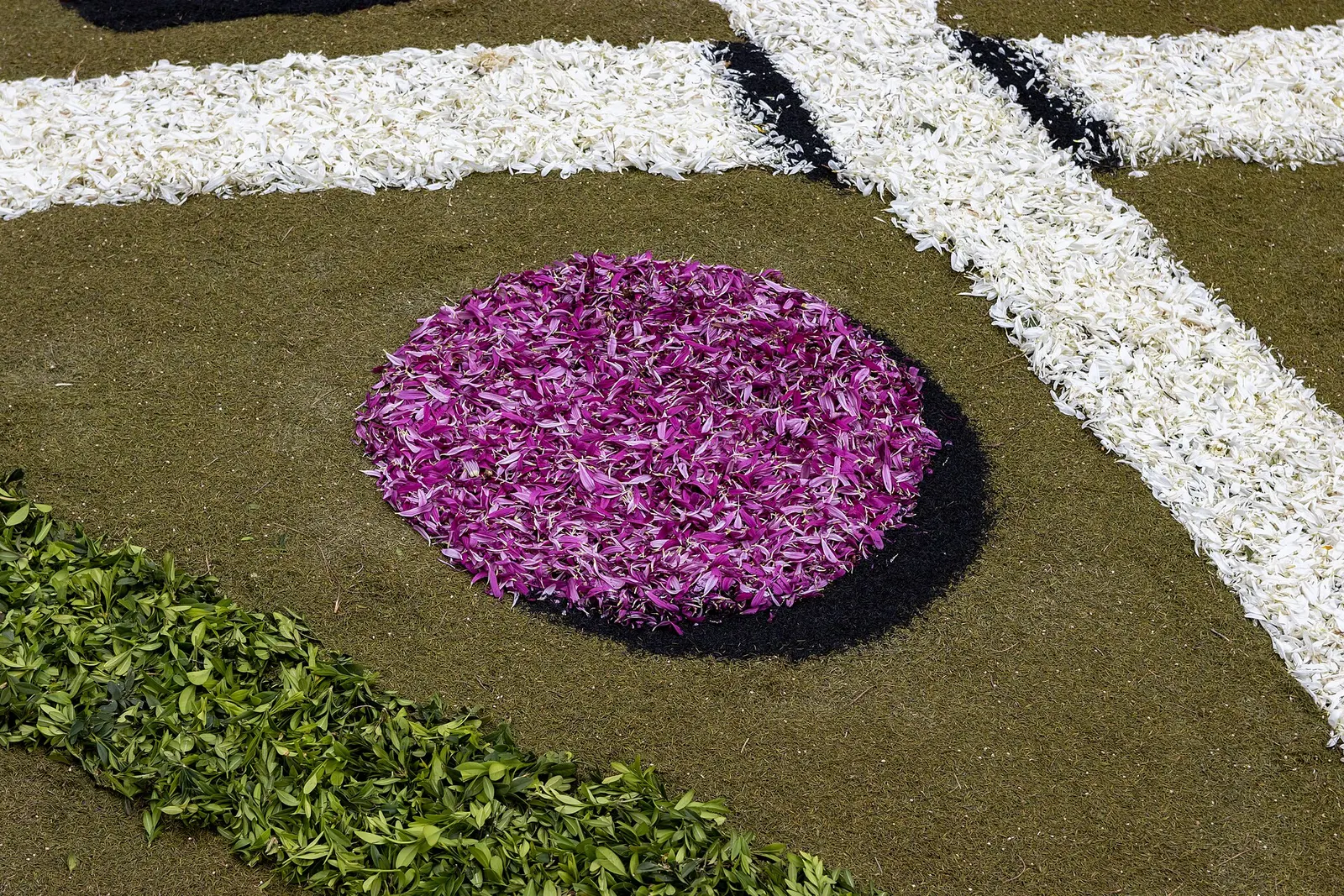
The flower carpets run through the streets of the old town: designs in petals, heather and other plant materials, laid out on the ground by groups of neighbours who return year after year. In the days before, many hands — traditionally, above all women’s — strip the flowers petal by petal.
The tapestry in the square is another scale altogether. The artisans work with natural sands of different tones from around Teide, and draw from them a surprising range of colour. The motif changes every year and is usually religious. Its size varies from one edition to the next and sources disagree on the figure, so we do not give one: suffice to say it fills the square and is best seen from above.
All of this is done in the open air, and rain has spoilt the work more than once. That is part of what it is: something fragile, made with what the land provides.
Where those sands come from, and why the park is protected, is told in why Teide is World Heritage.
The day itself
The main celebration is the Infraoctava of Corpus Christi, a few days after Corpus Christi. Because it is a movable feast, the date changes each year: it usually falls between late May and late June. It is worth confirming the exact day with La Orotava town hall before planning the trip.
The carpets can be admired before the procession passes, moving over them and ending in the square, where the tapestry awaits. That is when the meaning of it all becomes clear: the work exists to be walked on once.
How to see it respectfully
- Go early. First thing, the old town is calmer and the carpets are intact.
- Do not step on or touch the carpets or the tapestry, even if they look dry or finished. If there are barriers or cordons, respect them.
- Take photographs without getting in the way. Many of those working have spent hours on their knees.
- Do not take sand or stones. Not from the tapestry and, of course, not from the national park: Teide’s earth is protected and is not a souvenir.
- Comfortable shoes and patience. La Orotava is a hillside town and it fills up that day.
The town the rest of the year
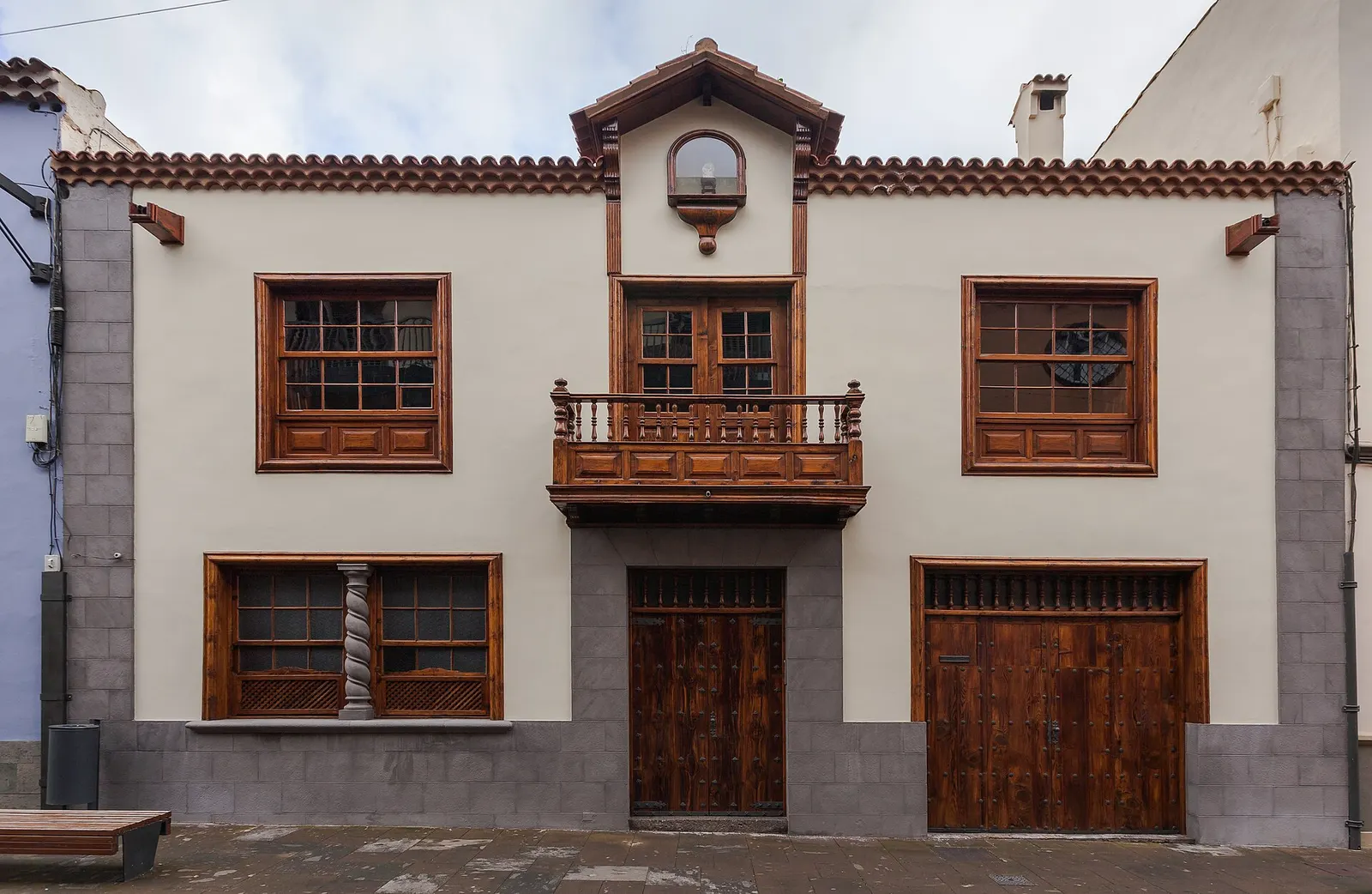
If you miss Corpus Christi, La Orotava is still worth the visit: a stately old town of houses with wooden balconies and inner courtyards, on the slope of the valley that bears its name. The Plaza del Ayuntamiento, empty and silent, helps you picture what it is like on that day in June.
Further reading
The carpets are just one of Tenerife’s festivals; the town’s patron saint festivities also include a romería and a baile de magos. And for the other half of the island’s heritage, La Laguna, the city without walls, is half an hour away.
Our approach
The details on origins, heritage status and materials come from Televisión Canaria, the official declaration and local accounts. We do not give the exact date of the next edition or the size of the tapestry because both change every year: check with La Orotava town hall (information as of October 2026).