The best cooking in Menorca hardly ever appears on a menu. It lives in the homes, follows the year’s calendar —the pig slaughter, Easter, the tomato of summer— and passes from one generation to the next with no written recipe. It is a cooking of spoon and oven, of thrift and of feast, that explains the island better than any restaurant.
The essentials
- Oliaigua —“oli” and “aigua”, oil and water— is Menorca’s mother soup: humble, of summer, and eaten cold with figs or melon.
- Arròs de la terra deceives: it has no rice, but crushed xeixa wheat, oven-baked with cured meats. It is a dish of the matances.
- The greixera is not a dish but a family of oven stews baked in an earthenware pot; there are savoury ones and sweet ones (the one made with brossat, curd cheese).
- Easter has its own baking: formatjades, rubiols, cocarrois, flaons and crespells.
- Almost all are dishes of season and of feast: knowing when they are eaten is half the recipe.
The spoon: oliaigua
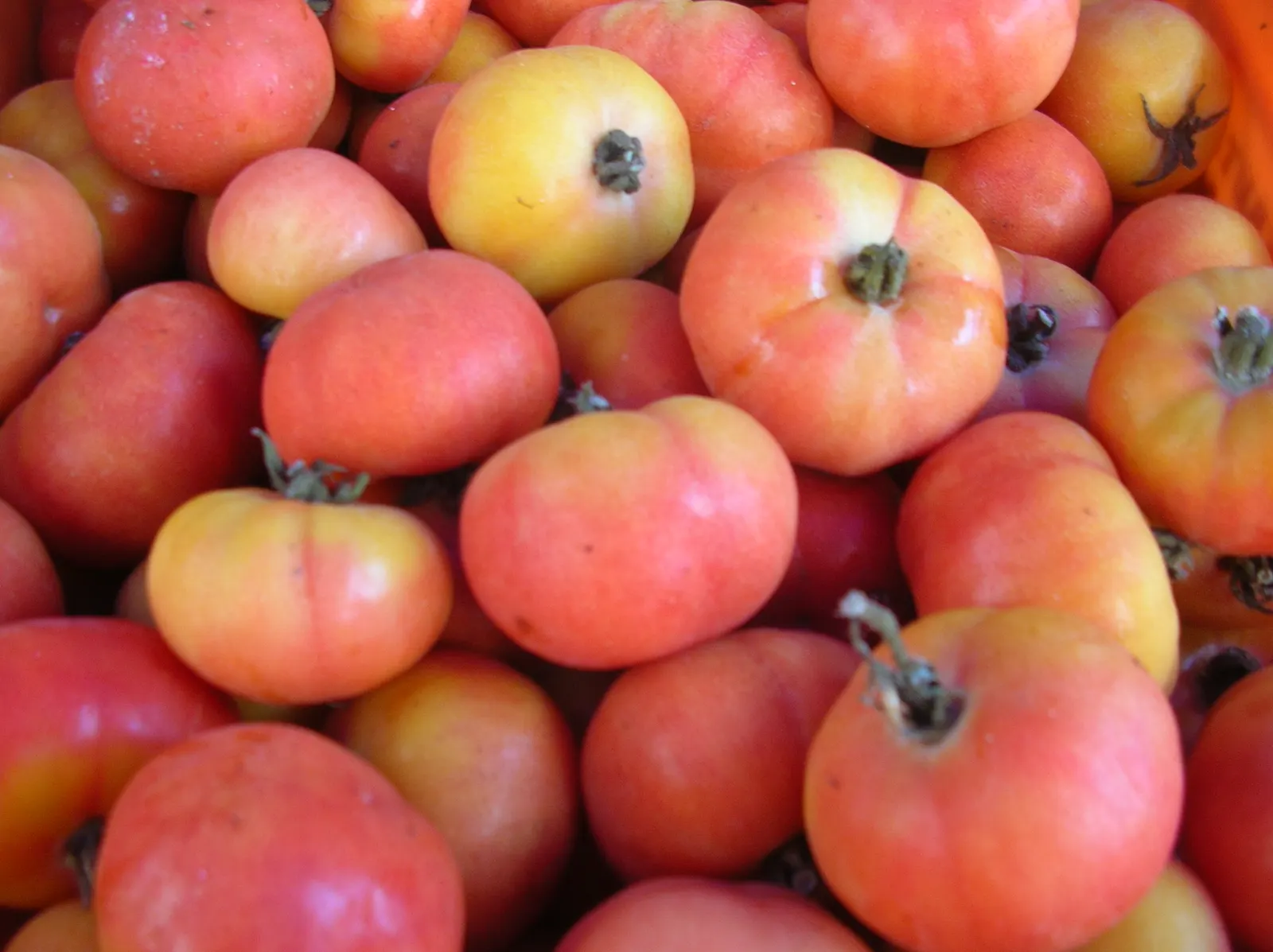
If Menorca has a mother soup, it is the oliaigua. The name says it all: oli and aigua, oil and water, and from there onion, tomato, pepper, garlic and stale bread. It was born as country food —whatever was in the pantry— and today it is a summer classic served cold, with figs or melon, in that sweet-savoury play so Mediterranean. Pere Ballester already documented it in De re cibaria, in 1923, proof that it is cooking with deep roots.
(One note, because it misleads: the sopes with a name of their own are Mallorcan. In Menorca, the soup of the house is the oliaigua.)
The oven: arròs de la terra and greixeres
The most misunderstood dish on the island is the arròs de la terra: it has no rice. It is made with blat xeixa —a local wheat— crushed in the stone mortar, soaked and oven-baked with potato, garlic and cured meats. It is the dish of the matances, the pig slaughter, and its origin points to Andalusi cooking. The Consell de Menorca’s own agri-food network lists it as heritage.
The other great oven family are the greixeres, which take their name from the earthenware pot in which they are baked. There are savoury greixeres —of meat, of cheese, of potato, even of arròs de la terra— and sweet ones, led by the greixera de brossat, a pudding of curd cheese, egg and sugar with the texture of a custard, documented on the island since old times.
The festive calendar
Much of this cooking is tied to the calendar:
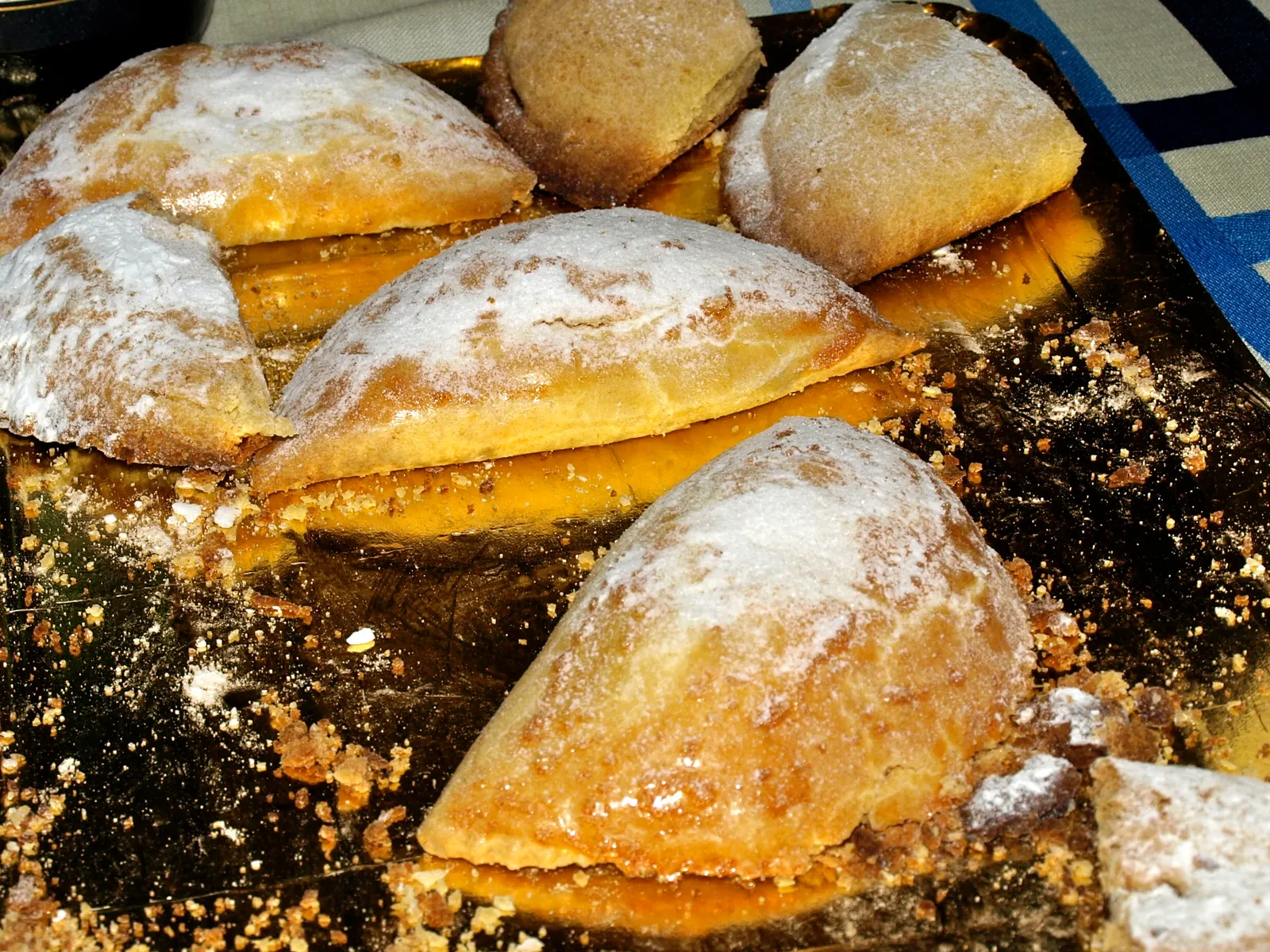
- Easter: the formatjades (savoury pies of meat —lamb or pork— and sobrassada) and the rubiols and cocarrois (half-moon turnovers, sweet or vegetable), plus the flaons and crespells. Some, such as the rubiols, point to a Sephardic Jewish heritage later “Christianised”.
- Winter / matances: the arròs de la terra, the fresh cured meats and the meat greixeres.
- Summer: the cold oliaigua, at the height of the tomato and fig season; and the perol, layers of potato and tomato baked in the oven, sometimes with fish in between.
- Sant Joan (23 June) and festivals: festive sweets such as the coca bamba.
Where and when to try them
These dishes do not live on menus but on the calendar. The rule is simple: go when the moment comes. At Easter, the formatjades and rubiols fill the bakeries across the island. In winter, the arròs de la terra and the cured meats appear at the produce fairs. And in summer, the oliaigua is a dish of the tomato season. The weekly markets of Maó, Ciutadella, Es Mercadal or Ferreries and the agri-food fires are the best places for the sweets and cured meats —though do confirm dates and venues each season, because they change.
Our view
To eat the real Menorca is a matter of timing, not of booking: coinciding with the Easter of the formatjades, the summer of the oliaigua, the fair where someone is selling their arròs de la terra. No star gives what a home-made greixera gives. Our advice: when you see one of these dishes in its season, do not let it pass.
Fine dining is booked; home cooking is found. In Menorca, the second is the one that truly tells the year.