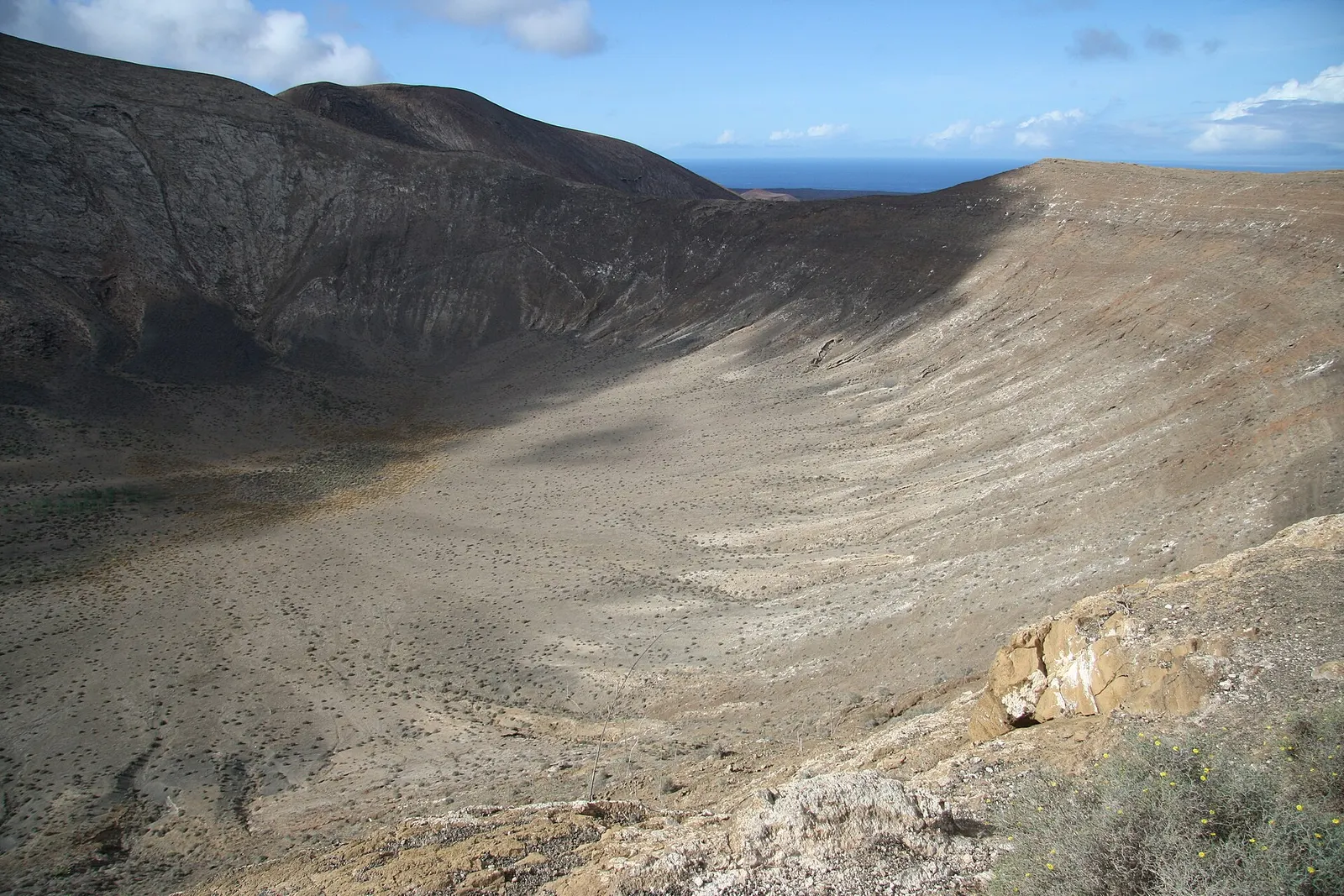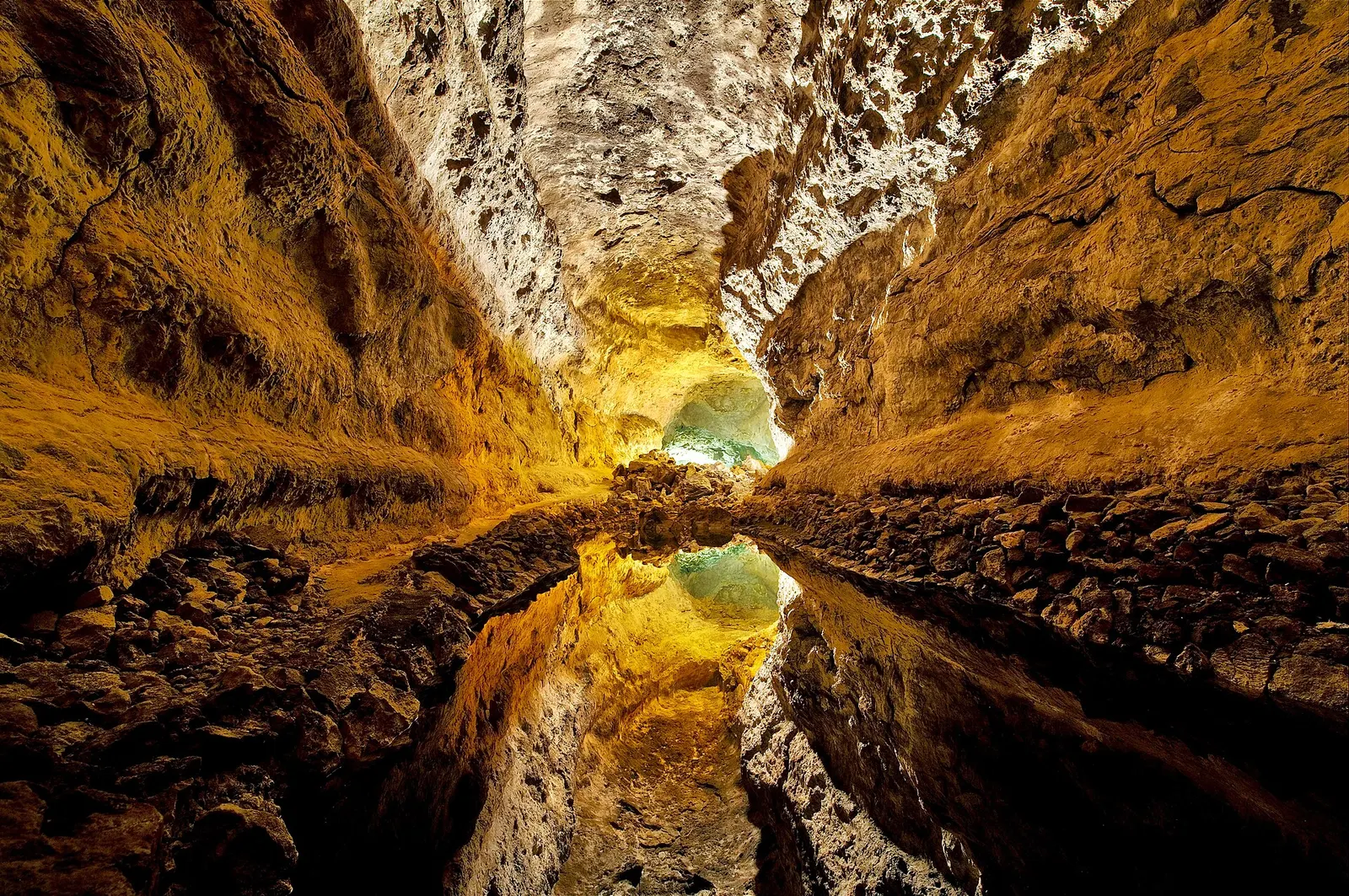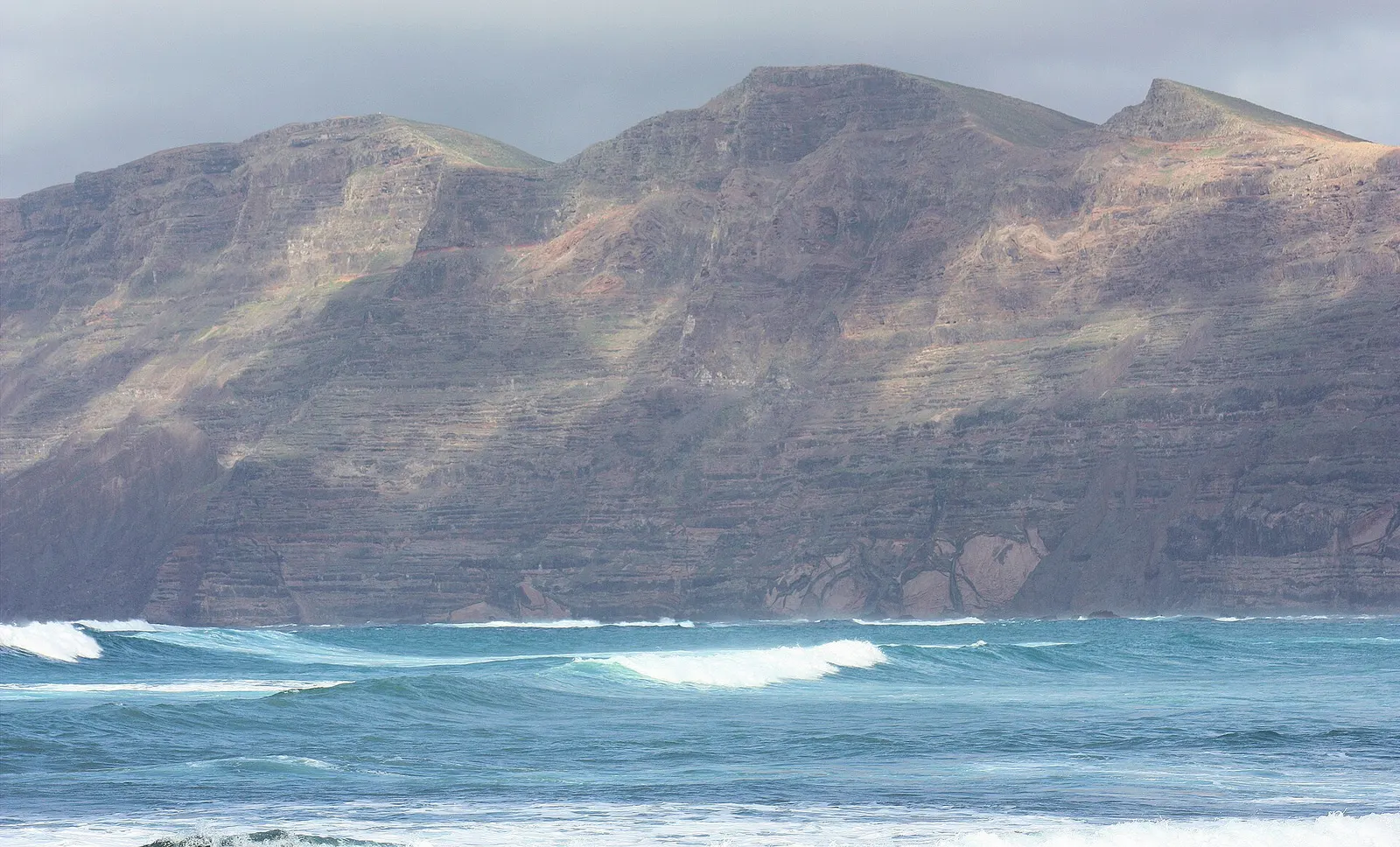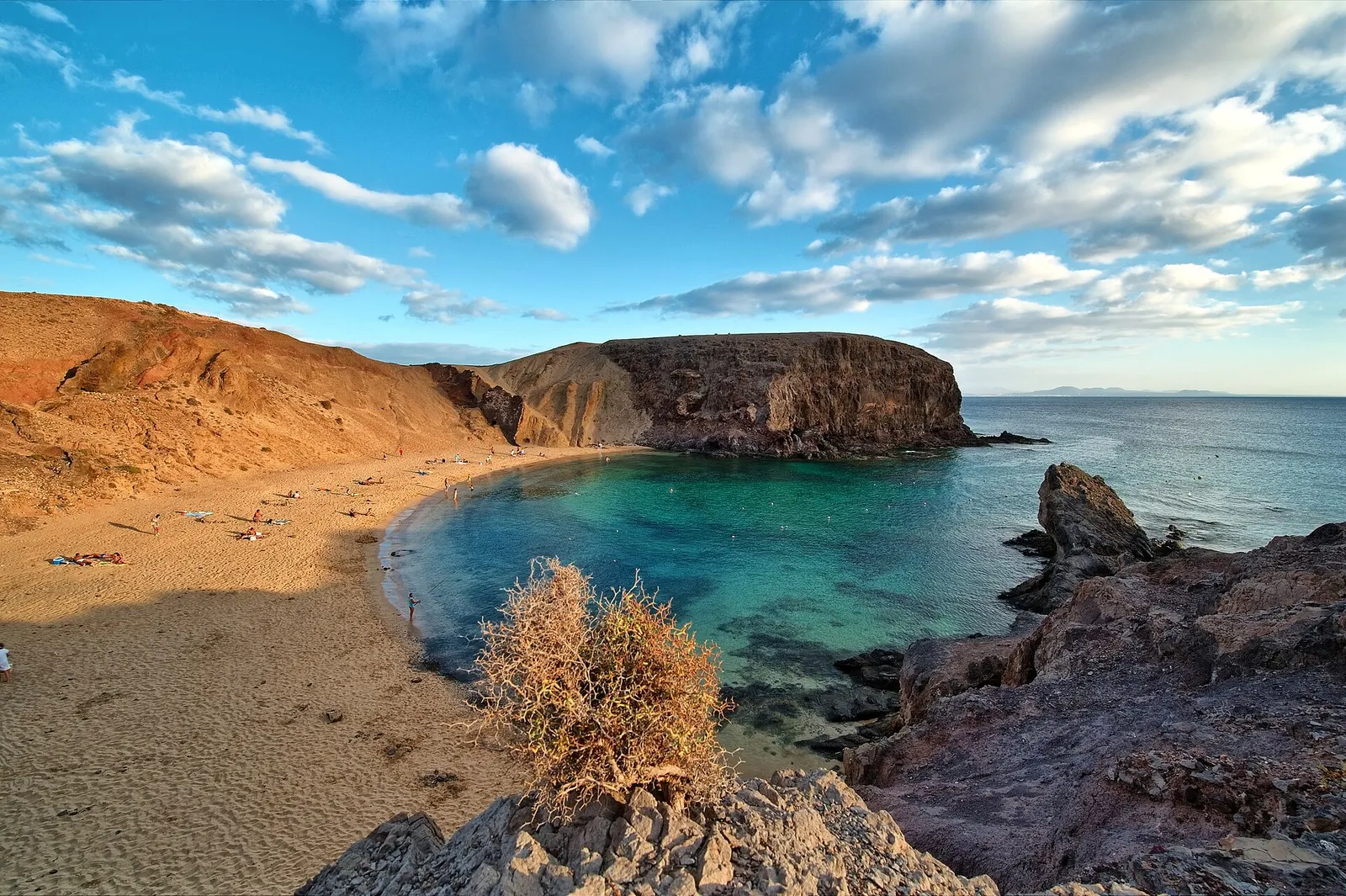
At the southern tip of Lanzarote, beyond Playa Blanca, the coast breaks into a run of pale-sand coves set between ochre hills. These are the Papagayo beaches, and they lie within the Los Ajaches Natural Monument, a protected area. That status explains nearly everything: there is no promenade, no sunloungers, no buildings. There is a dirt track, bare slopes and an Atlantic of a colour that hardly seems to belong to this island.
The essentials
- Where: at the island’s southern tip, beyond Playa Blanca, in the Los Ajaches Natural Monument, a protected area.
- Getting there: a dirt track of five or six kilometres from Playa Blanca, with paid access for non-resident vehicles; or by boat from Playa Blanca.
- The coves: Playa Mujeres, Playa de Papagayo and Caleta del Congrio.
- No facilities: no permanent lifeguards, no shade, no drinking water, no toilets.
- When: first thing in the morning; best season, October to May.
Getting there
From Playa Blanca, a dirt track of five or six kilometres leads to the cove car parks. It can be driven slowly — the surface improves and worsens with the rain and the traffic — cycled or walked.
At the entrance to the protected area, access is paid for vehicles of non-residents; check before you go (information as of October 2026).
The alternative is by sea: boats leave Playa Blanca and anchor off the coves. It is a way to see them without the dust, though you lose the sense of arrival.
The coves
From west to east, the best known are Playa Mujeres, the widest and most open; Playa de Papagayo, which gives the area its name, a sheltered half-moon beneath the cliff; and Caleta del Congrio, smaller and a little more out of the way. Between them, short, steep paths lead down: closed shoes for the walk, sandals for the sand.
The water is usually calm because the coves face south, sheltered from the trade winds that blow from the north for much of the year. That does not mean it always is: with a swell or a southerly wind, check the forecast before going in.
What there isn’t, and what to bring
The coves have no permanent facilities: no lifeguards on duty all year, no shade, no drinking water, no toilets. Bring plenty of water, something to eat, sun protection and, for a full day, a parasol. Whatever comes in goes back out with you.
As this is a protected area, no camping, no drones and no driving off the track. Nor does anything leave with you: no sand, no volcanic stones. It sounds like a small thing, but multiplied by a year’s visitors it changes the landscape.
The hour, which is what really matters
Papagayo has two lives. Early in the morning, only the early risers are in the coves, the light comes in low and the water has the clear green of the photographs. From mid-morning, cars arrive along the track and boats along the coast, and in July and August parking becomes the main problem.
If you can choose, October to May is the best time: Lanzarote has no real winter, the water remains swimmable for many, and the track is a different place. If it has to be summer, the rule is simple: arrive before the strong sun and leave as the others start to come.
Where it fits in the trip
Papagayo asks for an unhurried half-day. It pairs well with an afternoon in Playa Blanca or with the Yaiza coast towards El Golfo and the Janubio salt pans. Those staying in the south have it on their doorstep; from the north of the island, set off early.
To plan the journeys, see getting around Lanzarote; and for somewhere to stay, the hotels we choose on the island. The salt of the Yaiza coast has its own story: the Janubio salt pans.