On many of Europe’s islands, winter is the season of closing: shutters down, boats hauled out, villages left to the people who live there. Tenerife works the other way round. When it is dark by mid-afternoon in northern Europe, on the island’s coast people eat outdoors, swim and walk in short sleeves. Here winter is the high season, and has been for more than a century, since the first Britons came to Puerto de la Cruz to escape the cold.
The essentials
- A mild coast: in January, average highs of around 20-22 °C in the south and lows of about 15 °C.
- The south is warmer and drier; the north cooler, damper and greener.
- The sea, around 19-20 °C in January, its coldest month. Swimming is possible.
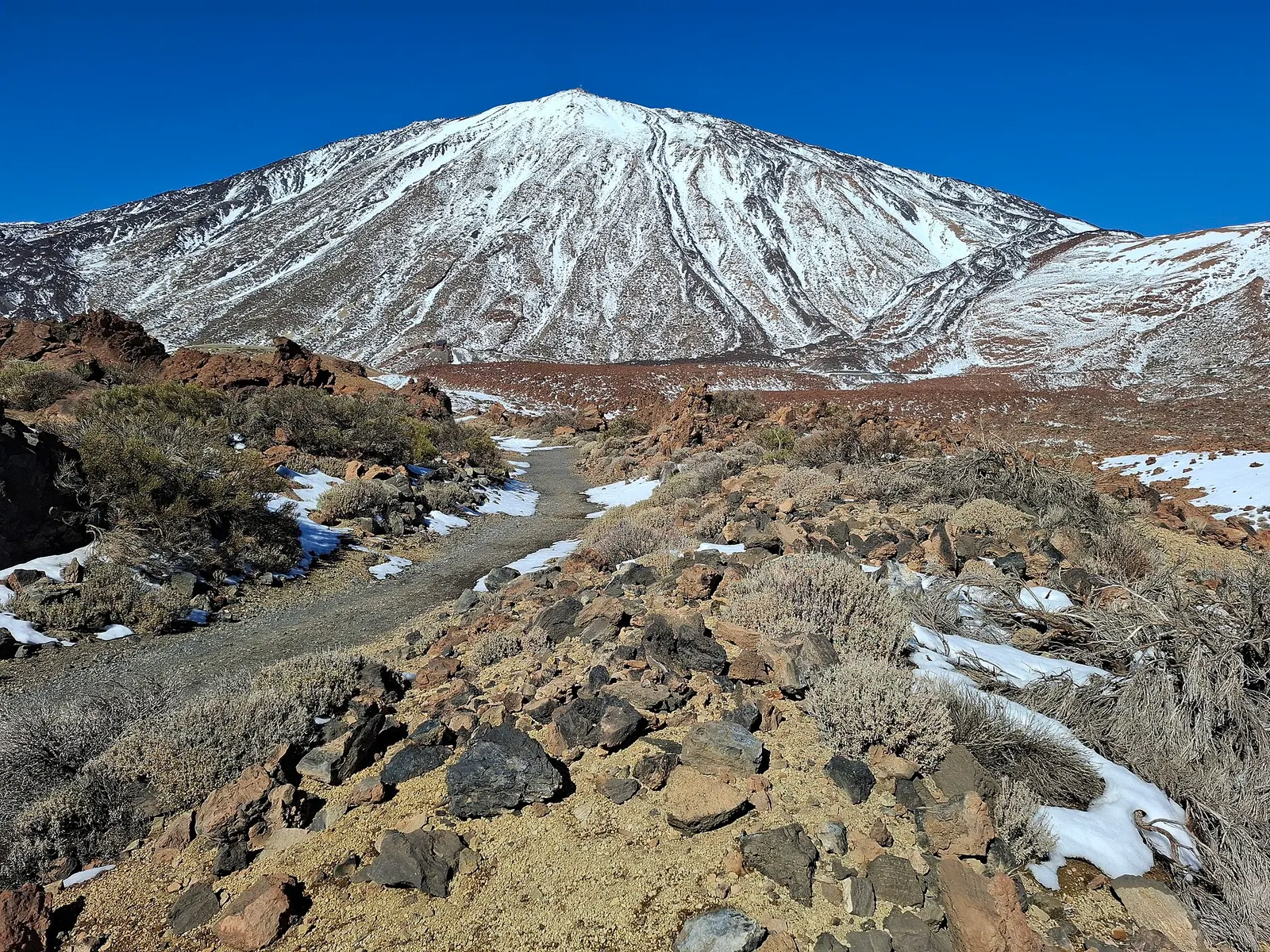
- Teide is another season: an average January high of about 7.5 °C at the summit, and snow several times each winter.
- Peaks in price and crowds: Christmas, New Year and Carnival. January, after Epiphany, is usually calmer.
- One hour behind mainland Spain.
The island that never closes
High season does not mean living it in a hurry. It means everything is open — restaurants, hotels, trails, golf courses — and the island runs at full capacity without the heat of summer. The Canaries’ two largest markets are from northern Europe: in 2025 the United Kingdom was the archipelago’s first market, with some 5.5 million visitors, and Germany the second, with some 2.6 million. In the middle of January, the south has the bustle the Balearics associate with summer.
The way to enjoy it calmly is simple: choose well where and when.
North or south
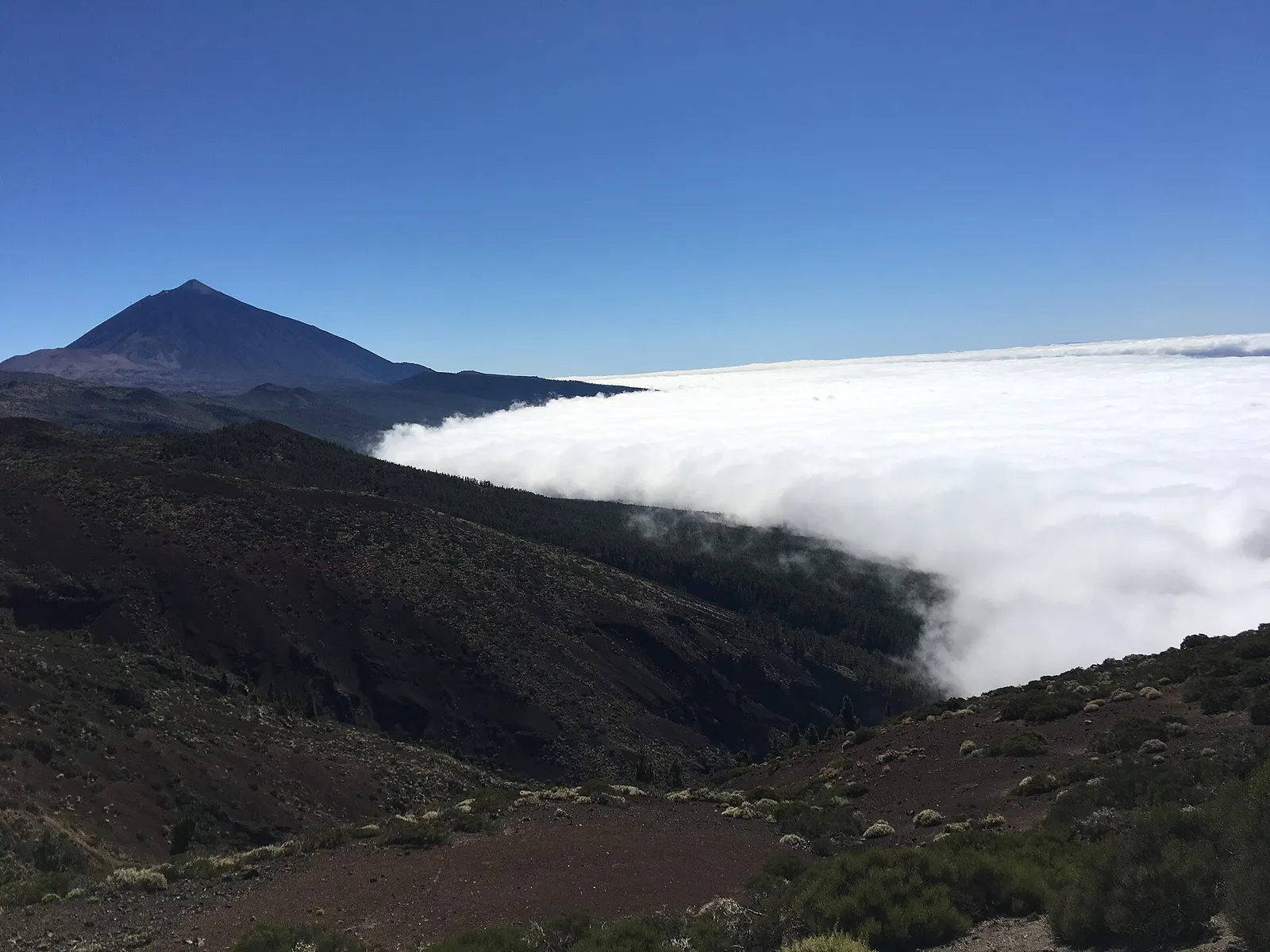
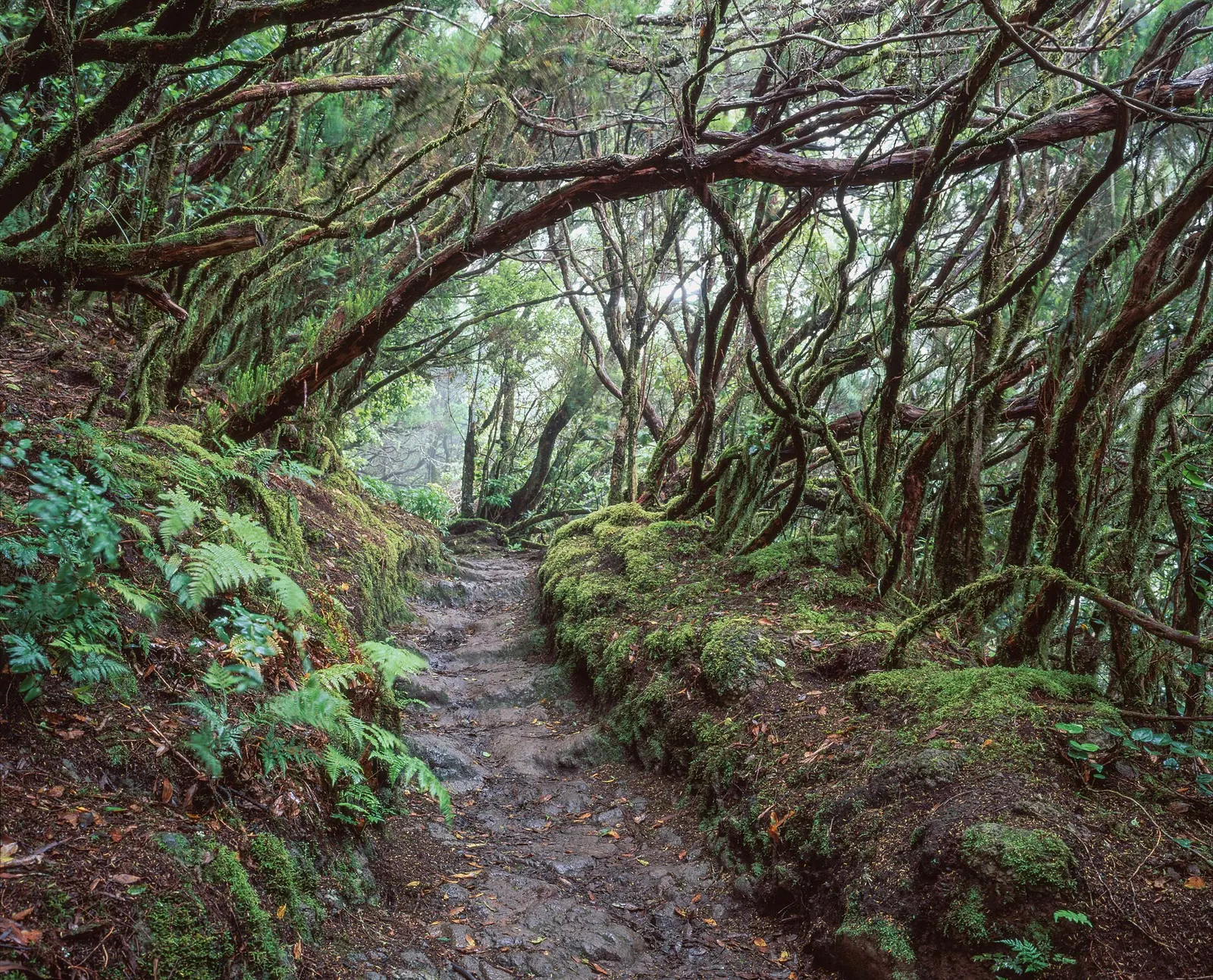
The difference between the two sides of the island is bigger than it looks on a map. The south is warmer, drier and sunnier: the safe bet for sun and sea. The north is cooler and cloudier, and therefore greener: the winter of gardens, of the cloud forests of Anaga and of historic towns such as La Laguna and Puerto de la Cruz.
Ideally, combine them: sleep on one side and cross to the other. If you are thinking of staying longer, Tenerife: north or south explains the difference in more detail.
Teide under snow
The most extraordinary thing about winter in Tenerife is seeing snow on the summit from a beach. In winter, Teide National Park is a world apart: cold, wind, sometimes snow, and very clear light. Go up well wrapped, check the state of the park’s roads beforehand, and bear in mind two things that do not change with the season: the cable car does not give access to the peak, and climbing to the summit on the Telesforo Bravo trail (no. 10) requires a specific permit from the National Park. To understand the park, see why Teide is World Heritage.
How to avoid the peaks
- Christmas and New Year are the most expensive and crowded week of the year.
- Carnival, above all in Santa Cruz de Tenerife, fills the island and the capital; if you are not coming for it, avoid its dates, which change every year.
- January, after Epiphany, is usually the quietest time of the winter.
- Book well ahead if you are travelling on peak dates: in high season the best hotels fill early.
To fit the trip around each month’s festivals, see Tenerife from October to June.
What to pack
Summer clothes for the coast, a layer for the evenings and the north, and a proper coat if you are going up Teide. In a single day you can go from twenty degrees on the beach to the cold of the high mountains.
Our view
Tenerife’s winter is no secret: it has been the reason for its tourism for more than a hundred years. What is an art is enjoying it calmly: January rather than Christmas, the north as well as the south, a morning on a snow-dusted Teide and the afternoon by the sea. The island does not close, but it knows how to slow down if you give it the chance.
Data as of October 2026. Temperatures: climate averages from specialist guides and sea-temperature portals, not forecasts; check AEMET before travelling. Tourism markets: Promotur (Turismo de Islas Canarias), 2025.