Few things so universal hide an origin so disputed. Mayonnaise —the sauce that today accompanies half the world— may well carry, according to the most widely held theory, the name of a Menorcan town: Mahón. Hence mahonesa, mahonnaise, mayonnaise. It is a lovely story, much repeated on the island, but it deserves to be told honestly: no one has ever proven conclusively where this sauce was born, and that very mystery is part of its charm.
What is certain is that the Menorcan version has weight, tradition and arguments on its side. Here we tell it as it deserves: with island pride, but without selling legend as history.
The essentials
- The most popular theory: the sauce comes from Mahón, and the French spread it after the capture of Menorca in 1756.
- Who cemented it: the gastronome Teodoro Bardají championed and popularised it in his pamphlet “La salsa mahonesa” (1928).
- The debate: there are alternative theories (Bayonne, French etymologies); no origin has been proven.
- What it really is: an emulsion of egg and oil; in its purest form, with nothing else added.
- The local nuance: in Menorca, traditional mahonesa is associated with all-i-oli and the island’s own oil.
The Menorcan theory, step by step
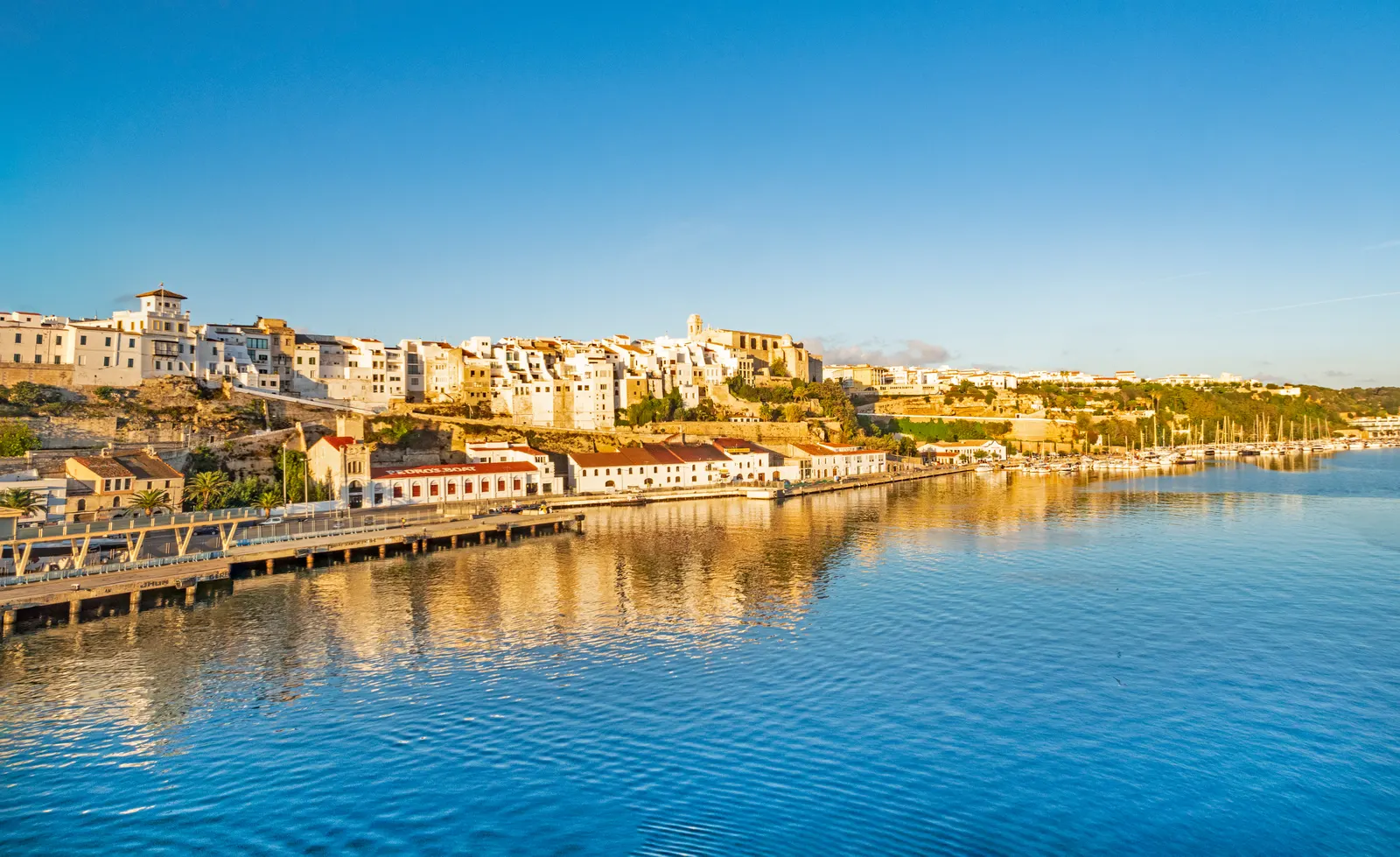
The most widespread account is set in 1756, during the French conquest of Menorca and the siege of Fort St Philip, at the mouth of Mahón’s harbour. According to this version, the French —the circle of the Duc de Richelieu is usually cited— discovered a local sauce of egg and oil on the island, were captivated by it, and took it back to France, where it caught on as mahonnaise, “from Mahón”.
It is a story consistent with the period and with the comings and goings of troops and cooks, but it is not conclusively documented. The Menorcan attribution took hold above all in the twentieth century, when the Aragonese cook and gastronome Teodoro Bardají published a pamphlet in 1928 titled “La salsa mahonesa”, defending the island origin with arguments. Put another way: the Menorcan version is solid and much loved, but it established itself as a modern thesis rather than as an eighteenth-century certainty.
And if it wasn’t from Mahón? The other theories
Here we must be fair: there are more hypotheses, all without definitive proof. The culinary literature records them:
- Bayonne (France): from bayonnaise, after the Basque-French city.
- “Moyeu”: from the Old French for “egg yolk”, a suggestion of the cook Prosper Montagné.
- “Magnonaise”: from the verb manier/magner (to beat, to stir), attributed to Marie-Antoine Carême around 1815.
- Mayenne or “Magnon”: French place names that have also been proposed.
As a solid fact: the sauce does not appear in French cookery treatises before 1756, and the first known written reference to the term mayonnaise dates from 1804, without explicitly connecting it to Mahón. The honest conclusion: the origin remains under debate, and the Menorcan theory is the most popular in Spain, but not the only one.
What a good mayonnaise really is
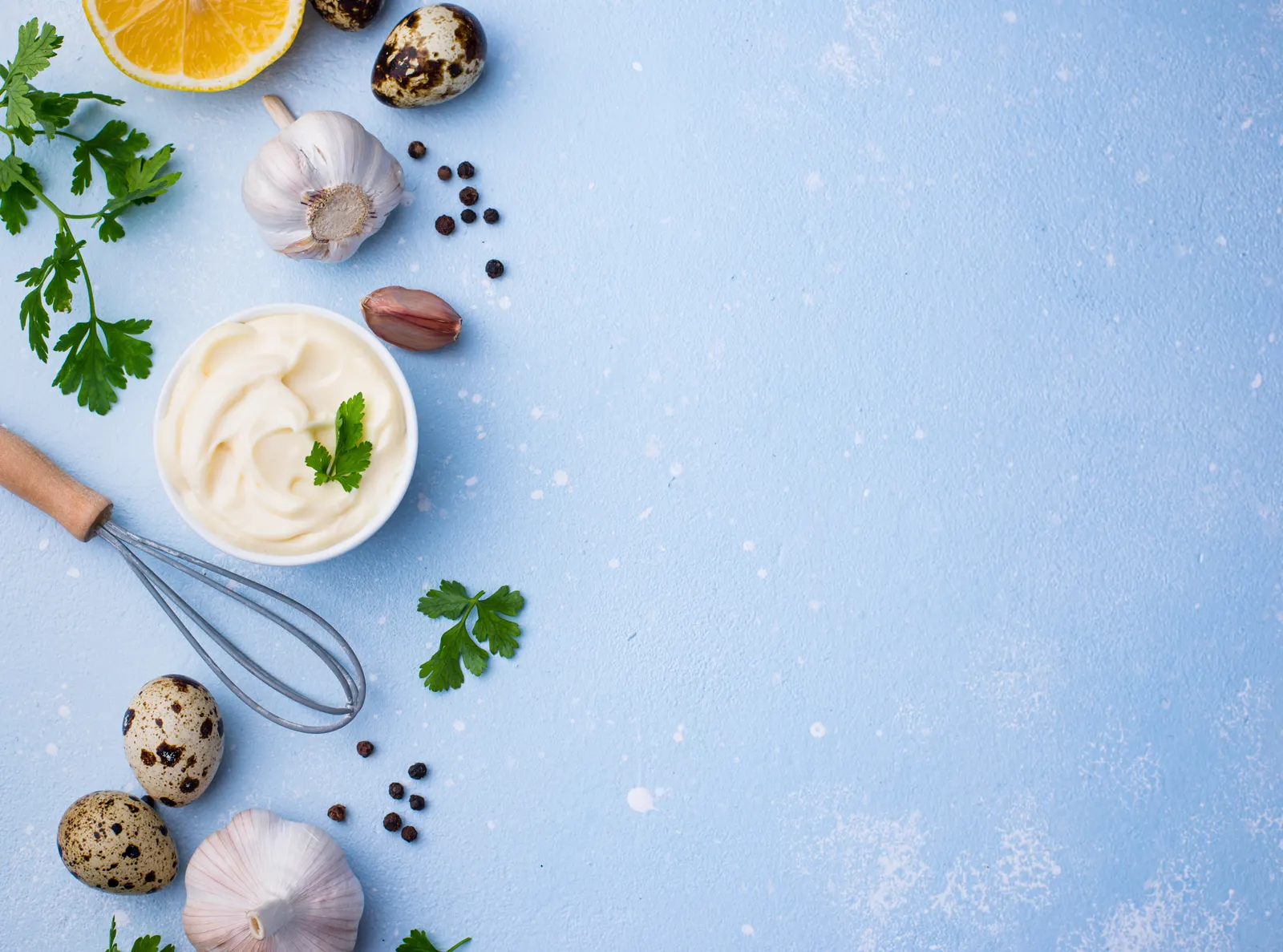
Beyond the etymology, the sauce is disarmingly simple: egg and oil, emulsified with patience, with a touch of salt and, to taste, a few drops of lemon or vinegar. Nothing more. That purity is precisely what links it to the Mediterranean culture of oil and all-i-oli, and what explains how, on an island of fine produce, something so well-rounded could have been born —or at least perfected.
The industrial version that fills today’s supermarkets is a distant grandchild of that mortar-and-pestle sauce. The real thing, whisked by hand with a good oil, remains something else entirely: a small ceremony.
Why this story matters (even unresolved)
That the origin is unproven takes nothing away: it adds to it. Menorca is a small island that has given the world things far larger than itself —the Mahón-Menorca cheese with its PDO, the island’s gin inherited from the British— and mayonnaise fits that tale of a land that cooks simply and well. To claim it with rigour, without inventing, is the best way to honour it.
Our take
Tell it for what it is: the most widely held and best-loved theory places mayonnaise in Mahón, popularised by the French after 1756 and defended in the twentieth century by Bardají; but the origin remains debated and there are other hypotheses. That honesty does not weaken the story —it makes it more interesting.
And if you visit Mahón, pay it a practical tribute: order something with a good homemade mayonnaise, whisked by hand with quality oil. Tasted like that, facing its harbour, the legend almost becomes truth.