Menorca speaks softly for most of the year, and then the festival summer arrives. From late June to late September, the island strings together its patron-saint festivals: each town brings out its horses, dresses its caixers and celebrates a ritual that has been repeated, almost unchanged, for centuries. These are not spectacles staged for visitors; they are the identity of each town, open to anyone willing to live them with respect.
This is the complete calendar for 2026, in order, from the mother of all festivals —Sant Joan in Ciutadella— to the September close. One honest note before we begin: the town halls publish each festival’s official programme with the season, so for the festivals with variable dates we give the customary weekend and point you to their page in our what’s on guide, which we keep up to date.
The essentials
- What they are: equestrian patron-saint festivals. The protagonist is the caball menorquí, the island’s black, high-strung horse, with its riders —the caixers— and the jaleo as the high point.
- When: the great cycle runs from Sant Joan (23-24 June, Ciutadella) to the September close in Es Mercadal and Alaior.
- Where: every town has its own; in July and August hardly a weekend goes by without one.
- The drink: the pomada, the island’s gin with lemonade, well chilled.
- How to follow them: dates and a page for each festival, in our what’s on guide.
What is the jaleo, and who are the caixers?
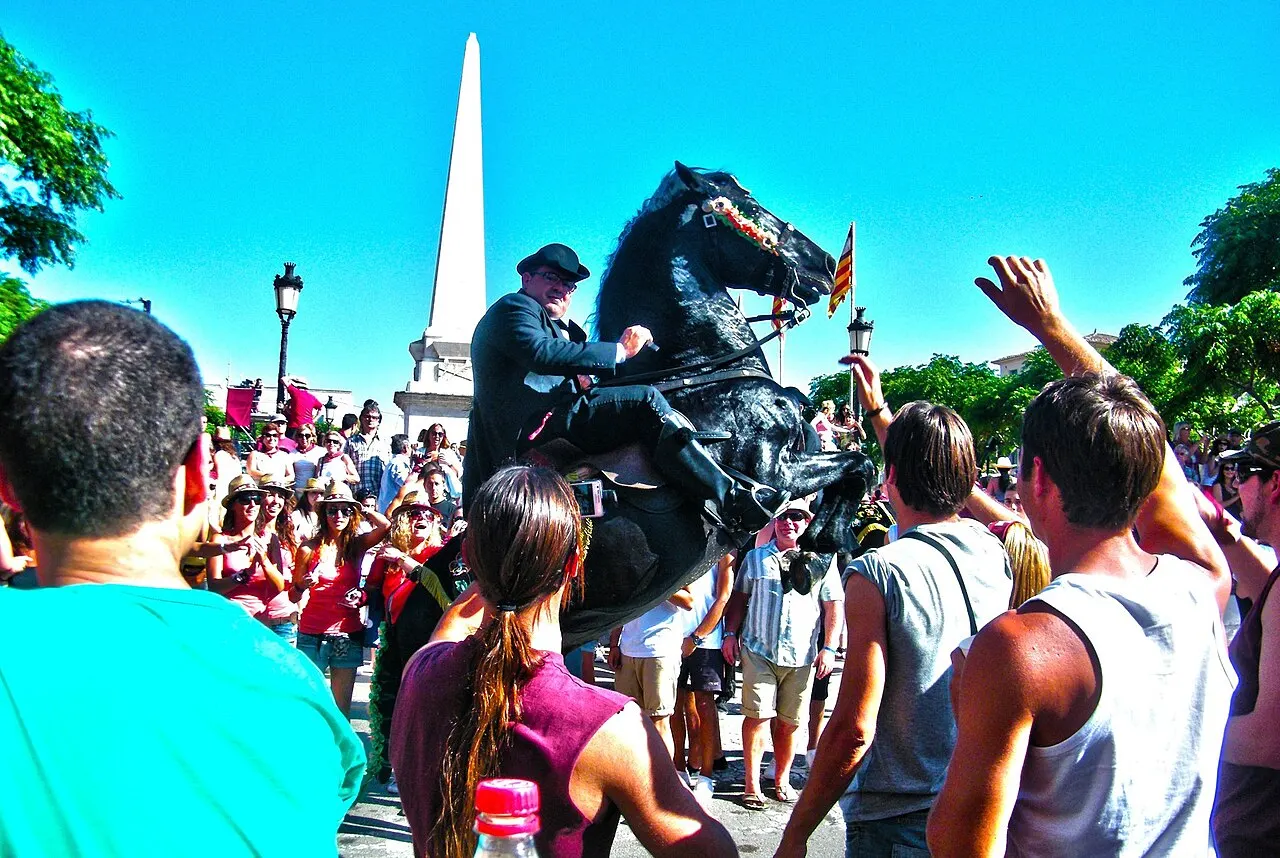
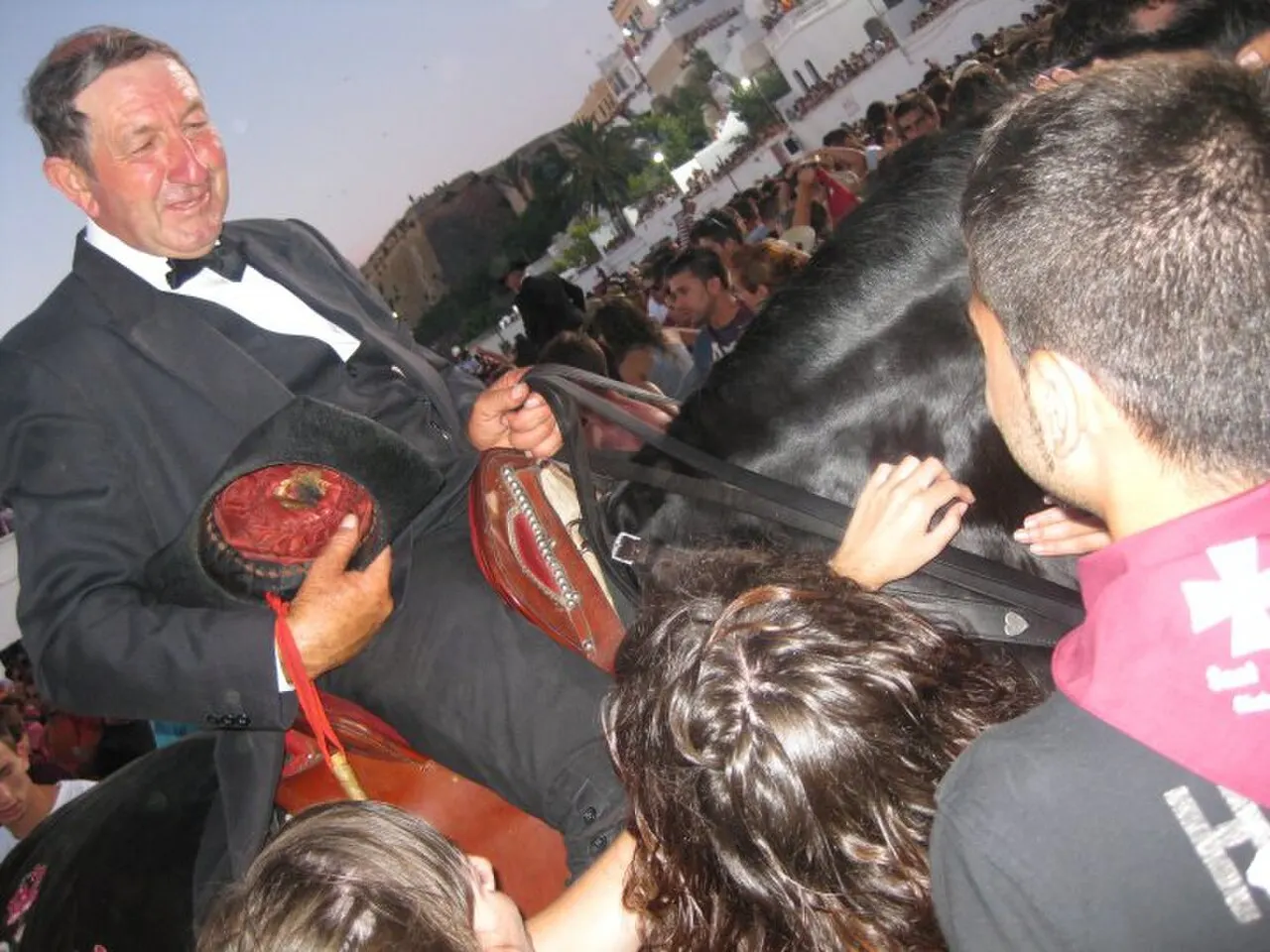
Before the dates, the vocabulary. Everything revolves around the qualcada, the mounted procession that winds through the town led by the estates of traditional society: the caixer capellà (the Church), the caixer senyor (the nobility), the caixers pagesos (the land), the caixer casat and the caixer fadrí (artisans and craftsmen), and the caixer batle, representing the townspeople. It is a living portrait of old Menorca, kept up with astonishing fidelity.
The moment that sums it all up is the jaleo: to the beat of the traditional music, the horses make their way through the crowd and rear up on their hind legs. Tradition holds that touching the heart of the horse while it is raised brings good luck. It is breathtaking and also intense: take it in with your wits about you, never cornering the animal and always respecting the riders. We tell the full story in our guide to Sant Joan in Ciutadella.
June: Sant Joan, the mother of them all
Festes de Sant Joan · Ciutadella · 23 and 24 June. The oldest, most intense and most emblematic celebration on Menorca: hundreds of horses, riders in full dress and a whole town given over to its streets. In 2026, the Dia des Be —the homo des be, dressed in lambskins— opened the festival on Sunday 21 June. If you only ever live one festival, make it this one; our complete guide to Sant Joan explains its rites, from the Caragol des Born to the closing fireworks, and Ciutadella deserves a chapter of its own.
Sant Pere · Maó harbour and Fornells · 29 June. The seafaring counterpoint: St Peter’s day, patron of fishermen, is celebrated with a crossing of Maó’s harbour (with events on 27 and 28 June), traditional sailing and the joc des capellet; in Fornells, the fishermen’s guild holds its seaborne procession. No horses, and plenty of salt air.
July: the village cycle gets under way
Festes de Sant Martí · Es Mercadal · usually the third weekend of July. Es Mercadal, in the heart of the island at the foot of Monte Toro, opens the cycle of midsummer village festivals with its qualcada, the caragol and the jaleo. The programme is confirmed each year by the town hall.
Festes de Sant Jaume · Es Castell · 24 to 26 July. Es Castell, the seaside town on Maó’s harbour, honours its patron with horses, jaleo and the warmth of one of the first great festes of the summer.
Festes de Sant Antoni · Fornells · usually the last weekend of July. The fishing village celebrates Sant Antoni with horses and jaleo beside its sheltered bay: one of the most charming festivals of the north.
August: a jaleo every weekend
Festes de Sant Cristòfol · Es Migjorn Gran · between late July and early August. Es Migjorn Gran, the island’s youngest and quietest municipality, lives its festival with caixers and jaleo in an uncrowded village atmosphere. The most serene date on the calendar.
Festes de Sant Gaietà · Llucmaçanes (Maó) · early August (8 and 9 in 2026). Maó’s small rural hamlet holds one of the most intimate and authentic festivals of the equestrian calendar, with the countryside as its stage.
Festes de Sant Llorenç · Alaior · 8 to 10 August. Alaior, the town of cheese and shoemaking, lives its festes at the heart of August: galloping horses, music and the bustle of one of the most characterful towns of the island’s centre.
Festes de Sant Climent · Sant Climent (Maó) · late August. The hamlet known for its live jazz honours its patron with caixers and jaleo, in a small, close-knit village atmosphere.
Festes de Sant Bartomeu · Ferreries · 23 and 24 August. Ferreries, the highest village on Menorca, sees August out with its serene jaleo. The summer enters its final stretch.
Festes de Sant Lluís · Sant Lluís · usually the last weekend of August. The white village of French origin closes the month with its caixers, the caragol and the jaleo through its whitewashed streets.
September: the close, ever more serene
Festes de Gràcia · Maó · 7 to 9 September. The festival that bids the summer farewell in the capital, with a calmer air than the height of August. For many islanders, the finest way to see the season off.
Festes de Sant Nicolau · Es Mercadal and Monte Toro · 12 and 13 September. The festival that tanca la festa amb clau —locks the festival away with a key—: the patron-saint cycle ends with the ride on horseback up Monte Toro, the caixers’ mass and the jaleo.
Cala’n Porter Festival · Cala’n Porter (Alaior) · 19 and 20 September. A lovely rarity, held since 1974 at the neighbours’ own request: the handing of the flag to the caixera fadrina and a singular jaleo — horses on the beach itself.
Festes des Caixers · Alaior · 26 and 27 September. The last equestrian date of the year, with the classic structure of the qualcada and the jaleo through the old town. When it ends, the island returns to its quiet voice.
And the rest of the year?
Menorca’s festive calendar does not end with the summer. On 17 January, Ciutadella celebrates Sant Antoni, Menorca’s national day, with the processó dels Tres Tocs at the cathedral: pure identity, far from the summer bustle. February brings the Darrers Dies, Menorca’s Carnival, with float parades in Ciutadella and Maó and open-air torradas. In spring, the Holy Week processions move through Maó, Ciutadella, Ferreries and Es Mercadal, and on 8 May the island honours its patroness, the Mare de Déu del Toro, with a pilgrimage to the sanctuary on Menorca’s highest point. If you are still deciding which month to come, our guide to when to visit Menorca will help you choose.
How to live a jaleo, unhurried
- Arrive early and on foot. The town centres are closed off and packed; the car is a hindrance on the big days.
- Closed shoes and comfortable clothes. You will be on your feet for hours, among the crowd.
- Respect the horses. Don’t touch them carelessly or hem them in: these are animals at full tension.
- Go easy on the pomada —the island’s gin mixed with lemonade— and stay hydrated: the day is a marathon.
- Check each town hall’s official programme: times, and some days, change from one year to the next.
Our take
The festivals are the most vibrant face of an island that almost always whispers, and that is precisely why they move you so deeply. Our advice is to choose with judgement: one great festival —Sant Joan, if you can— to understand what it is all about, and one small one —Es Migjorn, Llucmaçanes, Ferreries— to feel it up close, without the crowds. September, as the season takes its leave, holds perhaps the most serene of them all.
The exact dates and the detail of every festival, each with its own page, live in our what’s on guide to Menorca: we keep it up to date all year round, so all you have to do is choose which jaleo you are going to.