Where to eat in Menorca? The easy answer would be a list of fifty names; the honest one is shorter and far more useful. This island eats better than it ever has — eleven restaurants recommended by the 2026 Michelin Guide, a chain of Repsol Sols that grows every year — but its real wealth is not in the trophies: it is in a handful of small, deeply personal dining rooms scattered among harbours, squares and rural lanes, where the journey to the table is already part of the meal.
This guide gathers sixteen tables whose activity we checked one by one in August 2026, arranged by area and by moment: the lobster stew in Fornells, Maó’s harbour, Ciutadella and its coast, and the farm estates inland. For each one we say why it is worth the trip — the only criterion that matters to us. The practical details — how to get there, when each house opens — live in their linked place pages; here we talk about what is on the plate and why it deserves the drive.
One warning runs through everything: in Menorca, almost none of these houses publish their season dates. They are seasonal dining rooms with few tables and a rhythm of their own. The golden rule, always: book, and confirm.
The essentials, at a glance
- For lobster stew: Fornells, with two reference houses — Sa Llagosta (Repsol Sol) and Es Cranc (recommended by Michelin 2026).
- In Maó: the rice dishes of El Rais at the harbour, the sustainable table of El Romero and the two Michelin 2026 newcomers: Candela and La Cocina de Cristine.
- In Ciutadella: half a century of seafood at Cafè Balear, the Smoix bistro and, on the edges of town, Aquiara (Sol 2026) and Godai (dinner by the water).
- In the countryside: Santa Mariana, Torralbenc, Ca na Pilar, Sa Pedrera d’es Pujol, Sant Joan de Binissaida and a long lunch among the vines at Bodegas Binifadet.
- For the big occasion: our map of Menorca’s fine dining in 2026, with the Sols, the Keys and the Michelin Guide in detail.
- The golden rule: almost nobody publishes opening dates; always book and confirm before crossing the island.
Where do you eat lobster stew? In Fornells
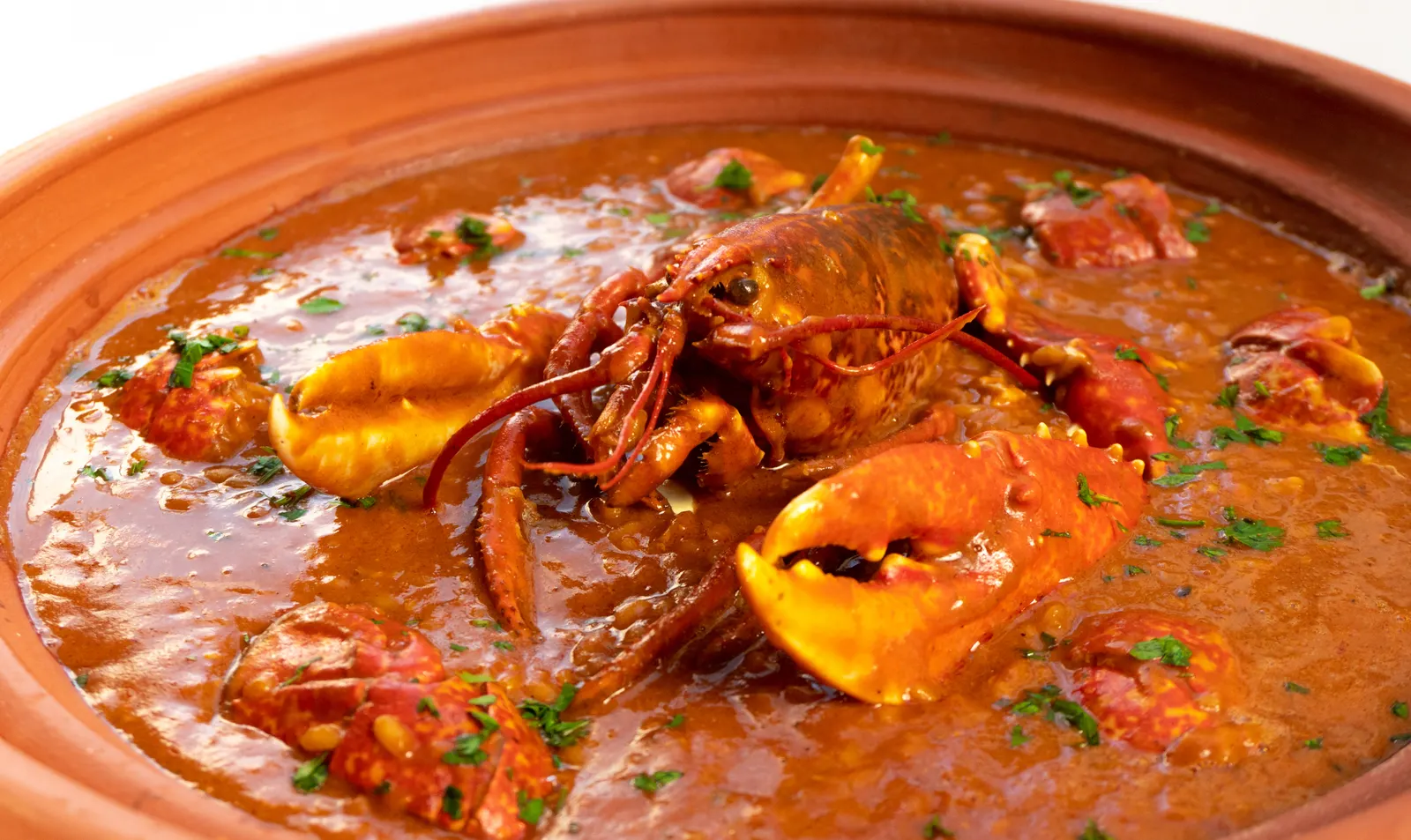
Some dishes demand a place, and lobster stew demands Fornells: a sheltered bay on the north coast, a fishing village painted white and a recipe born aboard the boats. We tell its full story — from poor man’s dish to seasonal luxury — in our lobster stew guide; here are the two houses where you go to understand it.
Sa Llagosta is the small, seasonal dining room that earned Fornells its Repsol Sol in 2024. Boat-and-market cooking, with no staging beyond the bay a few steps away. It has no website: its official channel is Instagram, and that domestic scale is precisely its charm. It is worth the trip because here the stew is not a performance — it is a house doing what it has always done, well.
Es Cranc, recommended by the 2026 Michelin Guide, lit its stoves for this season on 20 March. It is the classic temple of the dish: earthenware pot, deep broth and a liturgy unchanged in decades. In both houses the stew is a serious, seasonal affair: book, order ahead and confirm before heading north.
Where should you eat in Maó and its harbour?
Maó eats on two levels: the harbour below, the town above. Down at the port, the stop with judgement is El Rais, the rice house of the Ses Forquilles group, recommended by Michelin 2026: seafood rice overlooking what claims to be one of the largest natural harbours in the Mediterranean. Worth the trip for that exact combination of grain, broth and sheet of water.
Up in town, three tables of very different character. El Romero, on plaça de la Conquesta, is the sustainable, conviction-driven project that already holds a Repsol Sol and a Michelin recommendation. Candela, opposite the Mercat des Peix, is one of the island’s two newcomers to the red guide in 2026: the day’s seafood chalked on a board, no rigid menu. And La Cocina de Cristine — the other 2026 newcomer — is the table of the Cristine Bedfor hotel, led by Menorcan chef Pau Sintes: island cooking in an urban garden that feels a thousand kilometres from the quay.
Where should you eat in Ciutadella and along its coast?
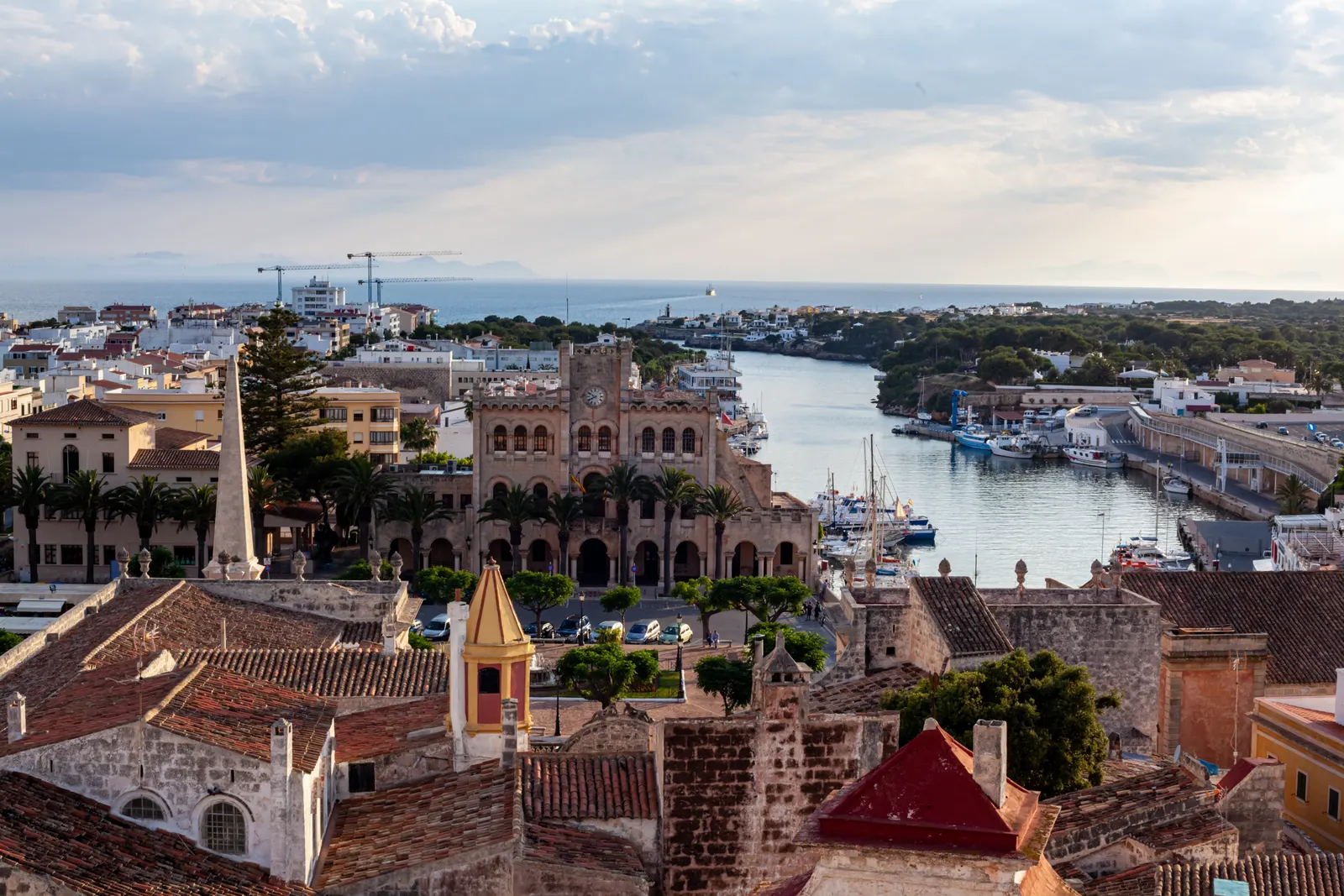
Ciutadella has the most photogenic harbour on the island and a product that exists nowhere else in quite the same way: the red prawn, landed by a small fleet regulated to the kilo. The house that tells it best is Cafè Balear: half a century of seafood cooking with its own boat and a Repsol Sol it has been revalidating for years. Worth the trip because here “boat to table” is not a slogan — it is a description of the business.
A few steps from the old town, Smoix is the Smoix family’s auteur bistro: contemporary cooking without solemnity, recognised at once by Michelin 2026 and by its long-standing Sol. And leaving town, two directions for two moments. On the road to Macarella, Aquiara — the table of the Morvedra Nou rural hotel — is the story of the year: the island’s only new Repsol Sol in 2026, a seasonal tasting menu on a seventeenth-century estate. In Cala en Bosc, Godai proposes the opposite and the complement: Japanese-Menorcan cooking by chef Julián Mármol, in the Michelin 2026 selection, for dinner by the water as the light goes down.
Which tables does the interior hide?
The classic visitor’s mistake is to look only at the coast. Menorca’s interior — the one of dry-stone walls and whitewashed farmhouses — holds some of the island’s most serious tables, and eating at them is the shortest way to understand what this landscape lives on.
In Alaior, Santa Mariana is a family agrotourism with its own vegetable garden and olive oil, recommended by Michelin 2026; you book ahead and choose your menu when you reserve — the sign of a kitchen that does not improvise. Close by, on the road to Cala en Porter, Torralbenc adds an estate, its own winery and a Michelin Key as a hotel: lunch among the vines with the sea beyond is one of the island’s great tableaux. In Es Migjorn Gran, Ca na Pilar is Víctor Lidón’s two-hundred-year-old house — auteur cooking in the quietest village of the south.
Towards the east, two estates close the map. In Torret (Sant Lluís), Sa Pedrera d’es Pujol — the country house of Daniel Mora and Nuria Pendás — combines a Repsol Sol and a Michelin recommendation in a stone dining room that seems paused in another century. And in Es Castell, Sant Joan de Binissaida is the estate carrying the cooking of the Ses Forquilles circle: confirm when booking that its season is under way, because it runs to the rhythm of the hotel that houses it.
For an unhurried lunch, the brightest option is back in Sant Lluís: Bodegas Binifadet, eating among the vines at the most visible winery of Menorcan wine. Worth the trip because it joins, at a single table, what this island does best: produce, landscape and calm.
And for the big occasion?
If what you want is the top tier — tasting menus, Sols, Keys and the question of why Menorca still has no star — that story has its own article: our map of Menorca’s fine dining in 2026, with the full timeline and verified facts, and the essay on why fine dining on this island doesn’t shout. The conclusion, in advance: gastronomic luxury here is not choreography — it is produce with a name of its own.
And a beach-day lunch?
The most summery question has the least fixed answer: beach bars and tables on the sand change hands, dates and hours every season, and we will not recommend one we have not been able to check. Our honest suggestion: browse the up-to-date place pages in our eat and drink section before heading down to the beach, and save the big indulgence — the stew, the prawn, the estate — for the evening.
How to book these tables without surprises
- Always book — weeks ahead in July and August. These are dining rooms with few tables; spontaneity is paid for in disappointment.
- Take no season for granted. Almost none of these houses publish their opening dates; many live to the rhythm of a hotel or a farm estate. Confirm through the official channel before crossing the island.
- The shoulder months are the secret. May, June, September and October offer the same cooking with half the pressure.
- Order the island’s produce. Red prawn, lobster, Mahón-Menorca PDO cheese, market garden and local wine: it is the thread that ties together the sixteen tables in this guide.
Eating well in Menorca does not require stacking up reservations: it requires choosing a few tables and arriving at them with time to spare. If this way of looking at the island suits you, we tell it once a month in the Calma Society newsletter: what is worth your time, calmly and without noise.